

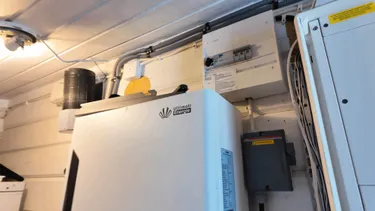
PV + Heat Pump + Battery Storage: When Does a Home Battery Actually Pay Off?
Installing a solar PV system is one of the most effective ways to reduce household electricity costs and increase energy independence. Pairing it with a heat pump makes even more sense, allowing homeowners to use clean solar electricity for space heating and domestic hot water instead of relying on fossil fuels.
But one question often comes up:
Do you really need a home battery, or are solar panels and a heat pump enough on their own?
The answer depends on several factors, including your electricity consumption patterns, the size of your PV system, local electricity prices, and your long-term energy goals.
In this guide, you'll learn when home battery storage is worth the investment, how it works alongside a heat pump, and which households benefit the most.
Why Combine Solar PV, a Heat Pump, and Battery Storage?
A solar PV system and a heat pump are a natural combination.
Solar panels generate renewable electricity during the day, while a heat pump uses electricity to provide efficient heating and hot water. Together, they help reduce energy bills, lower carbon emissions, and decrease reliance on fossil fuels.
The challenge is that electricity generation and consumption rarely happen at the same time.
Solar panels usually produce the most electricity around midday, while many households consume the most power in the morning and evening when people are preparing for work, cooking dinner, or heating their homes.
Without battery storage, much of the excess solar electricity is exported to the grid instead of being used within the home.
A home battery storage system bridges this gap by storing surplus solar energy during the day and supplying it later when demand is higher. This allows homeowners to maximize the value of their own solar generation instead of purchasing additional electricity from the grid.
How the Home Battery Storage System Works
During the day:
- Solar panels first supply electricity to household appliances and the heat pump.
- Any excess solar energy charges the battery storage system.
During the evening and at night:
- The battery powers the home using stored solar electricity.
- Grid electricity is only required once the battery has been depleted.
As a result, homeowners can increase solar self-consumption, reduce electricity imports from the grid, and make better use of the energy they generate themselves.
| Without Battery Storage | With Battery Storage |
|---|---|
| Excess solar electricity is exported to the grid | Excess solar electricity is stored for later use |
| Higher electricity purchases during the evening | Less electricity purchased from the grid |
| Lower solar self-consumption | Higher solar self-consumption |
When Does a Home Battery Actually Pay Off?
A home battery isn't automatically the right investment for every household. Whether it delivers a good financial return depends largely on how and when you use electricity, rather than simply how much electricity you consume.
The following situations typically offer the greatest benefits.
High Electricity Use Outside Solar Hours
Many households use the most electricity during the morning and evening—for example when preparing breakfast, taking hot showers, cooking dinner, or running household appliances. Unfortunately, these are also the times when solar panels generate little or no electricity.
A solar battery storage system shifts excess solar energy produced during the day to these high-demand periods, reducing reliance on expensive grid electricity.
Battery storage is particularly beneficial for:
- Families with children
- Households where occupants are away during the day
- People working remotely or with flexible schedules
- Homes with relatively high evening electricity consumption
Your Heat Pump Runs Throughout the Day
Unlike many household appliances, a heat pump doesn't only operate during sunny hours. It provides space heating and hot water whenever needed, including early mornings, evenings, and overnight during colder months.
By storing surplus solar electricity generated at midday, a home battery allows the heat pump to continue operating using your own renewable energy even after sunset. This increases self-consumption without requiring any changes to your heating system.
Dynamic Electricity Tariffs Create Additional Savings
Dynamic electricity pricing is becoming increasingly common in many countries. Instead of paying a fixed electricity rate, homeowners can benefit from prices that change throughout the day.
When combined with an Energy Management System (EMS), a battery storage system can automatically:
- Charge when electricity prices are low—or even negative in certain markets
- Prioritize self-generated solar electricity whenever possible
- Reduce electricity purchases during expensive peak-price periods
This intelligent energy management not only improves energy efficiency but also helps maximize long-term savings as electricity markets continue to evolve.
Real-World Example
Imagine a family of four with:
- a 9 kW solar PV system
- an air-source heat pump
- an 8–10 kWh home battery
Most family members are away during the day, while electricity demand increases significantly in the evening for cooking, lighting, entertainment, and heating.
Without battery storage, much of the solar electricity generated at midday is exported to the grid, while additional electricity must later be purchased from the utility.
With a properly sized battery storage system, surplus solar energy is stored and used later to power both household appliances and the heat pump. This significantly increases solar self-consumption while reducing dependence on grid electricity.
Expert Tip: The most effective battery isn't necessarily the largest one. A battery storage system that is properly matched to your PV capacity and household electricity consumption typically delivers the best long-term value.
It's also important to remember that battery storage isn't the most economical solution for every home. Properties with very small PV systems or consistently low electricity consumption may require a longer period to recover the initial investment.
What Size Battery Do You Need for a Heat Pump?
There is no universal battery size that suits every home. The ideal home battery storage capacity depends on several factors, including the size of your solar PV system, your household's electricity consumption, your heat pump's energy demand, and any future plans such as installing an EV charger.
The table below provides a general starting point.
| Solar PV System Size | Recommended Battery Capacity* |
|---|---|
| 5–8 kW | 5–8 kWh |
| 8–10 kW | 8–10 kWh |
| 10–15 kW | 10–15 kWh |
*Actual battery sizing should always be based on your property's energy profile and usage patterns.
Keep in mind that a larger battery doesn't automatically deliver greater savings. Oversizing increases upfront costs while much of the additional capacity may remain unused. In most cases, a properly sized battery storage system offers the best balance between investment, performance, and long-term value.
Conclusion
A home battery isn't essential for every solar-powered home, but it can significantly improve the performance of a solar PV and heat pump system.
For households with high electricity demand outside daylight hours, battery storage helps maximize solar self-consumption, reduce reliance on grid electricity, and make better use of renewable energy. The benefits become even greater when combined with an intelligent Energy Management System (EMS) or dynamic electricity tariffs.
Whether battery storage is worth the investment ultimately depends on your PV system size, electricity consumption, and long-term energy goals. Planning your solar panels, heat pump, and battery storage system as one integrated solution typically delivers the best financial and environmental results.
Ready to Maximize Your Solar + Heat Pump Projects?
Ultimati Enegie offers high-quality modular LiFePO₄ battery storage systems with excellent compatibility for solar PV, heat pumps, and EMS.
Our solutions deliver safety, long cycle life, scalability, and strong technical support for installers and EPC partners.
Whether for new installations or retrofits, we provide customized sizing and project support to help you deliver better performance and margins.
Contact our B2B team today for consultation and partnership opportunities.
Frequently Asked Questions
Is a home battery always worth it with a heat pump?
Not necessarily. Battery storage provides the greatest value when your home has a sufficiently sized solar PV system and a significant portion of electricity is consumed during the morning or evening. Homes with very small PV systems or consistently low electricity usage may see a longer return on investment.
What size battery is best for a heat pump?
The right battery size depends on your solar PV capacity, annual electricity consumption, and your heat pump's energy demand. Choosing a battery that matches your actual usage is generally more cost-effective than installing the largest available system.
Can a home battery make me completely independent from the grid?
No. While battery storage can significantly increase solar self-consumption and reduce grid electricity purchases, most homes still rely on the grid during extended periods of low solar generation, particularly in winter.
Can a home battery reduce electricity bills?
Yes. By storing excess solar energy for use when electricity demand is highest, a home battery can reduce the amount of electricity purchased from the grid. The actual savings depend on factors such as your solar PV system size, energy consumption habits, local electricity prices, and available incentives.

Ultimati Energie Deutschland GmbH is a Germany-based B2B energy storage system provider specializing in scalable residential and C&I battery storage solutions for European partners.
Become a Partner
Sales: +49 1624886367
Customer Support:
+49 15226994869
Address: Ober der Röth 4, 65824 Schwalbach am Taunus, Germany
Copyright © 2026 Ultimati Energie Deutschland GmbH All rights reserved.