

How Dynamic Electricity Tariffs Are Reshaping Germany’s Home Energy Storage Market
Germany’s Energy Market Is Entering a New Era
Germany’s energy transition is reaching a turning point.
For years, the focus was on expanding renewable energy generation. Today, the challenge is no longer how to generate more solar electricity, but how to use it more intelligently.
As rooftop solar installations continue to grow across Germany, wholesale electricity markets are experiencing an increasing number of zero-price and negative-price periods. During sunny midday hours, solar production often exceeds immediate demand, pushing electricity prices downward. Later in the evening, as solar generation declines and household consumption rises, electricity prices increase again.
This growing imbalance is creating a new reality:
Energy flexibility is becoming as important as energy generation itself.
For homeowners, installers, utilities, and energy technology providers, dynamic electricity tariffs are fundamentally changing the role of residential energy storage systems.
Why Are Negative Electricity Prices Becoming More Common?
Negative electricity prices occur when electricity supply temporarily exceeds market demand.
Contrary to popular belief, negative prices do not mean electricity has no value. Instead, they highlight a lack of flexibility within the energy system.
When surplus renewable energy cannot be stored, shifted, or consumed elsewhere, market prices fall sharply.
This challenge is driven by several factors:
- Rapid growth of rooftop solar installations
- Increasing renewable energy penetration
- Insufficient energy storage deployment
- Limited smart meter adoption
- Slow development of flexible demand-side resources
The solution is not to slow down renewable energy expansion.
Instead, excess electricity should be redirected into flexible energy assets such as:
- Residential battery storage systems
- Electric vehicle charging
- Heat pumps
- Water heating systems
- Commercial and industrial flexible loads
This is where intelligent energy management becomes critical.
Dynamic Tariffs Are Changing How Homeowners Use Energy
Traditional electricity contracts charge the same price regardless of when electricity is consumed.
Dynamic tariffs work differently.
Electricity prices fluctuate based on wholesale market conditions, creating opportunities for consumers to adjust energy usage according to price signals.
For homeowners, this creates several advantages:
Benefits of Dynamic Tariffs
- Charge batteries when electricity prices are low
- Increase solar self-consumption rates
- Reduce grid purchases during expensive peak hours
- Optimize EV charging schedules
- Improve overall household energy efficiency
- Potentially participate in future flexibility markets
However, taking advantage of dynamic tariffs requires more than simply installing a battery.
It requires intelligent control.
Traditional Battery Systems vs. Intelligent Energy Storage
Traditional Storage System | Intelligent Energy Storage System |
Fixed charging schedules | Dynamic optimization based on market conditions |
Solar self-consumption only | Solar + tariff optimization |
Standalone battery operation | Integrated energy ecosystem |
Limited visibility | Real-time monitoring and control |
Static operation | Continuous optimization |
As Germany’s energy market evolves, battery hardware alone is no longer enough.
The real value comes from how intelligently energy is managed.
Why Home Energy Management Systems (HEMS) Matter More Than Ever
A battery can store electricity.
A Home Energy Management System (HEMS) determines when and how that electricity should be used.
Modern energy systems must coordinate multiple assets simultaneously:
Connected Energy Assets
- Solar PV systems
- Residential battery storage
- Hybrid inverters
- Electric vehicle chargers
- Heat pumps
- Smart meters
- Grid connections
Critical Data Inputs
- Dynamic electricity prices
- Solar generation forecasts
- Household consumption forecasts
- Battery State of Charge (SOC)
- Battery State of Health (SOH)
- Backup power requirements
- Grid conditions
The objective is no longer simply charging and discharging at preset times.
The objective is maximizing long-term value while preserving battery health and maintaining household energy security.
How Ultimati Energy Helps Homeowners Adapt to Dynamic Tariffs
As Germany moves toward a more flexible energy market, homeowners need solutions capable of responding automatically to changing electricity prices and grid conditions.
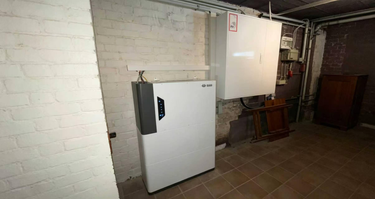
U-Energy’s Residential Energy Storage Solution combines high-performance battery storage with intelligent energy management through the UltiCloud Smart Energy Platform.
Rather than relying on fixed schedules, the system continuously analyzes real-time energy conditions to optimize performance.
Key Features of Ultimati Energy’s Smart Energy Ecosystem
- Dynamic tariff-based charging and discharging
- Intelligent solar self-consumption optimization
- Real-time energy monitoring
- Smart export power management
- Remote OTA firmware updates
- Multi-device energy coordination
- Flexible API integration capabilities
- Future-ready Virtual Power Plant (VPP) compatibility
This allows homeowners to automatically take advantage of low-price electricity periods while minimizing purchases during high-price hours.
From Fixed Schedules to Intelligent Energy Decisions
The next generation of energy management is moving beyond simple timer-based control.
Through the UltiCloud platform, U-Energy enables intelligent optimization using multiple data sources simultaneously.
Data Source | Optimization Goal |
Dynamic Electricity Prices | Reduce electricity costs |
Solar Forecasting | Increase self-consumption |
Household Load Forecasting | Improve energy matching |
Battery SOC & SOH | Extend battery lifespan |
Grid Conditions | Optimize export behavior |
VPP Signals | Support future revenue opportunities |
By combining these inputs, the system continuously adapts charging and discharging strategies throughout the day.
This approach helps homeowners maximize economic returns while maintaining long-term battery performance.
The Growing Role of Virtual Power Plants
Germany’s energy market is increasingly moving toward flexibility-based services.
While a single residential battery has limited impact on the grid, thousands of interconnected systems can collectively provide meaningful balancing capacity.
This is the concept behind Virtual Power Plants (VPPs).
Future-ready energy storage systems should be capable of:
- Remote monitoring and dispatch
- Aggregated energy optimization
- Grid services participation
- Demand response programs
- Flexible energy trading opportunities
As VPP markets continue to develop, homeowners may gain access to additional revenue streams beyond traditional electricity savings.
What Germany’s Energy Transition Means for Installers and Distributors
For energy professionals, Germany’s market is shifting from hardware-focused competition to solution-based competition.
Successful residential storage solutions will increasingly require:
Hardware Excellence
- High-performance lithium battery systems
- Reliable hybrid inverters
- Safe and scalable architecture
Software Intelligence
- Advanced HEMS and EMS capabilities
- Dynamic tariff integration
- Smart meter compatibility
- VPP readiness
Long-Term Service Support
- Cloud monitoring platforms
- Remote diagnostics
- OTA updates
- Cybersecurity compliance
The future customer is not simply purchasing a battery.
They are investing in a complete energy management ecosystem.
The Future of Residential Energy Storage in Germany
Germany’s increasing frequency of negative electricity prices is not a sign of failure.
It is evidence that renewable energy adoption has reached a new level of maturity.
The next phase of the energy transition will depend on flexibility.
The most competitive residential energy storage systems will combine:
- High-performance battery technology
- Intelligent Home Energy Management Systems (HEMS)
- Dynamic tariff optimization
- AI-assisted energy management
- Virtual Power Plant readiness
- Seamless integration with solar PV, EV chargers, and heat pumps
At U-Energy, we believe the future of residential energy storage is not just about storing electricity.
It is about intelligently creating value from every kilowatt-hour.
Key Takeaways
- Dynamic electricity tariffs are becoming increasingly important in Germany.
- Negative electricity prices highlight the growing need for flexibility.
- Residential battery storage is evolving beyond simple self-consumption.
- Intelligent HEMS and EMS platforms are becoming critical market differentiators.
- Dynamic tariff optimization can significantly improve energy savings.
- Future-ready systems should support VPP participation and smart grid integration.
FAQ
What are dynamic electricity tariffs?
Dynamic tariffs allow electricity prices to change throughout the day based on wholesale market conditions, encouraging consumers to shift energy usage to lower-cost periods.
Why are negative electricity prices increasing in Germany?
Growing solar and wind generation sometimes produce more electricity than the grid can immediately consume, resulting in temporary negative wholesale prices.
How can residential battery storage benefit from dynamic tariffs?
Battery systems can charge during low-price periods and discharge during expensive periods, improving household energy economics.
What role does HEMS play in home energy storage?
HEMS coordinates solar generation, battery storage, household loads, and electricity prices to optimize overall energy performance.
Why is intelligent energy management becoming important?
As electricity markets become more dynamic, automated energy optimization helps homeowners maximize savings, improve self-consumption, and prepare for future flexibility markets.
Ultimati Energie Deutschland GmbH is a Germany-based B2B energy storage system provider specializing in scalable residential and C&I battery storage solutions for European partners.
Become a Partner
Sales: +49 1624886367
Customer Support:
+49 15226994869
Address: Ober der Röth 4, 65824 Schwalbach am Taunus, Germany
Copyright © 2026 Ultimati Energie Deutschland GmbH All rights reserved.