

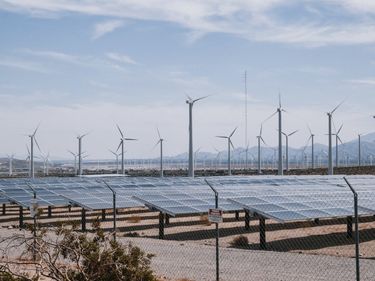
Is Photovoltaics with Storage Worth It? – Everything You Need to Know Before Making a Decision
Are you wondering whether a solar system with battery storage is a worthwhile investment? If so, you’re in the right place! In Germany, electricity prices are rising, and businesses are seeking sustainable solutions. As a specialist in storage technology at Ultimati Energie, we show you how to help your partners—installers and companies—store solar power and maximize solar self-consumption. With clear facts and up-to-date data, we examine costs, savings, and benefits. Let’s get started!
Why Consider Photovoltaics with Storage?
Imagine your customers reducing electricity costs, using their own solar power 24/7, and lowering their CO2 emissions. That’s what a solar system with battery storage offers. Solar energy is booming in Germany—by 2023, 61 gigawatts were installed, covering 12% of total consumption (Clean Energy Wire). Why is this exciting for your business?
Electricity prices are soaring—currently at €0.40/kWh (Statista, 2024). At the same time, demand for energy independence and sustainability is increasing. With a battery from Ultimati Energie, your customers gain flexibility, using solar energy whenever needed. Additionally, government incentives support these investments. How do your customers benefit? Read on!
Solar System with Storage: Costs, Savings & Payback Period
A solar system with storage is an investment—but the numbers speak for themselves.
Cost Overview
Photovoltaic System: €700–2,000 per kWp. A 5-kWp system costs around €3,500–10,000 (Fraunhofer ISE, 2023).
Battery Storage: Around €1,200 per kWh. A 5-kWh battery costs about €6,000 (PV Magazine, 2023).
Total Cost: A 5 kWp system with a 5 kWh battery: €9,500–16,000.
Savings
A typical household with 3,252 kWh annual consumption (e.g., a single-family home in Berlin) with a 5-kWp solar system generates 4,750 kWh per year. With a battery, self-consumption increases to 70%:
Savings: €1,300 by reducing grid electricity purchase (3,252 kWh × €0.40) plus €128 from feed-in tariffs (1,498 kWh × €0.0856) = €1,429 per year.
Payback Period: At €12,750 total cost, the system pays off in 8.9 years.
For larger projects, such as a four-person household in Bavaria with a 10-kWp system and 10-kWh battery, annual savings reach €2,858. With Ultimati Energie, these savings can be further optimized!
Optimal Battery Size for Photovoltaics
Choosing the right battery size is crucial. What is the ideal size for your customers?
Photovoltaic System Size
For 3,000–4,000 kWh annual consumption, a 5–10 kWp system is recommended.
5 kWp for smaller households, 10 kWp for larger ones or homes with an electric vehicle.
Tip: Ask customers about their consumption—it helps determine the best system size.
Battery Storage Size
A household consuming 9 kWh/day (3,252 kWh ÷ 365) benefits from a 5–10 kWh battery to maximize self-consumption.
Measurement: Have customers check their meter readings over a few days (morning and evening) to determine the perfect size.
Larger batteries = more independence, but higher costs. Our team can provide expert guidance.
Is There Any Government Incentives & Support?
Yes! Incentives make these projects even more attractive:
EEG Feed-in Tariff: Up to 10 kWp, customers receive €0.0856/kWh for excess energy fed into the grid (EEG 2023).
Regional Grants: Berlin, for example, offers up to €2,000 through SolarPLUS (Berlin Senate).
Tax Benefits: Small solar systems are often VAT-exempt, saving up to 19% (German Ministry of Finance).
For more details, visit the Consumer Protection Center—or ask us directly!
Installation & Maintenance – What to Consider?
A battery from Ultimati Energie is built to last—but proper installation and maintenance are key.
Installation Tips
Location: Batteries require a cool, dry space (15–25°C). Ideal locations: garages or basements. Avoid direct sunlight and moisture to extend lifespan.
Wiring: Use high-quality cables (minimum 4 mm² cross-section) and circuit protection. A certified electrician ensures safety and efficiency.
System Compatibility: The battery must be compatible with the solar system and inverter. Our flexible systems fit your needs.
Installation Time: 1–2 days depending on size—coordinate planning with your partners.
Testing: After installation, check performance and safety—e.g., using a multimeter to verify voltage.
Maintenance Best Practices
Regular Inspections: Annually check battery status, remove dust, inspect connections, and update software.
Battery Lifespan: Our batteries last 10–20 years, supporting up to 12,000 charge cycles.
Warranty: Ultimati Energie provides a 20-year warranty—reliable quality you can trust.
Proper Care: Keep ventilation slots clear and avoid placing heavy objects on top.
Common Mistakes – And How to Avoid Them
Incorrect Sizing: Too small, and solar power isn’t fully utilized; too large, and costs increase. Choose the right dimension!
Poor Installation: Without professionals, energy losses occur. Choose certified installers (e.g., DGS-certified).
Lack of Maintenance: An annual check extends lifespan—don’t neglect it!
Environmental Benefits
How do your customers benefit from battery storage—ecologically?
CO2 Reduction: In 2022, solar power saved 41.7 million tons of CO2 (Statista). A 5-kWp system with storage saves 2 tons CO2 per year.
Energy Transition: Germany targets 80% renewable energy by 2030—your projects contribute to this goal.
Sustainability: Less reliance on fossil fuels—a key selling point for your customers.
Conclusion – Is Photovoltaics with Storage Worth It?
Absolutely! After 8–9 years, a solar system with battery storage pays for itself, and from then on, it generates profits for 25–30 years. With government incentives, environmental benefits, and storage solutions from Ultimati Energie, you can offer your customers a compelling, future-proof energy solution.
Interested? Let’s Work Together!
Visit https://www.u-energie.de/, email us at sales@u-energie.de, or call +49 173 2473005. We look forward to your inquiry!

Ultimati Energie Deutschland GmbH is a Germany-based B2B energy storage system provider specializing in scalable residential and C&I battery storage solutions for European partners.
Become a Partner
Sales: +49 1624886367
Customer Support:
+49 15226994869
Address: Ober der Röth 4, 65824 Schwalbach am Taunus, Germany
Copyright © 2026 Ultimati Energie Deutschland GmbH All rights reserved.