

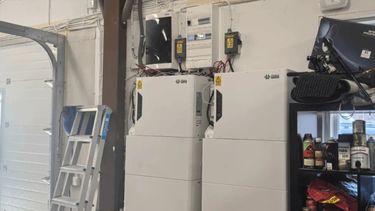
How to Size a Home Battery for a Heat Pump Without Oversizing
Pairing a heat pump with a solar battery is one of the most effective ways to lower electricity bills and increase energy independence. However, one question comes up in almost every project: What size home battery do I need for a heat pump?
Many homeowners assume that buying the largest battery available will maximize savings. In reality, that's rarely the case. An oversized battery costs significantly more but often delivers only a small increase in self-consumption and a longer payback period.
The goal isn't to buy the biggest battery—it's to choose the right battery size for your home, your solar PV system, and your future energy needs.
In this guide, you'll learn:
- How to estimate the right battery size for a heat pump
- When a larger battery actually makes sense
- How to maximize ROI without overspending
Bigger Isn't Always Better
Many homeowners assume that buying the largest home battery available will maximize savings. In reality, an oversized battery for a heat pump often costs significantly more while delivering only marginal gains in self-consumption and a longer payback period.
A home battery can only store the excess electricity your solar panels generate during the day. Once that surplus is stored, additional capacity doesn’t automatically create more value — this is a classic case of diminishing returns.
For example, upgrading from 5 kWh to 10 kWh often delivers a strong boost in self-consumption. However, jumping from 15 kWh to 20 kWh typically adds only a few extra percentage points while significantly increasing upfront costs.
Key takeaway: The most economical home battery is not necessarily the largest one — it’s the one that gets regularly charged and discharged.
Pro Tip: A well-utilized smaller battery frequently offers better ROI than a larger system that sits partially idle, especially during low-production winter months.
How to Choose the Right Battery Size for Your Heat Pump
The ideal home battery size for a heat pump is not a one-size-fits-all number. It depends on four key factors: your electricity consumption, solar PV system, daily usage patterns, and future plans. Here’s how to determine the right size step by step.
1. Calculate Your Annual Electricity Consumption
Start with your total yearly electricity usage, including the heat pump and all household appliances. Evening and overnight consumption is especially important, as this is when the battery will supply power after sunset.
General Guideline:
| Annual Electricity Use | Recommended Battery Size |
|---|---|
| Up to 6,000 kWh | 10 kWh |
| 6,000 – 9,000 kWh | 10 – 15 kWh |
| Over 9,000 kWh | 15 kWh+ or professional assessment |
2. Match Your Solar PV System
Your battery should be sized to store the surplus solar energy your panels actually produce. A larger battery makes little sense if your PV array doesn’t generate enough excess power to charge it.
Typical Recommendations:
| Solar PV Size | Recommended Battery Size |
|---|---|
| Up to 8 kWp | Around 10 kWh |
| 8 – 12 kWp | 10 – 15 kWh |
| Above 12 kWp | 15 kWh+, depending on total consumption |
Pro Tip: The best performance comes from designing your solar PV, heat pump, and battery as one integrated energy system.
3. Plan for Future Energy Needs
Today's consumption is only part of the picture. Consider your plans for the next 5–10 years:
- Installing an EV charger or buying an electric vehicle?
- Expanding your solar array?
- Increasing household electricity use (e.g. home office, air conditioning)?
If you expect growth in demand, a modular battery system is usually smarter than buying an oversized battery today. You can start with the right size now and expand later as needed.
Quick Battery Size Guide for Heat Pump
The table below provides a simple starting point.
| Home Setup | Recommended Battery |
|---|---|
| Standard home + heat pump | 10 kWh |
| Average family + heat pump | 10–15 kWh |
| Heat pump + EV charger | 15 kWh |
| Large home + multiple EVs | 20 kWh |
Remember that these are general recommendations. The ideal battery size should always reflect your actual energy profile.
Real-World Examples
Example 1: Typical Family Home
- 8–10 kWp solar PV
- Air-source heat pump
- Annual electricity use: 7,200 kWh
Recommended battery: 10 kWh
Although a 15 kWh battery is technically possible, a 10 kWh system already captures most of the available solar energy while offering a shorter payback period.
Example 2: Heat Pump + EV Charging
- 12 kWp solar PV
- Heat pump
- EV charger
- Higher evening electricity demand
Recommended battery: 15 kWh
The larger PV system generates enough excess electricity to keep the battery well utilized, making the additional capacity worthwhile.
10 kWh vs. 15 kWh: Which Offers Better Value?
| Criteria | 10 kWh | 15 kWh |
|---|---|---|
| Initial Cost | Lower | Higher |
| Solar Self-Consumption | Around 63% | Around 67% |
| Additional Savings | — | Moderate |
| Payback Period | Shorter | Longer |
While a 15 kWh battery stores more energy, the financial return isn't always proportionally higher. For many households, a well-sized 10 kWh battery delivers the best balance between investment and long-term savings.
Why Modular Battery Systems Make Sense
Your energy needs are unlikely to stay the same over the next 10–15 years. You may install an EV charger, expand your solar system, or increase household electricity consumption.
Instead of oversizing your battery today, consider a modular battery storage system that can grow with your needs.
Modular LiFePO₄ battery systems from Ultimati Energie allow homeowners to start with the capacity they need today and expand later, providing greater flexibility and a more cost-effective long-term investment.
Final Thoughts
Choosing the right home battery for a heat pump isn't about buying the largest battery available—it's about finding the most economical balance between storage capacity, solar production, and electricity consumption.
For many homes, a 10–15 kWh battery offers the best combination of self-consumption, cost savings, and return on investment. Larger batteries make sense only when supported by higher electricity demand, larger solar systems, or future expansion plans.
By treating your solar PV system, heat pump, and battery storage as one integrated energy solution, you can maximize renewable energy use while avoiding unnecessary investment.
Frequently Asked Questions
What size battery do I need for a heat pump?
Most homes with an 8–12 kWp solar PV system and a heat pump perform well with a 10–15 kWh battery, although the ideal size depends on your electricity consumption and energy profile.
Is a 10 kWh battery enough for a heat pump?
Yes. For many average-sized homes, a 10 kWh battery provides an excellent balance between cost and performance.
Can a home battery be too large?
Absolutely. Oversizing increases upfront costs and often extends the payback period because the extra capacity may not be fully utilized.
Can I expand my battery later?
If you choose a modular battery system, you can typically add capacity in the future as your energy needs grow.

Ultimati Energie Deutschland GmbH is a Germany-based B2B energy storage system provider specializing in scalable residential and C&I battery storage solutions for European partners.
Become a Partner
Sales: +49 1624886367
Customer Support:
+49 15226994869
Address: Ober der Röth 4, 65824 Schwalbach am Taunus, Germany
Copyright © 2026 Ultimati Energie Deutschland GmbH All rights reserved.