

Germany’s Smart Meter Rollout Falls Behind: What It Means for Home Battery Owners
Germany wants households to use electricity more intelligently.
Dynamic electricity tariffs, residential battery storage, heat pumps, electric vehicles and rooftop solar are all expected to become part of a more flexible energy system. But for this system to work, households and energy providers need accurate, timely information about how much electricity is being consumed, generated or supplied to the grid.
That is where smart meters become essential.
Germany has made progress in establishing the regulatory framework for intelligent metering, but the physical rollout has not moved as quickly as planned. On 27 March 2026, the Bundesnetzagentur announced that it had launched proceedings against 77 companies that failed to meet the statutory target of installing smart metering systems at 20% of the relevant metering points by the end of 2025.
The announcement highlights a broader challenge for the German energy transition: introducing dynamic tariffs and flexible energy technologies is not enough. The infrastructure must also be able to measure, communicate and act on energy data. For homeowners with photovoltaic systems and battery storage, this raises an important question: What does Germany’s delayed smart meter rollout mean for the operation and value of a home battery?
Why Germany Is Accelerating Its Smart Meter Rollout
Germany’s electricity system is becoming more decentralised.
Instead of electricity flowing in one direction from large power stations to passive consumers, millions of households now generate electricity through rooftop PV systems. At the same time, heat pumps, electric vehicles and residential batteries are changing when and how households consume power.
These technologies create new flexibility, but they also make household energy flows more complex.
A home may import electricity from the grid in the morning, generate surplus solar power at midday, charge a battery in the afternoon and discharge stored energy after sunset. An electric vehicle or heat pump can create additional consumption peaks.
Traditional meters record how much electricity has been used over a long billing period. They do not necessarily provide the detailed, timely information required for dynamic tariffs or automated energy management.
Germany’s intelligent metering programme is intended to address this limitation. An intelligent metering system can provide more granular energy data and establish secure communication between the metering point and authorised energy-market participants. This creates the technical foundation for applications such as:
- dynamic electricity tariffs
- more accurate energy billing
- remote meter reading
- flexible load control
- integration of renewable generation
- grid-oriented operation of controllable devices
- new energy services based on actual consumption patterns
Since 1 January 2025, German electricity suppliers have been required to offer at least one dynamic electricity tariff. These tariffs link at least part of the customer’s electricity price to short-term wholesale-market developments.
However, households can only use this price variation effectively when they can measure consumption at the necessary intervals and shift electricity demand accordingly.
What Happened to Germany’s 20% Smart Meter Target?
Under Germany’s smart meter rollout framework, responsible metering point operators were required to reach defined installation targets.
For the relevant mandatory rollout groups, a 20% installation quota applied by the statutory deadline of 31 December 2025.
In March 2026, the Bundesnetzagentur reported that 77 companies had not achieved this target and initiated supervisory proceedings. Depending on the scale of non-compliance, the authority can require the companies concerned to correct their rollout failures.
This does not mean Germany’s smart meter programme has stopped. It means that implementation remains uneven.
Some households and regions are progressing more quickly than others, while the Bundesnetzagentur continues to collect rollout data and enforce statutory obligations.
For consumers, the practical result is that access to an intelligent metering system may still depend on the local metering point operator, the household’s annual electricity consumption and the energy technologies installed at the property.
The German market therefore faces an important transition period:
Dynamic electricity tariffs are available, but not every household yet has the complete metering and control infrastructure required to use them efficiently.
A Digital Meter Is Not Always an Intelligent Metering System
The term “smart meter” is frequently used to describe several different devices. This can create confusion for homeowners, installers and solar professionals.
In Germany, it is important to distinguish between three layers.
1. A Modern Digital Electricity Meter
A modern metering device digitally records electricity consumption. It replaces older analogue meters but does not necessarily include an external communications gateway.
It provides more detailed information than a traditional meter, but it is not automatically a complete intelligent metering system.
2. A German Intelligent Metering System
A regulated intelligent metering system, commonly referred to as an iMSys, combines a modern digital meter with a certified Smart Meter Gateway.
The gateway provides secure communication for authorised market and grid applications. It forms part of Germany’s regulated energy-metering infrastructure.
3. A Smart Energy Meter Inside a Home Battery System
A residential energy storage system may also use its own smart energy meter.
This device measures real-time power flows at the household connection point and sends the data to the inverter, battery controller or home energy management system.
Its purpose is operational control.
For example, it can help the battery system determine:
- whether the household is importing electricity
- whether the PV system is exporting surplus power
- how much energy the home is consuming
- whether the battery should charge or discharge
- whether export limitation or zero-export control is required
This type of energy meter plays a critical role in home battery management, but it should not automatically be described as a replacement for Germany’s regulated intelligent metering system.
The two systems can serve different but complementary purposes.
Why a Home Battery Needs Real-Time Metering
A battery cannot make an intelligent energy decision if it does not know what is happening at the grid connection point.
Without accurate power-flow data, the system may know the battery state of charge and PV inverter output, but it may not have a complete picture of household imports and exports.
Consider a home with rooftop solar.
At midday, the PV system produces 6 kW while the household consumes 2 kW. The remaining 4 kW is available either to charge the battery or to be exported to the grid.
A correctly installed smart energy meter detects this surplus. The energy management system can then instruct the battery to charge using the available solar power.
Later in the evening, the PV system may produce almost nothing while household demand rises to 3 kW. The smart meter detects grid import, allowing the battery to discharge and reduce the amount of electricity purchased from the grid.
This creates a continuous control loop: Measure the energy flow → analyse the current situation → control the battery → measure the result again.
Without the measurement layer, battery control becomes less precise.
How Smart Meter Data Supports Home Battery Optimization
A smart energy meter does more than display household electricity consumption. Its measurements can become an important input for battery energy management software.
Increasing Solar Self-Consumption
The meter identifies when solar generation exceeds household demand.
Instead of exporting the entire surplus, the system can charge the battery and make the stored solar energy available after sunset.
Reducing Unnecessary Grid Imports
When household demand exceeds current solar production, the meter detects how much electricity is being imported.
The battery can then discharge according to the selected operating strategy and available state of charge.
Supporting Export Limitation
Some installations must limit the amount of solar electricity exported to the grid.
Real-time metering allows the energy storage system to adjust battery charging or inverter output according to the measured export level.
Coordinating Backup Reserve
The smart meter helps the energy management system understand normal household demand. This information can support more informed decisions about how much battery capacity should remain available for backup operation.
Enabling Tariff-Aware Scheduling
When combined with electricity-price data, PV forecasts and household consumption forecasts, measured energy data allows software to compare the current situation with expected future conditions.
The battery can then decide whether it should charge, discharge or preserve capacity.
Why a Smart Meter Alone Does Not Optimize a Battery
Installing a smart meter does not automatically reduce electricity costs.
A meter provides information. It does not necessarily decide what should happen next.
This distinction becomes especially important with dynamic electricity tariffs.
A household may know that electricity is inexpensive at 03:00. But charging the battery to 100% overnight may still be the wrong decision if strong solar generation is expected the next day.
Likewise, a high electricity price at 17:00 does not automatically mean the battery should discharge completely. The system may need to preserve energy for an even higher household load later in the evening or maintain a minimum emergency reserve.
Effective optimization requires several types of information:
- real-time import and export data
- current battery state of charge
- household consumption patterns
- expected solar generation
- electricity tariff data
- user-defined backup requirements
- battery operating limits
The smart meter supplies an essential part of this information. The home energy management system turns it into a coordinated operating strategy.
How Ultimati Energie’s Smart Meter Works with RESS and UltiCloud
Ultimati Energie’s residential energy storage architecture combines three functional layers:
1.The RESS battery and inverter system, which stores and converts energy.
2.The smart energy meter, which measures household grid import and export.
3.UltiCloud, which monitors the system and supports intelligent energy management.
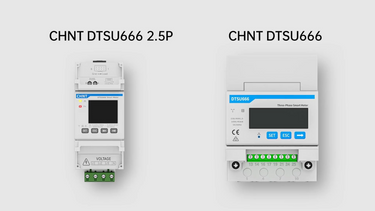
The smart meter is installed at the appropriate household metering point and measures three-phase power flow using current transformers and voltage references.
The energy data is transmitted to the RESS power conversion system through an RS485 communication connection. This allows the storage system to react to the actual direction and level of household power flow.
For example:
- When the meter detects surplus PV export, the battery can charge.
- When it detects grid import, the battery can discharge according to the active operating mode.
- When an export limit applies, the system can adjust its operation based on measured power at the grid connection point.
- When UltiCloud receives system data, installers and system owners can monitor energy production, consumption, battery status and operating performance.
The meter therefore acts as the measurement link between the physical household energy flow and the system’s control logic.
It is important to describe this accurately: Ultimati Energie’s smart energy meter supports the operation of the residential battery system. It does not, by itself, replace the regulated German Smart Meter Gateway required for specific market and billing applications.
Smart Meter, UltiCloud and Dynamic Electricity Tariffs
Dynamic electricity tariffs create an opportunity to buy electricity during lower-price periods and reduce grid consumption when prices are higher.
However, tariff variation alone does not guarantee savings.
A home energy management system must coordinate the tariff with the household’s actual energy situation.
Imagine a German home on a dynamic tariff.
Overnight prices are low, but the next day is expected to be sunny. The battery is currently 40% charged.
A simple timer may charge the battery fully overnight because the price is attractive. When the PV system begins generating at midday, the battery has no remaining capacity. Much of the solar surplus must therefore be exported.
A more intelligent strategy may only charge the battery partially overnight, leaving enough space for the next day’s solar production.
Now consider a different day.
The weather forecast predicts limited PV generation, while evening electricity prices are expected to rise. In this situation, charging more energy during the lower-price period may be beneficial.
The optimal decision changes according to the context.
This is why the strongest residential energy architecture is not based on one product alone. It connects: Smart metering + PV generation + battery storage + electricity tariffs + energy management software.
Germany’s Smart Meter Challenge Is Also a Software Challenge
The proceedings announced by the Bundesnetzagentur show that Germany still has work to do before intelligent metering is available at the required scale.
But installation volume is only one part of the challenge.
Once meters are deployed, households still need technology that can turn energy data into useful action.
A smart meter can show when electricity is being imported or exported. A home energy management system must decide whether the battery should charge, discharge or wait.
For German households combining PV, battery storage, heat pumps or electric vehicles, the long-term value will come from connecting these technologies rather than operating each one independently.
The next stage of Germany’s residential energy transition will therefore depend on two forms of intelligence:
- secure, regulated metering infrastructure connecting households with the wider electricity market
- intelligent energy management inside the home, coordinating generation, storage and consumption
Conclusion
Germany’s delayed smart meter rollout illustrates the complexity of building a more digital and flexible electricity system.
Dynamic tariffs have already entered the market, but tariffs alone cannot optimize household energy use. Homeowners also need accurate metering, controllable devices and software that can coordinate them.
For residential battery systems, a smart energy meter provides the real-time visibility required to understand household imports, exports and solar surplus. UltiCloud and the RESS control system can use that information to support more intelligent charging, discharging and energy management.
The central lesson is clear: A meter makes energy visible. Intelligent energy management turns that visibility into value.
As Germany continues expanding its regulated smart metering infrastructure, households with properly integrated PV, battery storage and home energy management systems will be better positioned to benefit from dynamic tariffs and the country’s increasingly flexible electricity market.
FAQ
Why is Germany’s smart meter rollout in the news?
On 27 March 2026, the Bundesnetzagentur announced supervisory proceedings against 77 companies that had failed to meet the statutory 20% rollout quota for relevant smart metering systems by the end of 2025.
What is an intelligent metering system in Germany?
A German intelligent metering system, or iMSys, generally consists of a modern digital electricity meter and a certified Smart Meter Gateway. It enables secure communication for regulated energy-market and grid applications.
Is a home battery smart meter the same as a German iMSys?
Not necessarily. A home battery smart energy meter primarily measures household import and export for system control. A German iMSys forms part of the regulated metering and communication infrastructure. The two can perform complementary functions but should not be presented as identical.
Does a home battery need a smart energy meter?
For accurate self-consumption control, export limitation and grid-import detection, a compatible system-level energy meter is generally an important part of the residential battery architecture.
Can a smart meter reduce electricity bills automatically?
No. A meter supplies energy data, but optimization also requires control software, compatible devices and an appropriate electricity tariff. A home energy management system uses the available data to determine when the battery should charge or discharge.
Can a home battery work before a German iMSys is installed?
In many configurations, yes. A residential battery can use its own compatible system-level energy meter for PV self-consumption and battery control. However, participation in specific dynamic-tariff or regulated market applications may require additional metering infrastructure.
How does Ultimati Energie’s smart meter support RESS?
The smart meter measures real-time three-phase power flow at the household connection point and communicates with the RESS power conversion system. This allows the battery to respond to measured PV surplus, household demand and grid import or export.
How does UltiCloud use smart meter data?
UltiCloud combines system monitoring with battery, PV and household energy information. Depending on the available configuration, this data can support remote monitoring, energy-flow analysis and more intelligent battery scheduling.

Ultimati Energie Deutschland GmbH is a Germany-based B2B energy storage system provider specializing in scalable residential and C&I battery storage solutions for European partners.
Become a Partner
Sales: +49 1624886367
Customer Support:
+49 15226994869
Address: Ober der Röth 4, 65824 Schwalbach am Taunus, Germany
Copyright © 2026 Ultimati Energie Deutschland GmbH All rights reserved.