

Poland's Volatile Power Market Shows Why Home Battery Software Matters
For years, homeowners choosing a battery storage system focused on three specifications: capacity, inverter power and price.
Today, that comparison is no longer enough.
As electricity markets become more dynamic across Europe, the value of a home battery depends not only on how much energy it can store, but also on when it charges, discharges and preserves energy for future demand.
Poland provides one of the clearest examples of this shift. Rapid solar deployment, evolving electricity pricing and ongoing power market reforms are making battery timing more valuable than ever. A battery operating on a fixed schedule may miss the best opportunities for self-consumption, tariff savings or backup readiness.
This is why battery optimization software is becoming just as important as battery hardware. For homeowners and installers, the question is no longer simply "Which battery should I buy?" It's increasingly "How intelligently can my battery make energy decisions?"
Why Poland's Changing Energy Market Makes Battery Software More Valuable
Poland's residential energy market is changing quickly, making intelligent battery control more valuable than ever.
Several trends are driving this shift. Solar installations continue to grow, electricity prices are becoming more dynamic, and homeowners are paying greater attention to energy independence and long-term electricity costs. At the same time, Poland's 2024 balancing market reform has highlighted the increasing value of flexible energy resources across the power system.
Industry reports from GreenEdge, Modo Energy and ESS News all point to the same direction: as the electricity market becomes more volatile, flexibility becomes more valuable. While these studies focus mainly on large-scale battery energy storage systems, they also reveal an important lesson for residential PV systems.
The value of a home battery is no longer determined only by its capacity. It increasingly depends on how intelligently that stored energy is managed throughout the day.
Why Fixed Battery Scheduling No Longer Works
For many years, residential battery systems operated with simple charging rules. A battery might charge whenever surplus solar power was available, discharge every evening, or fill up overnight when electricity prices were lower.
These strategies worked reasonably well when electricity tariffs were relatively stable and household energy consumption followed predictable patterns. Today, however, that approach is becoming less effective.
Solar generation changes with the weather, electricity prices fluctuate throughout the day, and household energy demand is increasingly influenced by electric vehicles, heat pumps and other high-power appliances. A battery operating on a fixed schedule can easily make the wrong decision because it cannot anticipate what will happen next.
| Fixed Strategy | Potential Limitation |
| Charge whenever electricity is cheap | May leave no room for midday solar generation |
| Discharge whenever household demand increases | Energy may be exhausted before the most expensive period |
| Maintain one fixed backup reserve | Cannot adapt to changing weather, tariffs or household demand |
| Focus only on PV self-consumption | May overlook tariff-saving opportunities |
| Follow the same schedule every day | Cannot respond to changing market conditions |
The challenge is no longer storing energy—it is knowing when that energy will deliver the greatest value. As electricity markets become more dynamic, effective battery operation requires continuous analysis rather than fixed rules.
What Battery Optimization Software Actually Does
Battery optimization software is the intelligence layer behind a modern home energy storage system. Instead of following the same charging schedule every day, it continuously evaluates changing conditions and determines how the battery should operate over the coming hours.
Rather than relying on a single rule, the software combines multiple sources of information to make each charging and discharging decision.
| Information Available | How the Software Responds |
| Electricity prices | Determines whether charging from the grid is economically beneficial |
| Solar generation forecast | Reserves battery capacity for expected PV production |
| Household demand forecast | Preserves energy for anticipated peak consumption |
| Battery state of charge (SoC) | Maintains sufficient backup capacity |
| User preferences | Prioritizes self-consumption, backup power or cost savings |
| Battery condition | Reduces unnecessary cycling to support long-term battery health |
Instead of asking "Can the battery charge now?", battery optimization software asks a much more valuable question:"Is charging now the best decision for the next few hours?"
That difference is what allows modern residential energy storage systems to adapt to changing electricity prices, weather conditions and household energy demand instead of relying on fixed schedules.
How UltiCloud Puts Battery Optimization into Practice
UltiCloud is Ultimati Energie's battery energy management software, designed to turn intelligent battery scheduling into practical everyday operation.
Rather than relying on fixed timers or manual settings, UltiCloud continuously evaluates changing conditions and adjusts battery behaviour automatically. The goal is simple: maximize the value of every kilowatt-hour stored.
Depending on household conditions, UltiCloud can automatically determine:
- when surplus solar energy should be stored for later use;
- when battery capacity should be reserved for upcoming PV generation;
- when stored energy should be discharged to reduce grid consumption;
- when backup capacity should be protected for potential outages;
- when dynamic electricity prices create opportunities for cost savings; and
- when forecasts indicate that the day's charging strategy should be adjusted.
This continuous optimization allows homeowners to benefit from changing market conditions without having to manually manage battery schedules. Instead of simply reacting to energy use, the system plans ahead using forecasts, battery status and user preferences.
In other words, UltiCloud transforms battery capacity into intelligent, automated energy management—helping homeowners get more value from the same hardware.
How UltiCloud Makes Better Battery Decisions
Instead of relying on a fixed charging schedule, UltiCloud evaluates different scenarios throughout the day and adjusts battery operation accordingly.
Scenario 1: A Sunny Day Is Expected
Electricity prices are low overnight, making grid charging appear attractive. However, the weather forecast predicts strong solar generation the following day.
Rather than charging the battery to 100%, UltiCloud can reserve capacity for the expected PV production. This allows more solar energy to be stored instead of exported to the grid, improving self-consumption and reducing wasted renewable energy.
Scenario 2: Evening Electricity Demand Will Be Higher
Household demand often increases after sunset as cooking, heating, air conditioning or EV charging begin.
Instead of discharging too early in the afternoon, UltiCloud preserves enough battery capacity to cover the expected evening peak, helping reduce grid imports during the most valuable hours.
Scenario 3: Backup Power Remains the Priority
Some homeowners prefer to keep part of the battery available for emergency backup. UltiCloud respects this user-defined reserve instead of sacrificing backup capacity simply to maximize short-term electricity savings. This ensures the battery is ready when grid outages occur.
Scenario 4: Conditions Change During the Day
Weather forecasts, household consumption and electricity prices can all change unexpectedly.
Rather than following a fixed daily timer, UltiCloud continuously updates its operating strategy using the latest available information, allowing the battery to adapt whenever conditions change.
From Fixed Rules to Dynamic Optimization
| Situation | Conventional Battery Control | UltiCloud Optimization |
| Strong PV forecast | Fully charges overnight | Reserves capacity for solar generation |
| High evening demand | Discharges too early | Preserves energy for the evening peak |
| Backup required | Uses a fixed reserve | Protects user-defined backup capacity |
| Changing weather or tariffs | Continues following the original schedule | Continuously adjusts charging strategy |
How RE-LA1 Premium Edition and UltiCloud Work Together
For Polish homeowners, choosing the right battery system is no longer just about storage capacity. The real value comes from combining reliable hardware with intelligent energy management.
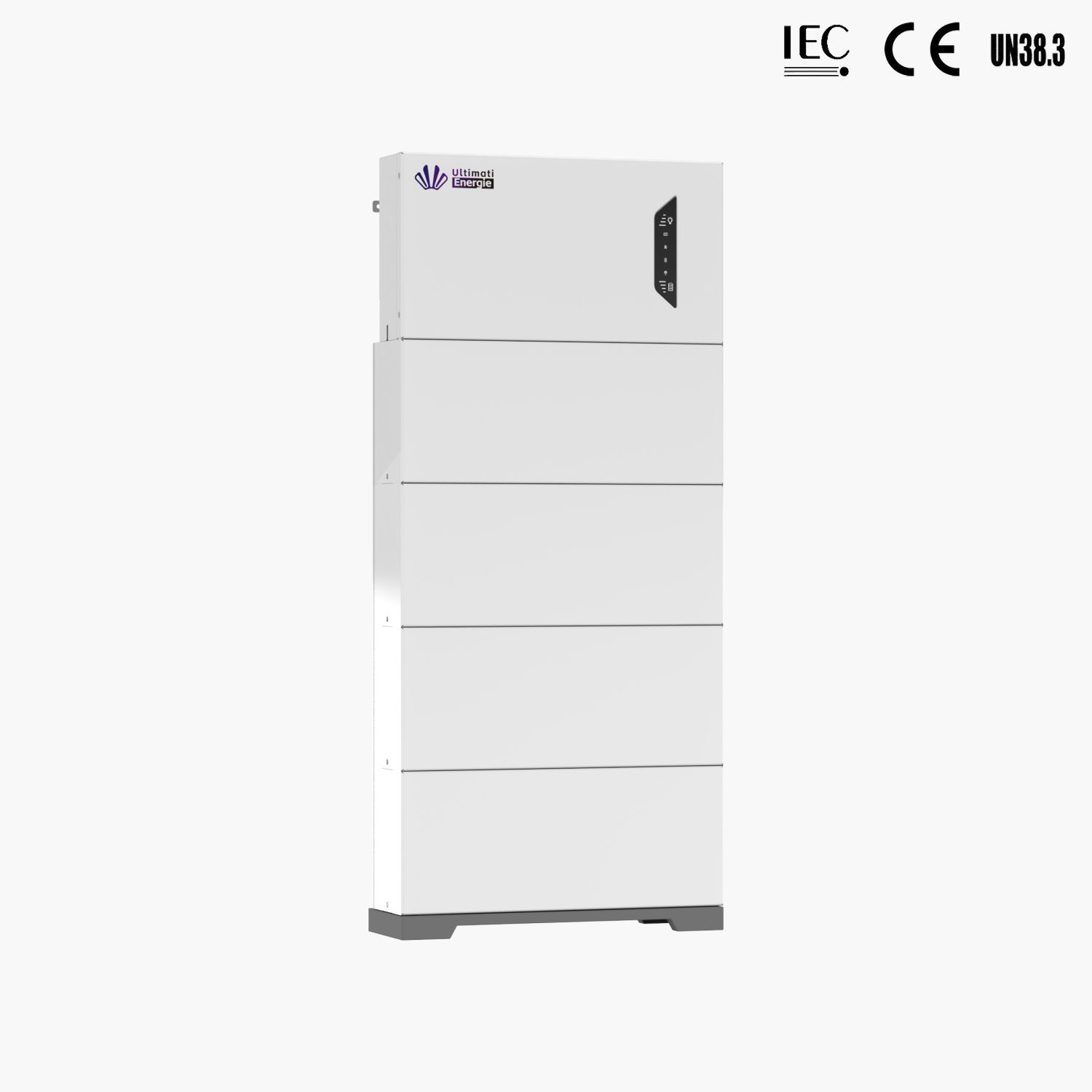
This is where the RE-LA1 Premium Edition and UltiCloud work together.
The RE-LA1 Premium Edition provides a low-voltage all-in-one residential energy storage solution, available in capacities from 5 kWh to 20 kWh with output power ranging from 3.68 kW to 6 kW. While the battery stores energy efficiently, UltiCloud continuously determines how that stored energy should be used throughout the day.
Consider a typical summer day for a Polish household:
- Solar panels generate surplus electricity around midday.
- Household electricity demand increases after sunset.
- Electricity prices vary throughout the day.
- The homeowner wants to keep some battery capacity available for backup power.
Instead of relying on one fixed charging schedule, UltiCloud evaluates all of these factors together.
If strong solar production is expected, it can reserve battery capacity for midday generation. If solar output is likely to be limited, it may recommend partial charging during lower-priced grid periods. When evening demand is expected to increase, it preserves enough stored energy to reduce grid imports during the most expensive hours.
The result is not simply a battery that stores electricity—it is a home energy storage system that continuously adapts to changing conditions, helping homeowners improve self-consumption, reduce electricity costs and maintain backup readiness without manual intervention.
What Polish Homeowners Should Ask Before Choosing a Battery System
Battery capacity, inverter power and price remain important when comparing residential energy storage systems. However, as electricity markets become more dynamic, software capabilities are becoming just as important as hardware specifications.
Before choosing a home battery system, homeowners should look beyond the battery itself and consider how intelligently the system manages energy throughout the day.
Some useful questions include:
- Can the system use weather and PV generation forecasts?
- Can it optimize charging and discharging based on electricity prices?
- Can it protect a user-defined backup reserve?
- Can it reduce unnecessary battery cycling to support long-term battery health?
- Can installers remotely monitor system performance and provide maintenance support?
- Can the software coordinate solar generation, household consumption and battery storage automatically?
The answers to these questions often determine how much value a battery system can deliver over its lifetime. Two systems with similar hardware specifications may perform very differently if one relies on fixed schedules while the other continuously adapts to changing conditions.
For many homeowners, choosing intelligent battery management software today can have a greater long-term impact than simply choosing a larger battery.
Conclusion
Poland's changing electricity market reflects a broader trend that is emerging across Europe. As renewable generation increases, electricity prices become more dynamic and household energy demand grows more complex, the way a battery is managed becomes just as important as the battery itself.
For homeowners, this means that choosing a residential energy storage system is no longer only about comparing capacity, power output or price. Intelligent battery optimization software now plays a critical role in improving self-consumption, reducing electricity costs and maintaining reliable backup power.
This is where solutions such as the RE-LA1 Premium Edition and UltiCloud work together. While the battery provides reliable energy storage, intelligent software ensures that stored energy is used at the right time and for the right purpose.
Ultimately, the future of residential energy storage is not defined by bigger batteries alone. It is defined by smarter energy decisions—and by software that helps homeowners unlock the full value of every kilowatt-hour they store.
FAQ
What is battery optimization software?
Battery optimization software is the control layer that decides when a battery should charge, discharge, hold reserve or leave capacity for future PV generation or load events.
Why does volatility make battery software more important?
When prices, loads and grid conditions change quickly, fixed battery schedules can miss valuable operating windows. Software can use forecasts and real-time signals to make better decisions.
How does UltiCloud help Polish PV homes?
UltiCloud helps coordinate PV generation, household load, battery state of charge, tariff signals and user reserve preferences so the battery is not operated by a fixed timer only.
Should homeowners expect direct balancing-market revenue?
Not automatically. A residential battery should not be treated like a merchant BESS asset. Homeowners should focus first on PV self-consumption, tariff-aware scheduling and backup reserve.
Which Ultimati Energie product fits this topic?
For Polish residential storage, RE-LA1 Premium Edition is the suitable low-voltage home storage product, used together with UltiCloud for smarter monitoring and scheduling.

Ultimati Energie Deutschland GmbH is a Germany-based B2B energy storage system provider specializing in scalable residential and C&I battery storage solutions for European partners.
Become a Partner
Sales: +49 1624886367
Customer Support:
+49 15226994869
Address: Ober der Röth 4, 65824 Schwalbach am Taunus, Germany
Copyright © 2026 Ultimati Energie Deutschland GmbH All rights reserved.