

Germany's EEG 2027 Draft: Why Battery Storage Is Becoming Essential for New Solar Projects
Germany has long been Europe's benchmark market for residential and commercial solar energy.
Now, the proposed EEG 2027 reform could become one of the biggest policy changes since the country's renewable energy transition began.
Although the draft legislation is still subject to parliamentary approval, its direction is clear: Future solar projects will rely less on guaranteed feed-in income and more on intelligent energy management.
For installers, EPC companies, distributors, and project developers, this means battery storage is no longer simply an upgrade—it is becoming a critical component of project economics.
Key Changes Proposed in the EEG 2027 Draft
Although the legislation is still under review and the final implementation details may change, the overall direction is becoming increasingly clear: future PV systems will be expected to maximize local energy use rather than simply export electricity to the grid. For homeowners, businesses, installers, and energy storage providers, understanding these proposed changes is essential for planning future investments.
| Proposed Change | Expected Impact |
| Reduced reliance on fixed feed-in compensation for new residential PV systems | Greater dependence on self-consumption |
| Possible 50% export power limitation for certain new PV installations | More excess solar generation needs to be stored locally |
| Continued expansion of utility-scale solar deployment | Increased demand for flexible grid-support technologies |
Rather than viewing these proposals as separate policy adjustments, they should be understood as parts of a broader market transition. Together, they encourage a new operating model for distributed solar energy: Generate electricity → Consume locally → Store excess energy → Export only when economically beneficial
This represents a fundamental shift from maximizing electricity production to maximizing electricity value.
Why Self-Consumption Is Becoming the New Driver of Solar Returns
One of the biggest shifts proposed in Germany's EEG 2027 draft is not simply a change to feed-in compensation—it is a change in how residential solar projects create value.
For many years, homeowners could install rooftop PV systems and rely on relatively predictable feed-in tariffs to generate steady returns from exporting surplus electricity. In this model, maximizing solar generation was often the primary objective, while battery storage remained an optional upgrade.
Under the proposed EEG 2027 framework, that economic model is expected to change. As fixed feed-in compensation is gradually reduced for certain new installations and electricity exports become increasingly exposed to market pricing, the value of each kilowatt-hour will depend less on how much electricity is generated and more on how that electricity is used.
Instead of maximizing grid exports, homeowners are increasingly encouraged to maximize self-consumption—using more of their own solar energy within the home rather than selling it back to the grid.
For residential PV systems, higher self-consumption can deliver several long-term benefits:
- Lower household electricity bills by reducing grid electricity purchases
- Reduced exposure to volatile wholesale electricity prices
- Less reliance on feed-in revenue as a primary source of project returns
- Better utilization of rooftop solar generation throughout the day
- Improved energy independence and resilience
However, increasing self-consumption is not simply a matter of generating more solar power.
The challenge is that electricity generation and household demand rarely occur at the same time.
Most residential PV systems produce their highest output around midday, when many occupants are away from home and household electricity demand is relatively low. By contrast, electricity consumption typically peaks during the evening, when solar generation has already declined.
Without a battery, much of this midday surplus is exported to the grid—often during periods when electricity prices are lowest or when export restrictions may apply.
From Battery Storage to Intelligent Energy Management
Battery storage provides the flexibility to shift energy across time, but maximizing its value increasingly depends on how intelligently that flexibility is managed.
As Germany accelerates the rollout of dynamic electricity tariffs, residential electricity prices are becoming more closely linked to wholesale market conditions. In many tariff models, prices can change every 15 minutes, creating new opportunities for homeowners to reduce electricity costs—but also making energy management significantly more complex.
Under these conditions, simply charging a battery whenever excess solar power is available or discharging it whenever electricity demand increases is no longer the most economical strategy. Instead, every charging and discharging decision should take multiple variables into account, including solar generation forecasts, household electricity consumption, real-time electricity prices, battery state of charge, and even weather forecasts.
The Growing Role of Home Energy Management Systems (HEMS)
Rather than controlling individual devices independently, a HEMS continuously coordinates the home's energy assets—including rooftop PV, battery storage, smart meters, EV chargers, and heat pumps—to determine the most cost-effective operating strategy throughout the day.
Instead of relying on fixed schedules or manual adjustments, the system automatically optimizes energy flows based on real-time data and future forecasts, helping homeowners to:
- Maximize solar self-consumption
- Take advantage of dynamic electricity prices
- Reduce unnecessary grid imports and low-value exports
- Coordinate EV charging and heat pump operation
- Maintain battery capacity for backup power when required
As electricity markets become more dynamic, software is becoming just as important as hardware. Two homes equipped with identical battery systems can achieve very different economic outcomes depending on how effectively their energy resources are managed. For this reason, the next generation of residential energy storage is no longer defined solely by battery capacity. It is increasingly defined by the ability to integrate intelligent software, connected devices, and real-time energy optimization into a single, coordinated energy ecosystem.
Commercial Battery Storage: Flexibility Becomes a Competitive Advantage
While much of the discussion around the EEG 2027 draft has focused on residential solar, the underlying policy direction is equally significant for commercial and industrial (C&I) energy users. Across Germany, businesses are facing a combination of rising electricity costs, growing electrification, and increasing pressure to use energy more efficiently. At the same time, many commercial facilities are installing larger rooftop PV systems, expanding EV charging infrastructure, and electrifying heating and cooling systems—all of which place greater demands on the local grid and on-site energy management.
Against this backdrop, battery storage is evolving beyond a simple backup power solution. It is becoming a flexible energy asset that helps businesses optimize electricity costs while making better use of on-site renewable generation.
Some of the most common challenges and corresponding storage applications include:
| Business Challenge | Battery Storage Solution |
| Rising peak demand charges | Peak shaving and load management |
| Low utilization of rooftop PV | Higher self-consumption of solar energy |
| Dynamic electricity tariffs | Intelligent charging and discharging strategies |
| Limited grid connection capacity | Flexible energy buffering and load shifting |
| Power interruptions or unstable supply | Backup power and improved energy resilience |
For many businesses, however, battery storage delivers the greatest value when it is integrated into a broader energy management strategy rather than operating as an isolated asset.
By coordinating photovoltaic generation, battery storage, EV charging, production loads, and building energy systems, modern Energy Management Systems (EMS) can continuously optimize energy flows based on electricity prices, demand profiles, and operational priorities. This enables businesses not only to reduce energy costs, but also to improve operational flexibility and make better use of existing grid capacity.
As Germany's energy market continues to become more dynamic, commercial battery storage is increasingly shifting from a hardware investment to a long-term energy optimization platform—one that combines intelligent software, flexible storage, and real-time control to support more resilient and cost-effective operations.
How Ultimati Energie Helps Partners Prepare for the Next Energy Market
Germany's proposed EEG 2027 reforms highlight a broader industry shift: future energy systems will need to respond to electricity prices, grid conditions, and household demand in real time—not simply store energy.
At Ultimati Energie, we develop energy storage solutions with this transition in mind, combining reliable hardware with intelligent software to help European partners build systems that remain valuable as market rules continue to evolve.
Residential Energy Storage Designed for Smarter Self-Consumption
Our residential All-in-One systems are built around one objective: maximizing the value of every kilowatt-hour generated by rooftop PV.
Instead of functioning as a standalone battery, the system works together with UltiCloud HEMS, enabling homeowners to:
- Increase PV self-consumption under changing market conditions
- Optimize charging and discharging based on dynamic electricity tariffs
- Coordinate battery storage with smart meters, EV chargers, and heat pumps
- Support both new PV installations and retrofit projects through flexible system integration
- Monitor and manage the entire system remotely through a single cloud platform
As residential electricity becomes more dynamic, intelligent scheduling is becoming just as important as battery capacity.
Commercial Energy Storage Built Around Energy Optimization
For commercial and industrial customers, battery storage is increasingly expected to do more than reduce peak demand.
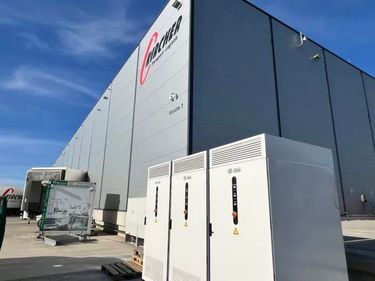
Our liquid-cooled commercial ESS combines battery storage with an integrated EMS to help businesses optimize multiple energy flows simultaneously, including:
- Peak shaving and demand charge reduction
- Higher rooftop PV self-consumption
- Dynamic tariff optimization
- EV charging load management
- Remote monitoring and cloud-based O&M
- Scalable deployment across commercial and industrial sites
Rather than treating battery storage as an isolated asset, the system becomes part of a broader energy management strategy that supports lower operating costs and greater operational flexibility.
We believe the next generation of energy storage will not be defined by battery capacity alone.
It will be defined by how effectively PV, battery storage, smart meters, EV chargers, heat pumps, and intelligent software work together as one coordinated energy ecosystem. That is the principle behind every Ultimati Energie solution.
FAQs
Will Germany completely remove feed-in tariffs?
The current EEG 2027 proposal suggests significant changes for new residential PV systems below certain capacity thresholds. The final legislation is still subject to parliamentary approval.
Why does battery storage become more important?
Battery storage helps increase self-consumption, reduce export limitations, and optimize electricity use under dynamic pricing.
What is a Home Energy Management System (HEMS)?
A HEMS coordinates batteries, PV systems, smart meters, EV chargers, and heat pumps to optimize household energy consumption automatically.
Can commercial battery storage benefit from EEG 2027?
Yes. Businesses can improve PV utilization, reduce peak demand charges, and optimize electricity costs through intelligent energy management.
Ultimati Energie Deutschland GmbH is a Germany-based B2B energy storage system provider specializing in scalable residential and C&I battery storage solutions for European partners.
Become a Partner
Sales: +49 1624886367
Customer Support:
+49 15226994869
Address: Ober der Röth 4, 65824 Schwalbach am Taunus, Germany
Copyright © 2026 Ultimati Energie Deutschland GmbH All rights reserved.