

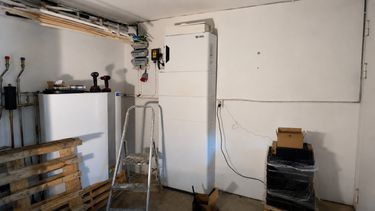
Why the Cheapest Electricity Hour Is Not Always the Best Time to Charge a Home Battery
The best time to charge a home battery depends on much more than electricity prices. For homes with solar panels and dynamic electricity tariffs, charging during the cheapest hour is not always the most cost-effective strategy. The optimal charging schedule also depends on solar generation forecasts, household electricity demand, battery state of charge (SoC), and expected peak electricity prices.
If tomorrow's solar forecast is strong, filling the battery overnight can leave no room for midday PV. If the evening price is expected to spike, the battery may need to preserve energy instead of discharging too early. For PV homes on dynamic tariffs, the better question is: What battery state of charge should the home have before the next high-value period?
Quick answer
For most solar homes, the best time to charge a home battery is not always the cheapest electricity hour. Instead, the battery should be charged according to solar production forecasts, household demand, battery state of charge, electricity prices, and backup requirements. Intelligent energy management systems can optimize these factors automatically.
The Problem With "Charge at the Cheapest Hour"
Simple battery logic looks attractive:
Find the cheapest grid hour -> charge the battery
Find the expensive evening hour -> discharge the battery
In real homes, this can fail:
Several common scenarios show why charging a battery at the lowest electricity price does not always maximize savings.
| Situation | Why the cheapest-hour rule can be wrong |
| Strong PV forecast tomorrow | Overnight charging may block midday solar storage |
| Low evening load tomorrow | A full battery may not be needed |
| High evening prices expected | The battery should hold reserve earlier in the day |
| Backup reserve required | Daily arbitrage cannot use the full battery |
| EV charging planned | The battery schedule must avoid competing with EV demand |
The cheapest hour is only one signal. It is not the whole decision.
Dynamic Tariffs Need Forecast-Based Battery Control
During the late-June 2026 heatwave, The Guardian reported that electricity prices jumped across Europe as demand rose. Euronews also reported that the heatwave added more than EUR700 million to electricity bills in Germany and France in one week.
For a PV household, the lesson is not "heatwaves are expensive." The useful lesson is that electricity value changes by time of day.
Battery control should compare:
- expected PV production;
- expected household load;
- current battery state of charge;
- electricity price intervals;
- equired backup reserve;
- user plans such as EV charging or high evening consumption.
This is the difference between a fixed timer and an AI scheduling layer.
Example: When Overnight Charging Wastes Solar
Assume a PV home uses a 15.2 kWh RE-HA1 configuration.
| Input | Example value |
| Battery SoC at midnight | 45% |
| Available battery energy | 6.8 kWh |
| Cheapest grid window | 02:00-03:00 |
| Forecast midday PV surplus | 7 kWh |
| Forecast evening load | 6 kWh |
| Minimum reserve target | 20% |
A simple rule may charge the battery to 100% at 02:00 because the price is low.
That can be a poor schedule. If the battery is full by morning, the home may have no room for the forecast 7 kWh of midday PV surplus. The system saves a little on cheap grid energy but loses the chance to store its own solar energy.
A smarter schedule asks: How much grid charging is needed before PV arrives?
If the forecast PV surplus is enough to cover the evening load, the better decision may be to keep battery space available overnight and charge from solar during the day.
Example: When Cheap Grid Charging Makes Sense
Now change the forecast.
| Input | Example value |
| Battery SoC at midnight | 35% |
| Forecast midday PV surplus | 2 kWh |
| Forecast evening load | 7 kWh |
| Expected evening price | High |
| Minimum reserve target | 20% |
Here, the battery may not have enough energy for the evening. If a low-price grid window appears overnight, partial grid charging can make sense.
The key word is partial. The battery does not always need to be full. It needs enough energy to pass through the high-value period while preserving backup reserve and leaving room for any available PV.
Where RE-HA1 Premium Edition Fits
RE-HA1 Premium Edition provides the hardware layer for this scheduling problem.
Relevant product points:
- 8/10/12 kW inverter options: support different household power profiles
- 7.6-22.7 kWh battery capacity: scalable for different PV sizes and evening-load patterns
- Integrated PCS, BMS and EMS: coordinates power conversion, battery protection and system operation
- Backup-ready architecture: allows reserve planning when the installation is designed for backup use
The important point is not simply capacity. A larger battery with poor scheduling can still underperform. The value comes from matching hardware capability with better control.
What UltiCloud AI Actually Does
UltiCloud should not be described as a dashboard only. Its value is in turning multiple signals into a battery plan.
| Signal | Schedling situation |
| PV forecast | How much battery space should be kept for solar? |
| Load forecast | How much energy should be saved for evening use? |
| Battery SoC | Is the current reserve enough? |
| Dynamic tariff | Is grid charging worth it now? |
| User settings | Should the system prioritize savings, backup or comfort? |
For example, UltiCloud AI can avoid charging to 100% during the cheapest hour if tomorrow's PV forecast is strong. It can also charge partially from the grid if the next day is cloudy and evening prices are expected to be high.
That is the real AI value: not chasing the lowest price, but calculating the best battery state for the next operating window.
A Practical 24-Hour Scheduling Logic
For a PV home on dynamic tariffs, the daily control logic should be:
1. Check tomorrow's PV forecast.
2. Estimate evening household load.
3. Keep the required backup reserve.
4. Decide whether grid charging is needed before PV arrives.
5. Avoid filling the battery if strong PV surplus is expected.
6. Preserve enough SoC before expensive evening hours.
7. Recalculate when weather, load or price signals change.
This is much closer to how real households use energy than a fixed timer.
What Installers Should Explain
Installers should avoid saying "the app charges at the cheapest hour." That is too simple and often wrong.
A better explanation is:
- the system compares price with PV forecast;
- it checks whether the battery needs energy now or needs empty capacity later;
- it preserves reserve for high-value evening periods;
- it respects backup settings;
- it adapts when forecasts change.
This makes UltiCloud easier to understand for homeowners and more credible for B2B partners.
Conclusion
The cheapest electricity hour is only useful if the battery actually needs grid energy at that time. For solar homes, the best schedule may be to leave room for midday PV, hold energy for evening demand or charge only partially before a high-price period.
RE-HA1 Premium Edition provides the residential storage platform: 8/10/12 kW inverter options and 7.6-22.7 kWh battery capacity. UltiCloud adds the AI scheduling layer: PV forecast, load forecast, state of charge, tariff signal and user prioritise.
By combining accurate forecasts with intelligent battery scheduling, homeowners can improve solar self-consumption, reduce dependence on expensive grid electricity, and make better use of dynamic electricity tariffs. Instead of relying on fixed charging times, AI-based energy management continuously adjusts battery operation to changing weather, electricity prices, and household demand.
FAQ
When is the best time to charge a home battery?
The best time depends on electricity prices, solar forecasts, household demand, and battery state of charge rather than electricity price alone.
Should I charge my home battery overnight?
Overnight charging can be beneficial when electricity prices are low and limited solar generation is expected the following day. However, if strong solar production is forecast, leaving battery capacity available for daytime solar charging may provide greater savings.
Can AI improve battery charging?
AI-based energy management systems continuously analyze electricity prices, PV generation forecasts, battery SoC, and household load to determine the most efficient charging schedule.

Ultimati Energie Deutschland GmbH is a Germany-based B2B energy storage system provider specializing in scalable residential and C&I battery storage solutions for European partners.
Become a Partner
Sales: +49 1624886367
Customer Support:
+49 15226994869
Address: Ober der Röth 4, 65824 Schwalbach am Taunus, Germany
Copyright © 2026 Ultimati Energie Deutschland GmbH All rights reserved.