

Why Bigger Electricity Price Spreads Don't Always Mean Bigger Battery Savings
As Germany's electricity market becomes increasingly volatile, the real opportunity for residential battery owners is no longer defined by negative electricity prices alone. It's defined by how intelligently a battery responds to widening price spreads.
Germany's Electricity Market Is Changing—And It's Not Just About Negative Prices
Negative electricity prices have become one of the most discussed topics in Germany's energy market.
Whenever wholesale electricity prices fall close to—or even below—zero, homeowners naturally ask the same question: "Should I charge my home battery now?"
It's an understandable reaction. Cheap electricity seems like an opportunity that shouldn't be missed.
But focusing on negative prices alone tells only part of the story.
As we explained in our previous guide on the best time to charge a home battery (https://en.u-energie.de/blogs/best-time-to-charge-home-battery), the charging decision depends on much more than the current electricity price. Solar generation forecasts, household consumption, battery state of charge and reserve settings all influence whether charging actually creates value. Recently, pv magazine Germany(https://www.pv-magazine.de/2026/07/24/nicht-der-minuspreis-zaehlt-sondern-die-spanne/) highlighted another important shift.
Rather than asking whether electricity prices become negative, the industry is increasingly paying attention to electricity price spreads—the difference between the lowest and highest electricity prices within a day. That shift changes how we should think about residential battery storage.
Bigger Price Spreads Mean Bigger Opportunities
Electricity price spreads are becoming larger across Germany.
The reason is straightforward. As more renewable energy enters the grid, electricity prices fluctuate more dramatically throughout the day. Midday solar production can push prices to extremely low levels, while evening demand often creates much higher prices only a few hours later.
For battery owners, this creates more opportunities to shift energy from low-price periods to high-price periods.
On paper, wider spreads increase the potential economic value of battery storage.
But market opportunity and household savings are not the same thing. A larger spread simply creates more opportunities. It does not guarantee that every opportunity should be taken.
The Cheapest Electricity Isn't Always the Most Valuable Electricity
This is where residential battery systems differ from energy traders.
An electricity trader looks only at the market.
A home battery manages an individual household.
Imagine electricity prices fall significantly overnight. At the same time, tomorrow's weather forecast predicts abundant solar production.
Should the battery charge from the grid?
Not necessarily.
Charging overnight may leave insufficient battery capacity to capture free solar energy later in the day, reducing self-consumption rather than improving it.
This is exactly why we explains that intelligent battery systems do not always charge during the cheapest electricity hours. Future solar production can sometimes be more valuable than today's low electricity prices.
In other words, batteries should not simply look for the lowest price. They should identify the charging opportunity that delivers the greatest overall value.
Why Software Is Becoming the Competitive Advantage
As electricity price spreads become larger, the value of making the right charging decision increases as well. A modern residential battery system no longer responds to electricity prices alone.
An intelligent energy management system evaluates multiple variables simultaneously, including:
- Day-ahead electricity prices
- PV generation forecasts
- Household demand forecasts
- Battery State of Charge (SoC)
- Backup reserve requirements
- Charging and discharging efficiency
Only after considering all of these factors can the system determine whether charging from the grid makes economic sense.
In other words: Hardware stores energy.
Software decides whether storing that energy is worthwhile.
Turning Market Signals into Better Household Decisions
As dynamic electricity tariffs continue to expand across Europe, residential battery systems need to do more than react to price signals.
They need to interpret them.
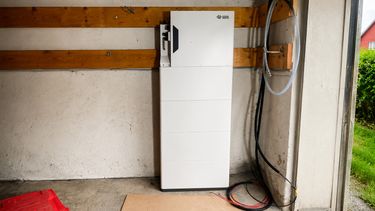
For residential installations, the RE-HA1 Premium Edition provides a high-voltage battery platform designed for flexible home energy storage.
Combined with UltiCloud, the system evaluates electricity prices alongside PV forecasts, household demand and battery conditions before determining whether today's price spread represents a genuine opportunity—or whether waiting will deliver greater long-term value.
Instead of asking,"Is electricity cheap right now?"
UltiCloud asks,"Is charging now the best decision for this home?"
That difference is becoming increasingly important as Germany's electricity market grows more dynamic.
Conclusion
Germany's growing electricity price spreads are reshaping the economics of residential battery storage.
Negative electricity prices may capture headlines, but they are only individual moments within a much broader market trend. What ultimately determines household savings is not simply how low electricity prices fall. It is whether the battery makes the right charging decision at the right time. As electricity markets become more volatile, intelligent scheduling is becoming just as important as battery capacity itself.

Ultimati Energie Deutschland GmbH is a Germany-based B2B energy storage system provider specializing in scalable residential and C&I battery storage solutions for European partners.
Become a Partner
Sales: +49 1624886367
Customer Support:
+49 15226994869
Address: Ober der Röth 4, 65824 Schwalbach am Taunus, Germany
Copyright © 2026 Ultimati Energie Deutschland GmbH All rights reserved.