

Peak Shaving With Battery Storage: When Does It Actually Reduce Business Energy Costs?
For many businesses, electricity costs are not driven only by total energy consumption. They can also be affected by short periods of high power demand, especially when equipment, cooling systems, EV chargers, or HVAC loads operate at the same time.
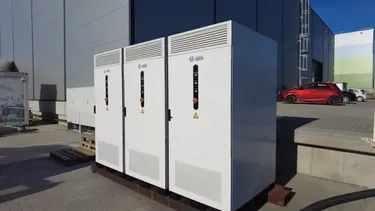
Peak shaving with battery storage is designed to reduce these costly demand peaks. A commercial battery storage system supplies additional power during high-load periods, helping lower peak demand from the grid and improve control over business electricity costs.
However, peak shaving does not automatically reduce costs for every business. It only makes financial sense when demand charge savings are high enough to justify the battery investment, system sizing, and operating strategy. This article explains how peak shaving works, why peak demand matters, and when battery storage can actually reduce commercial energy costs.
Why Peak Demand Can Increase Business Electricity Costs
Many commercial and industrial electricity bills include more than a simple energy charge based on kilowatt-hours. In addition to the energy rate, businesses may also pay demand charges based on the highest level of power drawn from the grid during a billing period.
The energy charge reflects total electricity consumption. The demand charge reflects maximum power demand, usually measured in kilowatts. This means a business may pay more not only because it uses more electricity overall, but because its highest short-term demand reaches a costly peak.
Even a brief load spike can affect the measured peak demand. For example, if several machines start at the same time or multiple EV chargers operate simultaneously, grid demand may increase for only a short period. If that moment sets the highest demand level for the billing cycle, it may influence the demand charge.
Common causes of peak demand in businesses include:
simultaneous startup of machinery or production lines
high cooling or refrigeration loads
multiple EV chargers operating at the same time
peak activity in logistics centers or commercial buildings
combined operation of production equipment, lighting, HVAC, and charging infrastructure
For companies with fluctuating electricity demand, peak demand can become a significant cost factor. The goal of peak shaving is to reduce these peaks before they increase maximum grid demand unnecessarily.
How Peak Shaving With Battery Storage Works
Peak shaving with battery storage uses a battery energy storage system as a short-term power buffer. When a business’s electricity demand approaches a predefined limit, the battery discharges and supplies part of the required power. This keeps grid demand below the target level and helps reduce the measured peak.
An energy management system is essential. It monitors real-time load, identifies when demand is about to exceed the set threshold, and controls battery charging and discharging. Without accurate control, the battery may not respond at the right moment to reduce peak demand.
For effective peak shaving, the system must be sized around three key factors:
Discharge power in kW: how much peak demand the battery can reduce
Usable capacity in kWh: how long the battery can sustain that output
Energy management strategy: when and how the battery charges or discharges
A well-designed peak shaving battery storage system must match the business’s actual load profile. Battery size alone is not enough; discharge power, usable capacity, and control strategy all need to fit the demand pattern.
When Does Peak Shaving With Battery Storage Make Sense for Businesses?
Peak shaving with battery storage is most useful for businesses that experience recurring demand peaks that have a measurable impact on electricity costs. The key factor is not simply the size of the business, but the shape of its load profile.
Peak shaving is especially attractive when a business has repeated and relatively short peak loads. This may happen when machines start at the same time, several EV chargers operate together, or refrigeration systems create high power demand during specific operating periods.
A commercial battery storage system for peak shaving can be particularly worthwhile when these conditions apply:
- The business has clear and recurring peak demand events.
- Peak loads usually last from a few minutes to about one hour.
- Demand charges account for a meaningful share of electricity costs.
- The load profile is measurable and partly predictable.
- Interval data or historical load data is available for analysis.
- The battery can also support solar self-consumption, EV charging, or broader energy management.
Typical use cases include manufacturing facilities, logistics centers, cold storage facilities, supermarkets, commercial buildings, hotels, workshops, and businesses with growing EV charging infrastructure. Companies with solar PV systems may also benefit when the battery not only reduces peak demand but also stores solar energy for later use.
Peak shaving is less suitable when electricity consumption is very stable and there are no meaningful demand peaks. It may also be less attractive when demand charges are low or when peak loads last for many hours. In these cases, the battery would need to be much larger, which can increase capital costs and reduce the return on investment.
Peak shaving is therefore not a universal solution for every company. It becomes most attractive when short, high, and recurring load peaks can be reliably reduced with a properly sized battery storage system.
How to Estimate the Business Case for a Peak Shaving Battery Storage System
The business case for peak shaving depends mainly on how much peak demand can be reduced and how expensive each kilowatt of demand is under the utility tariff. A simple starting point is:
Potential annual savings = reduced peak demand × demand charge
For example, if a business reduces its maximum grid demand by 80 kW and the demand charge is $90 per kW per year, the theoretical annual savings would be $7,200.
This simple calculation shows the basic principle, but it does not replace a detailed system design. In practice, companies also need to consider capital cost, usable storage capacity, discharge power, system efficiency, battery lifetime, charging windows, load profile, and additional use cases.
It is especially important to understand the difference between kW and kWh. The kW rating describes how much power the battery can provide to reduce a peak. The kWh capacity describes how long the battery can provide that power.
For example, if a business wants to reduce a peak by 100 kW and that peak lasts for about 30 minutes, the battery would theoretically need around 50 kWh of usable energy. In real system design, additional factors such as safety margins, round-trip efficiency, depth of discharge, and other loads must also be considered.
When assessing the economics of peak shaving, businesses should review the following factors:
| Factor | Why It Matters for Peak Shaving |
|---|---|
| Peak demand level | Determines the theoretical savings potential |
| Peak duration | Influences the required battery capacity |
| Target reduction in kW | Determines the required discharge power |
| Demand charge | Has a major impact on possible cost savings |
| Load profile | Shows whether peaks are regular and predictable |
| Energy management system | Enables precise battery control |
| Additional use cases | Improves economics through solar self-consumption, EV charging, or backup support |
The more functions a battery storage system can perform, the more attractive the investment may become. If the battery is used not only for peak shaving but also for solar self-consumption, EV charging support, or overall energy optimization, the total business value of the system can increase.
What Data Should Businesses Review Before Planning Battery Storage?
Before investing in a peak shaving battery storage system, businesses should not start by choosing a battery size. The first step should be to analyze actual electricity consumption data. This makes it possible to determine whether peak demand events occur regularly, how long they last, and what level of reduction is technically and economically realistic.
For an initial assessment, the following data is especially useful:
- load profile or interval data from the last 12 months
- highest measured demand in kW
- frequency and duration of peak demand events
- current demand charges and utility tariff structure
- existing or planned solar PV system
- existing or planned EV charging infrastructure
- target reduction of maximum grid demand
- operating hours and typical consumption patterns
This data helps avoid oversizing or undersizing the battery. A battery that is too small may not reliably reduce peak demand. A battery that is too large may increase capital costs and weaken the return on investment.
The first step should therefore be load profile analysis, not immediate battery selection. Only after reviewing real consumption data can a business determine the required discharge power, storage capacity, and energy management strategy.
Peak Shaving and Solar PV: A Practical Combination?
Peak shaving can become especially attractive when a business already has a solar PV system or plans to install one. Solar energy generated during the day can be used directly on-site or stored in a battery. The same battery can then support solar self-consumption while also providing additional power during peak demand events.
Whether this combination is economically worthwhile depends on solar generation, the business load profile, the frequency of demand peaks, and the right battery size. The key is to design solar PV, battery storage, and energy management together so the battery is neither too small for peak shaving nor unnecessarily large for actual business needs.
Conclusion: When Does Peak Shaving Actually Reduce Business Energy Costs?
Peak shaving with battery storage can reduce business electricity costs when demand charge savings are large enough to justify the battery investment. The value does not depend on a generic battery size, but on the company’s actual load profile, utility tariff, and realistic savings potential.
The next step should not be selecting a battery model, but analyzing real interval data. That analysis shows whether a battery can be sized correctly for peak shaving, what discharge power is required, and whether the potential demand charge savings justify the investment.
If your business regularly experiences high peak demand or is evaluating commercial battery storage for energy cost reduction, load profile analysis is the best starting point. It helps determine whether peak shaving is technically feasible, financially worthwhile, and aligned with your long-term energy strategy.
Want to know whether peak shaving is right for your business?
Ultimati Energie helps companies analyze load profiles, design suitable battery storage systems, and develop efficient energy management solutions. Contact us to discuss your project and evaluate the potential to reduce demand charges and business electricity costs.

Ultimati Energie Deutschland GmbH is a Germany-based B2B energy storage system provider specializing in scalable residential and C&I battery storage solutions for European partners.
Become a Partner
Sales: +49 1624886367
Customer Support:
+49 15226994869
Address: Ober der Röth 4, 65824 Schwalbach am Taunus, Germany
Copyright © 2026 Ultimati Energie Deutschland GmbH All rights reserved.