

Industrial Energy Storage Systems: How Long Can it Operate and How to Ensure Its Safe and Stable?
Today, companies face multiple challenges, including rising energy costs, volatile electricity markets, and the increasing importance of renewable energy. It is against this backdrop that industrial-grade energy storage systems play a crucial role. One of the most frequently asked and core questions is: How long can industrial energy storage systems operate? And how can companies ensure that these systems maintain optimal performance over many years?
This guide will comprehensively analyze the lifespan of modern industrial energy storage systems, the factors affecting it, maintenance requirements, and optimization methods, helping companies achieve stable and efficient energy benefits over the long term.
Why the Lifespan of Industrial-Grade Energy Storage Systems Is Crucial
Industrial energy storage systems are not short-term investments; they are a core component of a company’s long-term energy infrastructure. Whether it is peak shaving, storing solar energy, providing emergency power, or stabilizing production processes—the operational time of an energy storage system directly determines its economic value.
Modern industrial-grade storage systems typically operate for 10 to 15 years, but the actual lifespan depends on the model, operating environment, charge-discharge patterns, and maintenance conditions.
The Realistic Expected Lifespan of Industrial Energy Storage Systems
Typical Lifespan of Modern Battery Chemistries
Today, industrial storage primarily uses lithium iron phosphate (LFP) batteries, which are favored for their high safety, long cycle life, and slow degradation.
Average performance in practice:
- LFP batteries: 6,000–12,000 cycles
- Operational lifespan: 10–15 years
- Remaining capacity after 10 years: usually 70–80%
Especially in large containerized energy storage systems, good cooling and a complete battery management system (BMS) can significantly extend actual lifespan.
Recommended Solution: ULTIBLOCK-TL261 — Combining Lifespan and Efficiency
Notably, Ultimati Energie’s ULTIBLOCK-TL261 is a high-integration C&I storage system designed specifically for industrial storage, utilizing liquid-cooling technology.
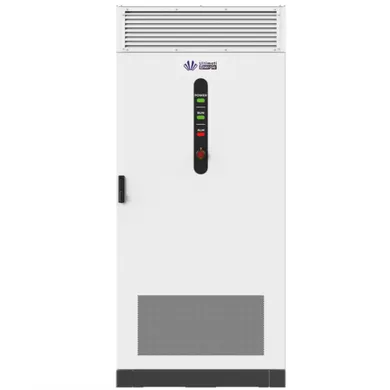
The ULTIBLOCK-TL261 integrates:
- Lithium iron phosphate battery modules
- Integrated BMS, PCS, and EMS
- Multi-level fire protection system
- Liquid cooling temperature control system
Occupying only 1.35 square meters, it has high energy density and efficiency of up to 90%, making it one of the most reliable and long-lasting industrial storage solutions. Its intelligent management system supports cloud monitoring, mobile apps, and local web management, helping companies ensure the long-term lifespan and performance of their energy systems.
Factors Affecting the Lifespan of Industrial Energy Storage Systems
Temperature and Thermal Management
Overheating is one of the biggest enemies of energy storage systems. Maintaining an operating temperature of 15–30°C is ideal.
Charge-Discharge Rate
A common question: Does fast charging harm lifespan? The answer is yes—if there is no smart management over the long term. A good EMS can prevent overload.
Depth of Discharge (DoD)
The deeper the discharge, the faster the degradation. For maximum lifespan, it is recommended to maintain 70–80% DoD.
Cycle Frequency
Depending on the application, such as peak shaving, maximizing self-consumption, or backup power, the number of cycles can vary significantly.
Regular Maintenance
Even though the maintenance cost of battery-powered systems is very low, regular inspections are still indispensable:
- Battery module condition
- BMS functionality
- Ventilation and cooling
- Power electronics performance (PCS, inverters, etc.)
How to Maintain Industrial Storage System Performance Long-Term
Intelligent Operational Strategies
A clear operational strategy can significantly extend system lifespan, such as optimizing charging curves, avoiding extreme state-of-charge conditions, and controlling charging power.
EMS and Real-Time Digital Monitoring
A powerful EMS is key to ensuring storage performance. For example, the ULTIBLOCK-TL261 provides cloud monitoring, mobile app, and local web management.
Consider System Scalability
Modular systems can prevent single-module overload, improving lifespan and efficiency.
Advantages of Modern Industrial Energy Storage Systems for Companies
Modern industrial storage systems offer significant economic benefits. Peak load management is particularly important: industrial storage systems can reduce peak load and stabilize internal grid structure, significantly lowering utility costs. For many companies, this is one of the fastest ways to optimize energy costs and improve the efficiency of energy infrastructure.
Optimizing Self-Consumption and Economic Use
Combined with photovoltaic generation, industrial storage systems can often increase self-consumption rates by up to 70%. Through targeted industrial storage, companies can store excess solar energy and use it flexibly, especially during high-demand periods. This increases independence from the grid and reduces costly peak electricity purchases.
Emergency Power Capability, Enhancing Operational Reliability
Many modern industrial storage systems come with emergency power or black start capability. This ensures that critical processes continue even during grid outages. Reliable operation minimizes production downtime and protects sensitive equipment, providing significant safety and cost benefits.
Sustainability and CO₂ Reduction
Industrial storage actively helps companies achieve Environmental, Social, and Governance (ESG) goals. Efficient use of renewable energy significantly reduces CO₂ emissions, enabling companies to implement sustainable business models more easily. Using modern industrial storage systems also enhances brand image and prepares companies for future energy needs.
How Long Do Industrial Storage Systems Last Compared to Other Energy Solutions?
Direct comparison:
- Lead-acid batteries: 3–7 years
- LFP batteries: 10–15 years
- Flow batteries: over 20 years (but large in volume, low energy density)
This makes modern LFP-based industrial storage systems the best balance of cost, safety, efficiency, and lifespan.
Longevity Measures Companies Can Take
1.Control the Environment
Dust, high temperatures, or humidity can affect electronic components.
2.Ensure Stable Load
Avoid unnecessary peak loads, ideally using an Energy Management System (EMS) for automated control.
3.Regular Software Updates
Improved algorithms can significantly enhance the efficiency of modern storage systems.
4.Utilize Documentation
Operational data helps detect anomalies early.
Typical Applications Where Durability Is Critical
- High-energy-consumption production workshops
- Refrigeration and logistics centers
- Data centers
- Charging stations and electric vehicle fleets
- Agriculture
- Commercial rooftop PV systems
The higher the usage frequency of the storage system, the more important its stability and long-term performance.
Frequently Asked Questions:
Can industrial storage systems last 20 years?
Yes, under optimal conditions, but capacity will noticeably decline after about 10–15 years.
Will performance remain unchanged?
No. Capacity gradually decreases each year—typically 1.5–3%.
How can performance be best maintained?
Through moderate charge-discharge cycles, good cooling, intelligent control, and regular professional maintenance.
Conclusion: Industrial Storage System Lifespan Is Longer Than Expected
Modern industrial storage systems provide companies seeking optimized energy supply with robust, safe, and cost-effective long-term solutions. These systems typically have a 10 to 15-year lifespan and offer multiple optimization options, ensuring predictable energy costs, reliable supply, and maximum efficiency.
For companies aiming to optimize energy supply over the long term, Ultimati Energie offers high-performance industrial storage solutions, including scalable modular systems. Learn more now to find the energy storage solution that fits your company.

Ultimati Energie Deutschland GmbH is a Germany-based B2B energy storage system provider specializing in scalable residential and C&I battery storage solutions for European partners.
Become a Partner
Sales: +49 1624886367
Customer Support:
+49 15226994869
Address: Ober der Röth 4, 65824 Schwalbach am Taunus, Germany
Copyright © 2026 Ultimati Energie Deutschland GmbH All rights reserved.