
✓

Hybrid Inverter vs Conventional Inverter — What’s the Key Difference?
Hybrid inverter vs conventional inverter: Differences, advantages, applications, and selection guidance. Learn about modern hybrid inverter solutions like the RE-U20.
The demand for modern energy systems is growing rapidly, and many companies and private power plants are asking the question: Hybrid inverter vs conventional inverter — what is the real key difference? Or more precisely: What is a hybrid inverter? Why are solar hybrid inverters considered the future standard for photovoltaics?
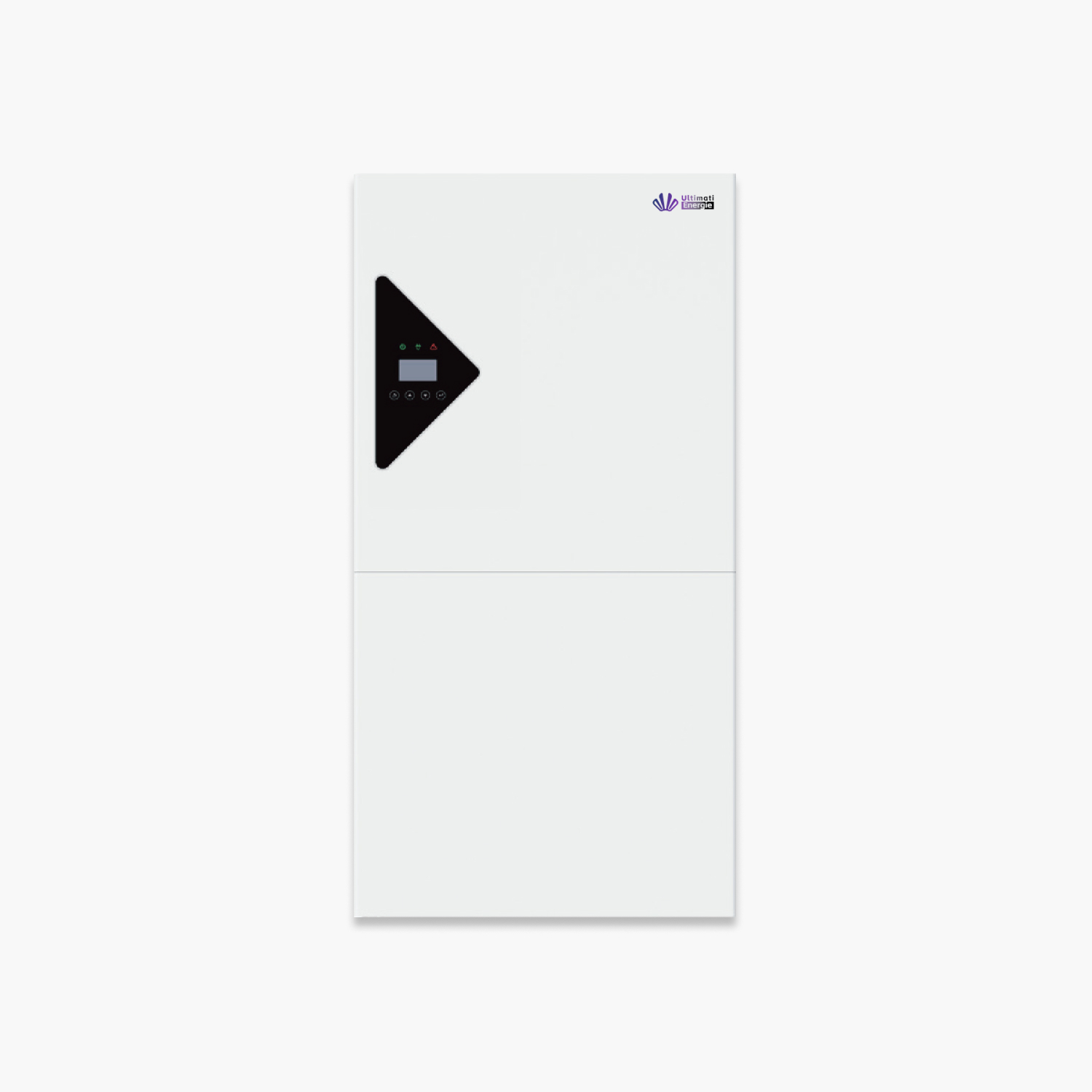
Here is a complete guide explaining their differences, advantages, technical background, and applications, including recommendations for modern solutions such as Ultimati Energie' s RE-U20 on/off-grid hybrid inverter, which offers powerful performance, high flexibility, and is an ideal choice for building future energy systems.
What is a Hybrid Inverter?
Definition and Working Principle of a Hybrid Inverter
A hybrid inverter, commonly referred to as a solar hybrid inverter, is a multifunctional device that intelligently combines solar power, battery storage, and grid electricity. For those asking, “What is a hybrid inverter, and why do I need it?” the answer lies in its core principle: a hybrid inverter simultaneously manages the photovoltaic system and battery storage, optimizing energy flow in real time.
A conventional inverter only converts DC to AC. A hybrid inverter also has the following functions:
- Charging and discharging the battery
- Prioritizing self-consumption optimization
- Providing backup power
- Dynamic energy management
A particularly good example is Ultimati Energie' s RE-U20 hybrid inverter, which supports both grid-tied and off-grid modes, can reach 10,000 cycles, and is compatible with VPP (Virtual Power Plant) solutions.
What is a Conventional Inverter?
Basic Function of a Conventional Inverter
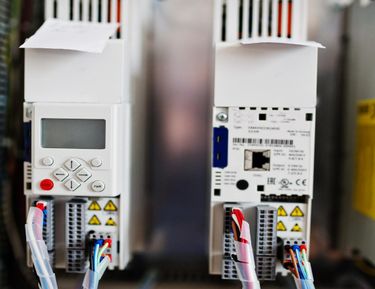
A conventional inverter can deliver solar-generated electricity steadily to the public grid. It is stable and cost-effective but has limited functionality.
Limitations of a Conventional Inverter
In many modern applications, it encounters bottlenecks:
- Cannot connect to energy storage
- No emergency power supply
- No energy management functionality
- Cannot operate off-grid
- Low self-consumption efficiency
Therefore, the question “What is a hybrid inverter?” is becoming increasingly important for businesses and households.
Hybrid Inverter vs Conventional Inverter — Key Differences
Comparison Table
| Function/Feature | Hybrid Inverter | Conventional Inverter |
| PV DC → AC conversion | ✓ | |
| Connectable to energy storage | ✓ | ✕ |
| Self-consumption optimization | Very High | Low |
| Emergency power supply | ✓ | ✕ |
| Off-grid operation | ✓ | ✕ |
| Energy management | Integrated | ✕ |
| Multi-energy source management | ✓ | ✕ |
| Cost-effectiveness | High | Medium |
| Suitable for PV + storage | ✓ | ✕ |
Modern models like Ultimati Energie’s RE-U20 solar hybrid inverter demonstrate the advanced capabilities of this technology compared to traditional inverters.
Why Are More Businesses and Households Choosing Solar Hybrid Inverters?
Greater Energy Independence
To reduce high dependence on the grid, solar alone is not enough — energy storage is essential. By combining storage with a hybrid inverter, electricity generated during the day can be used at night or during power outages.
Higher Self-Consumption Rate
Many ask, “What is a hybrid inverter? Can it really improve self-consumption?” The answer is: absolutely. Hybrid inverters can typically increase self-consumption rates to 50–80%, while conventional inverters usually only reach 20–35%.
Emergency Power Supply and Higher Reliability
Depending on the model, hybrid inverters can continue to supply critical loads during outages. Businesses can ensure uninterrupted processes, while households can maintain basic devices such as lighting, routers, or refrigerators.
Future-Proof Choice
The energy industry is moving toward a combination of storage + PV + smart energy management. Conventional inverters can no longer meet the growing demand for flexibility, efficiency, and backup power.
FAQ — Key Questions About Hybrid Inverters vs Conventional Inverters
What is the biggest advantage of a hybrid inverter?
It integrates battery management, reduces additional equipment, and enhances energy autonomy.
What is needed to set up a solar hybrid system?
PV modules, a hybrid inverter, and (optionally) an energy storage battery.
Can a conventional inverter be retrofitted with storage?
Yes, but it requires additional equipment, such as an AC-coupled storage system.
Is hybrid inverter installation difficult?
Installation is similar to a conventional inverter, just with additional storage interfaces.
Technical Details – How Do Solar Hybrid Inverters Work?
Intelligent Energy Distribution
Solar hybrid inverters have more efficient control over solar electricity than conventional inverters. They automatically decide whether electricity goes directly to household loads, is stored in batteries, or fed into the grid. Conventional inverters only handle power conversion and cannot prioritize energy use.
Efficiency Improvement
With MPPT technology, hybrid inverters can optimize solar generation, battery storage, and grid electricity simultaneously. This reduces losses, improves energy utilization, and ensures maximum self-consumption.
Communication and Monitoring
Modern hybrid inverters support app monitoring, real-time data viewing, and fault diagnosis. Users can check electricity usage, storage status, and PV generation at any time. Conventional inverters usually only provide basic information.
Which Inverter Is Better Suited for Your PV System?
Advice for Businesses
Hybrid inverters can reduce peak loads, lower grid costs, and provide emergency power. They improve energy independence and are ideal for companies seeking both operational stability and cost optimization.
Advice for Households
Households can use hybrid inverters to maximize self-generated electricity efficiently. They increase self-consumption, reduce electricity bills, and make homes less dependent on the public grid.
Conclusion — Hybrid Inverter vs Conventional Inverter
To answer the question, “Hybrid inverter vs conventional inverter — what’s the key difference?” the answer is clear: hybrid inverters are the core component of modern storage and solar optimization. Conventional inverters only perform basic functions — no storage, no backup power, no energy management.
For those aiming to make their energy systems more forward-looking, modern solutions like Ultimati Energie’s RE-U20 on/off-grid hybrid inverter are worth considering. With optimized usage configurations, long lifespan, and comprehensive protection features, it provides businesses and households with a powerful, flexible, and economically sustainable choice.
Ultimati Energie is committed to helping businesses and households build reliable, scalable, and efficient energy systems — solutions that excel both technically and economically.

Ultimati Energie Deutschland GmbH is a Germany-based B2B energy storage system provider specializing in scalable residential and C&I battery storage solutions for European partners.
Company Overview
Product Center
Solution
Service Center
News Center
Become a Partner
Sales: +49 1624886367
Customer Support:
+49 15226994869
Address: Ober der Röth 4, 65824 Schwalbach am Taunus, Germany
Copyright © 2026 Ultimati Energie Deutschland GmbH All rights reserved.