

How Much Battery Storage Do You Need for a 100 kWp Solar System?
A 100 kWp PV system is one of the most common system sizes used in the commercial sector. Many businesses install systems of this size to increase self-consumption, reduce electricity costs, and lower peak demand. As a result, one of the most frequently asked questions is:
How large should the battery storage system be for a 100 kWp PV system?
There is no one-size-fits-all answer. Depending on the facility's load profile, self-consumption rate, and intended application, the optimal battery capacity can range from 80 kWh to more than 500 kWh.
The installed capacity of the photovoltaic system is only one part of the equation. More importantly, the right battery size depends on how and when the generated solar energy is used. In this article, you'll learn how to calculate the appropriate battery storage capacity for a 100 kWp PV system, which storage capacities are commonly used in practice, and the key factors to consider when planning a commercial battery energy storage system.
Why Is There No Standard Battery Size?
General recommendations such as "100 kWp PV = 100 kWh battery storage" or "150 kWh battery storage" are often used as rough guidelines. While these figures can provide a useful starting point, they cannot replace a project-specific system design.
The required battery capacity is determined not only by the PV system itself, but more importantly by the facility's load profile.
As a result, two businesses with the same 100 kWp PV system may require completely different battery capacities. A manufacturing facility may consume most of its solar energy directly during the day, while a logistics center or hotel often needs to store energy for evening and nighttime operations.
Additional applications—such as peak shaving, load management, backup power, or taking advantage of dynamic electricity tariffs—can also influence the required battery capacity.
The optimal battery size is therefore not determined by a fixed kWh rule, but by the combination of the facility's load profile, PV generation, and business objectives.
Quick Check: What Determines the Right Battery Size?
| If your business... | Then you should... |
|---|---|
| Uses most of its solar energy directly during the day | Consider a smaller battery capacity |
| Has high electricity demand in the evening | Plan for a larger battery capacity |
| Intends to implement peak shaving | Size the battery according to peak demand |
| Plans to expand its PV system or EV charging infrastructure in the future | Choose a modular battery storage solution |
What Battery Size Is Typical for a 100 kWp PV System?
Although every project should be evaluated individually, several battery capacity ranges have become common for PV systems with battery storage.
| Application | Typical Battery Capacity |
|---|---|
| Increase self-consumption | 80–150 kWh |
| Self-consumption + Peak Shaving | 150–250 kWh |
| High evening electricity demand | 250–400 kWh |
| Peak Shaving, Load Management, and Backup Power | 300–500+ kWh |
These figures are intended as general guidelines only.
An oversized battery increases the initial investment cost and is often not fully utilized. On the other hand, an undersized battery may not be able to store all excess solar energy or effectively reduce peak demand.
The objective is therefore not to install the largest possible battery, but to select a storage capacity that matches the actual requirements of the project.
How Many kWh of Battery Storage per kWp of PV Is Recommended?
A commonly used rule of thumb is 1 to 3 kWh of battery storage capacity per kWp of PV. However, this guideline is only of limited value for commercial applications, as the facility's load profile, self-consumption rate, and peak shaving requirements have a much greater influence on the optimal battery size.
Expert Tip
In practice, the facility's load profile often provides a much better basis for battery sizing than the installed PV capacity alone. For this reason, battery system design should always be based on the actual energy demand and the project's objectives.
Calculating Battery Storage Capacity – Step by Step
When calculating the required battery storage capacity, it is important to look beyond the installed PV capacity. The key is to evaluate the relationship between solar power generation, electricity consumption, and the operational requirements of the business.
1. Determine the PV Energy Yield
A 100 kWp PV system in Germany typically generates 90,000 to 110,000 kWh of electricity per year, depending on factors such as location, roof orientation, and shading conditions.
For battery sizing, however, the annual energy yield is less important than the amount of surplus solar energy available each day.
2. Analyze the Load Profile
The most important step is to analyze the facility's electricity consumption.
The focus is not only on how much electricity is consumed, but also when it is consumed. Businesses with high daytime electricity demand often require less battery capacity than facilities with significant energy consumption during the evening or at night.
3. Calculate the Available PV Surplus
Not every kilowatt-hour generated by the PV system needs to be stored.
The first step is to determine how much solar electricity remains available after direct on-site consumption. This surplus determines how much energy the battery storage system can absorb each day.
4. Define the Project Objectives
The optimal battery size ultimately depends on the goals of the project, such as:
- Increase self-consumption
- Reduce electricity purchased from the grid
- Peak shaving
- Load management
- Backup power supply
- Lower electricity costs
Only by considering all four of these steps together can the battery storage system be sized appropriately.
What Factors Affect the Optimal Battery Size?
In addition to the installed capacity of the photovoltaic system, several other factors influence the design of a commercial battery storage system.
PV Generation: The system's location, orientation, and local weather conditions determine how much solar energy is available to charge the battery. Equally important is when surplus PV energy becomes available for storage.
Load Profile:The timing of electricity consumption determines when energy should be stored and when it should be discharged.
Self-Consumption Rate: The higher the self-consumption rate, the greater the economic benefit of combining a PV system with battery storage.
Peak Shaving: Businesses with high peak demand charges can reduce demand costs by using battery storage. As a result, battery capacity for peak shaving projects is often determined by the facility's maximum demand rather than the installed PV capacity alone.
Electricity Tariffs: Variable electricity prices or time-of-use network charges can further improve the economic value of battery storage.
Future Expansion: Many businesses plan to add new electricity loads in the future, such as EV charging stations, heat pumps, or additional production equipment. For this reason, it is often beneficial to choose a battery storage solution that can be expanded as energy demand grows.
Practical Examples: What Battery Size Is Suitable for Different Applications?
The following examples illustrate typical battery sizing for different commercial applications. They are intended as general references and do not replace project-specific system design.
| Application | PV Capacity | Annual Electricity Consumption | Recommended Battery Capacity | Reason |
|---|---|---|---|---|
| Manufacturing facility | 100 kWp | Approx. 180,000 kWh | 100–150 kWh | High direct consumption during production hours |
| Logistics center | 100 kWp | Approx. 120,000 kWh or higher | 250–400 kWh | High electricity demand during the evening and at night |
| Commercial facility with DC fast charging stations | 100 kWp+ | — | 300 kWh and above | Focus on peak shaving and load management |
Particularly for businesses operating DC fast charging stations or electric truck fleets, battery capacity is no longer determined solely by the PV system. Instead, charging power, the facility's load profile, and the requirements for peak shaving and load management become the key factors.
To learn more about battery sizing for these applications, see our article on battery storage sizing for electric truck depots.
Is a Larger Battery Storage System Worth It?
A larger battery storage system is not automatically the best solution. The key consideration is how efficiently the available storage capacity is utilized during daily operation.
An oversized battery increases the initial investment cost and often completes only a limited number of full charge and discharge cycles. In contrast, an undersized battery may not be able to absorb all available surplus solar energy or effectively reduce peak demand.
The best solution is therefore not the largest possible battery capacity, but a battery system that is properly sized to match the facility's load profile and project objectives.
Modular Battery Storage Instead of Oversizing
Electricity demand in commercial energy projects often changes over time. Additional PV capacity, EV charging infrastructure, or new production equipment can significantly increase future energy demand.
Rather than installing the largest possible battery system from the beginning, more and more businesses are choosing modular battery energy storage systems.
These systems offer several advantages:
- Lower initial investment
- Flexible expansion as energy demand increases
- Easier maintenance and servicing
- Higher system availability
- Better long-term investment protection
Modular battery storage systems make it possible to expand storage capacity gradually as actual energy demand grows. This helps businesses control investment costs while maintaining the flexibility to expand the system in the future.
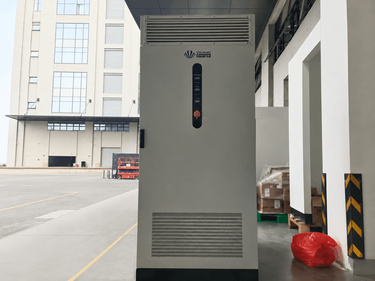
Ultimati Energie's commercial battery storage solutions are based on a modular system design. Depending on project requirements, additional battery modules or battery cabinets can be integrated as needed, allowing the system to grow alongside the company's energy demand.
As a result, these solutions are suitable not only for today's requirements but also for future expansions, such as additional PV capacity, EV charging infrastructure, or increased production capacity.
Conclusion
The optimal battery storage capacity for a 100 kWp PV system cannot be determined using a fixed rule of thumb.
Instead, the right battery size depends on the facility's load profile, PV generation, and individual project objectives. Only a properly sized battery system can maximize self-consumption, reduce peak demand, and optimize the overall economic performance of the energy system.
With its modular commercial battery storage solutions, Ultimati Energie helps businesses, installers, and EPC partners accurately size battery storage systems while providing the flexibility to expand capacity as energy demand grows. This creates future-ready energy storage solutions that combine technical performance with long-term economic value.
Frequently Asked Questions (FAQ)
Is a 100 kWh battery storage system sufficient for a 100 kWp PV system?
That depends on the facility's load profile. Businesses with high electricity consumption during the day can often achieve good results with a 100 kWh battery system. However, if electricity demand is high in the evening or additional applications such as peak shaving are required, a larger battery capacity is generally recommended.
What information is required to size a battery storage system?
A proper battery sizing assessment takes into account factors such as:
- Annual electricity consumption
- Load profile
- Expected PV generation
- Potential peak demand
Only by evaluating these factors together can the battery storage system be sized appropriately.
Can a commercial battery storage system be expanded later?
Yes. Many modern battery energy storage systems feature a modular design, allowing additional battery modules to be added as energy demand increases. This makes investment planning easier while simplifying future system expansion.

Ultimati Energie Deutschland GmbH is a Germany-based B2B energy storage system provider specializing in scalable residential and C&I battery storage solutions for European partners.
Become a Partner
Sales: +49 1624886367
Customer Support:
+49 15226994869
Address: Ober der Röth 4, 65824 Schwalbach am Taunus, Germany
Copyright © 2026 Ultimati Energie Deutschland GmbH All rights reserved.