

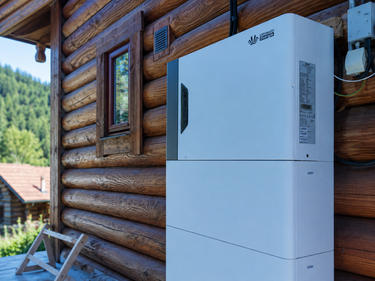
Battery Storage with MPPT: How Maximum Power Point Tracking Improves Solar Energy Utilization
When choosing a battery storage system for a photovoltaic installation, most people focus on storage capacity, charging power, or price. However, Maximum Power Point Tracking (MPPT) is just as important. It influences how efficiently the photovoltaic system operates and how much of the generated solar energy can actually be stored and used on-site.
But does every PV system require multiple MPPTs? And does having more MPPTs automatically result in higher solar yields? Not necessarily. What matters is selecting an MPPT configuration that matches the specific design of the PV system.
In this article, you'll learn how a battery storage system with MPPT works, when multiple MPPTs are beneficial, and what to consider when selecting a battery storage system.
What Does MPPT Mean in a Battery Storage System?
MPPT stands for Maximum Power Point Tracking. It is a technology that continuously identifies and adjusts the optimal operating point of photovoltaic modules, allowing them to operate as efficiently as possible even under changing sunlight conditions.
A common misconception is that the MPPT function is located inside the battery storage system itself. In reality, it is usually integrated into the hybrid inverter or the integrated inverter of an all-in-one battery storage system.
The battery storage system itself does not perform MPPT control. Instead, it benefits from the PV system operating as efficiently as possible through MPPT, making more solar electricity available for storage.
In short, a battery storage system with MPPT refers in practice to a storage system in which the Maximum Power Point Tracking function is integrated into the inverter to optimize the energy generation of the PV system.
How Does MPPT Improve the Performance of a Battery Storage System?
A battery storage system can only store as much solar electricity as the photovoltaic system generates. This is where MPPT delivers its greatest advantage. It ensures that the available solar energy is used as efficiently as possible. As a result, it does not increase the performance of the battery itself, but instead increases the amount of solar electricity that can be stored and used later.
Higher Self-Consumption
By continuously optimizing the operating point, more solar electricity is available to charge the battery storage system and supply direct household consumption. This increases self-consumption and reduces electricity purchased from the public grid.
More Stable Energy Yields
Changing weather conditions, high module temperatures, or temporary shading can affect the performance of a photovoltaic system. MPPT automatically adjusts voltage and current to match current conditions, helping maintain more consistent energy production.
| Without Optimized MPPT | With Optimized MPPT |
|---|---|
| Less usable solar energy | More usable solar energy |
| Lower self-consumption | Higher self-consumption |
| Higher energy losses | More efficient energy utilization |
| Less stable energy yields | More consistent system performance |
A battery storage system with MPPT does not make the battery itself more powerful. Instead, it ensures that a larger share of the generated solar energy can be stored and used more efficiently.
When Are Multiple MPPTs Beneficial?
Whether one or multiple MPPTs are required depends less on the battery storage system than on the design of the PV system. The key factor is whether different PV arrays need to be controlled independently.
East-West Roofs
Since each roof slope receives sunlight at different times of the day, two MPPTs allow each side to be optimized independently, resulting in a higher overall energy yield.
Multiple Roof Surfaces
If PV modules are installed on a house roof, garage, or carport, multiple MPPTs are also beneficial. Each group of modules can be controlled independently without affecting the performance of the others.
Partial Shading
If individual PV arrays are temporarily shaded, separate MPPTs can significantly reduce power losses.
| Roof Configuration | Recommendation |
|---|---|
| South-facing roof | 1 MPPT is sufficient |
| East-West roof | 2 MPPTs recommended |
| Multiple roof surfaces | 2 or more MPPTs |
| Partial shading | Separate MPPTs recommended |
It is important to note that more MPPTs do not automatically result in higher energy yields. What matters is that the number and configuration of the MPPTs match the roof layout and the PV system design. Only a properly designed overall system can fully unlock the potential of a battery storage system.
How to Choose the Right Battery Storage System with MPPT
A battery storage system with MPPT should not be selected based solely on storage capacity or the number of MPPT inputs. The key is ensuring that the storage system is compatible with the photovoltaic system and the existing hybrid inverter.
The following factors should be considered when making your selection:
Compatibility with the Hybrid Inverter
Since the MPPT function is typically integrated into the hybrid inverter, the inverter and battery storage system must be technically compatible. This is especially important for retrofit projects, where you should verify whether the existing inverter supports the desired battery storage system.
Suitable MPPT Configuration
The required number of MPPTs depends on the design of the photovoltaic system. For simple PV systems, one MPPT is often sufficient, while more complex systems with multiple PV arrays or different roof orientations can benefit from two or more MPPTs.
System Expandability
If you plan to add more solar panels or integrate additional electrical loads in the future, you should choose a battery storage system that can be expanded flexibly. This makes future upgrades easier to implement.
The Right Partner for Battery Storage Systems with MPPT
A high-performance MPPT system can only reach its full potential when it is part of a properly integrated energy storage solution. That's why it's not just the individual components that matter, but a solution that is tailored to the specific photovoltaic system and its intended application.
Ultimati Energie develops modular battery storage solutions for residential, commercial, and industrial applications. Our systems support the efficient use of solar energy and can be flexibly adapted to meet different project requirements.
Become our partner and work with us to deliver reliable and future-ready battery energy storage solutions.
Conclusion
A battery storage system with MPPT helps increase self-consumption and improve the efficient use of solar energy. However, the deciding factor is not the number of MPPT inputs, but a solution that is optimally matched to the photovoltaic system and the actual energy demand.
With a well-designed system configuration, you can achieve higher energy yields, greater flexibility, and a more reliable energy supply over the long term.
Frequently Asked Questions (FAQ)
Does every battery storage system have MPPT?
No. Maximum Power Point Tracking is generally integrated into the hybrid inverter or the integrated inverter of an all-in-one battery storage system. The battery storage system itself does not normally perform this function.
Can I retrofit a battery storage system with MPPT?
Yes, in principle, retrofitting is possible. However, the battery storage system and the hybrid inverter must be compatible. Depending on the existing PV system, it may also be necessary to replace the inverter.
Can MPPT completely eliminate the effects of shading?
No. MPPT cannot eliminate shading, but it can help reduce the resulting power losses. This is particularly effective when multiple PV arrays are controlled independently, allowing the system to achieve better energy yields under changing conditions.
How do I know how many MPPTs I need?
The required number of MPPTs depends on the roof orientation, the number of PV arrays, and any potential shading. While one MPPT is sufficient for many south-facing roofs, more complex PV systems often benefit from two or more independently operating MPPTs.

Ultimati Energie Deutschland GmbH is a Germany-based B2B energy storage system provider specializing in scalable residential and C&I battery storage solutions for European partners.
Become a Partner
Sales: +49 1624886367
Customer Support:
+49 15226994869
Address: Ober der Röth 4, 65824 Schwalbach am Taunus, Germany
Copyright © 2026 Ultimati Energie Deutschland GmbH All rights reserved.