

Can a PV Battery Storage System Be Installed Outdoors?
A PV battery storage system does not always need to be installed in a basement, utility room, or indoor technical area. In many cases, it can also be installed outdoors, provided the battery system, location, and mounting conditions are suitable.
The key requirement is manufacturer approval. A battery designed for indoor use should not be placed against an exterior wall, inside a garden shed, or under a carport unless the product documentation explicitly confirms that this type of installation is permitted.
This guide works as a practical site assessment checklist for homeowners, solar installers, and PV project partners. It helps evaluate common outdoor locations such as exterior walls, carports, garages, garden sheds, and protected technical areas before installation.
When Is Outdoor Battery Storage a Good Option?
Outdoor installation is especially worth considering when there is no suitable indoor space for the battery storage system. This may be the case if the home does not have a dedicated technical room, the basement is too damp, or the utility room is too small. In these situations, a protected outdoor area can be a practical alternative.
An outdoor PV battery storage system may be suitable when:
no dry and well-ventilated indoor location is available
short cable routes to the PV system, inverter, or main electrical panel are possible
an EV charger is planned in a carport or garage
a protected area under a roof overhang or carport is available
the exterior wall is strong enough and accessible for maintenance
a dedicated outdoor technical area can be planned for a new build or PV retrofit project
However, outdoor installation should not be decided based on space savings or cable length alone. It is more important to confirm that the location is protected, well ventilated, and approved for the selected battery system.
What Should You Check Before Installing Battery Storage Outdoors?
Before installing a battery storage system outdoors, start with the technical requirements. The key factors are manufacturer approval, IP rating, temperature range, enclosure quality, and professional installation. For a detailed planning approach, see the guide on correctly positioning an energy storage system.
Manufacturer Approval for Outdoor Installation
Manufacturer approval is the first point to verify. Product images or marketing terms such as “weatherproof” are not enough. The data sheet and installation manual should clearly state where and how the system may be installed.
Before planning the installation, check:
approved installation locations
enclosure protection rating
operating and storage temperature range
required clearances and mounting method
ventilation requirements
warranty conditions
If these requirements do not match the planned outdoor location, another site or a different battery storage system should be selected.
Suitable IP Rating
The IP rating indicates how well the enclosure is protected against dust and water. For outdoor battery storage, this matters because the system may be exposed to moisture, dust, wind, and splash water.
Depending on the location, different IP ratings may be suitable. Outdoor battery storage systems often use ratings such as IP54, IP55, or IP65. The required rating depends on the actual installation environment and the manufacturer’s specifications.
IP65 does not mean the battery can be installed anywhere in rain, snow, or standing water. Cable entries, electrical connections, mounting points, and service areas must also be properly protected.
Temperature Range and Battery Management
Temperature is one of the most important factors for outdoor installation. Outdoor locations can expose the battery to frost in winter, high temperatures in summer, and rapid temperature changes between day and night.
Low temperatures may cause the battery management system, or BMS, to limit charging or discharging power. High temperatures can accelerate cell aging and affect long-term battery life.
Before installation, check:
What operating temperature range is listed in the data sheet?
Are there charging restrictions at low temperatures?
Does the system use active or passive temperature management?
Is the location protected from direct sunlight and heat build-up?
Is the location exposed to frost in winter?
The BMS monitors temperature, state of charge, and operating status, but it cannot replace a suitable installation location. A protected, shaded, and well-ventilated site is more suitable than an unprotected south-facing wall.
UV, Corrosion, and Weather Protection
An outdoor PV battery storage system must be protected from more than rain. UV radiation, moisture, frost, dust, and corrosion can all affect long-term installation reliability.
Important factors include UV-resistant enclosure materials, corrosion-protected metal parts, protected cable entries, stable mounting, and weather-resistant electrical connections. In humid regions or exposed locations, installers should also check whether side rain, condensation, or splash water may occur.
Where Can Battery Storage Be Installed Outdoors?
The best location for a PV battery storage system is dry, protected, well ventilated, temperature-stable, and accessible for maintenance. Several outdoor locations may be possible, but not every space is equally suitable.
| Outdoor Location | Suitability | What to Check |
|---|---|---|
| Covered exterior wall | Very suitable | Strong wall, protection from direct sun, short cable routes |
| Carport | Suitable | Moisture, temperature, access, and EV charger connection |
| Protected outdoor technical area | Suitable | Useful for new builds or PV retrofit projects |
| Garage | Conditionally suitable | Must be dry, ventilated, and as temperature-stable as possible |
| Garden shed | Critical | Only if dry, insulated, and electrically suitable |
| Freestanding outdoor installation | Only with an outdoor-rated system | Foundation, drainage, anti-theft protection, and cable protection |
| Unprotected area exposed to sun or rain | Not recommended | Usually unsuitable even with a high IP rating |
Covered Exterior Wall
A covered exterior wall is often the most practical option if the battery system is approved for outdoor use. North- or east-facing areas are usually preferable because they receive less direct sunlight. The wall should be strong enough, cable routes should be protected, and maintenance access should remain clear.
Carport
A carport can be practical when an EV charger is installed or planned nearby. It can support a combined setup for solar self-consumption and EV charging. However, side rain, wind, frost, summer heat, and possible impact from vehicles or garden tools should be checked.
Garage
A garage may seem convenient, but it is not automatically suitable. Temperature, humidity, and ventilation are decisive. Uninsulated garages can become very cold in winter and very hot in summer. Flammable materials should not be stored directly next to the storage system.
Garden Shed
A garden shed is usually a critical location because it is often not permanently dry, insulated, or electrically prepared for a battery storage system. It should only be considered after a detailed technical assessment.
Freestanding Outdoor Installation
A freestanding installation in a garden or on a separate foundation requires a battery system specifically designed for outdoor use. Foundation, drainage, cable protection, anti-theft protection, and maintenance access must all be planned. For typical residential PV systems, a protected wall-mounted installation is usually simpler.
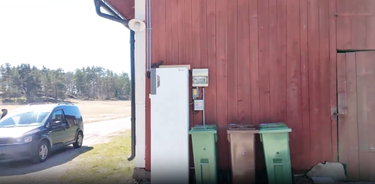
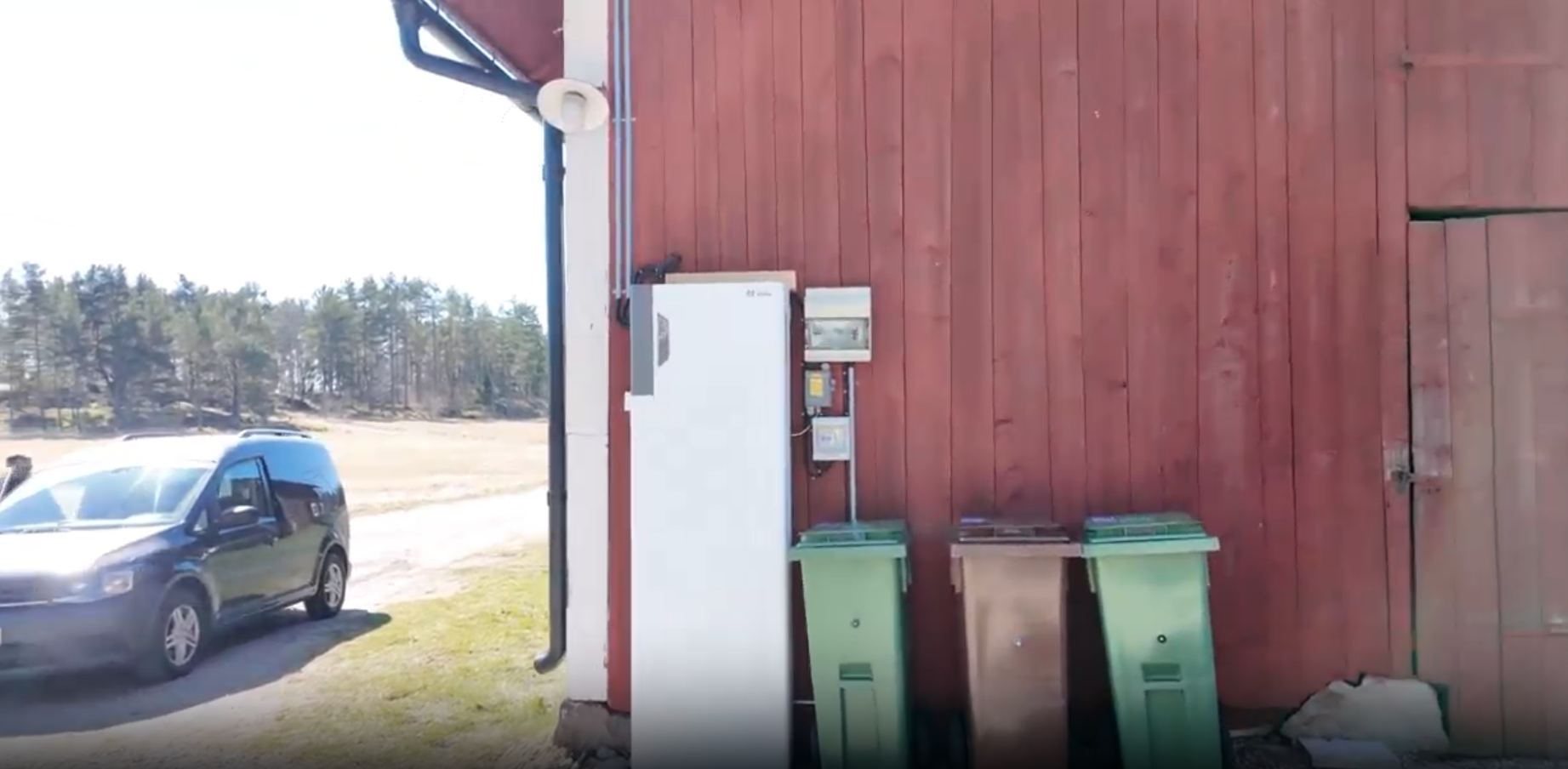
Example: Outdoor PV Battery Storage in Hamburg
A Hamburg project by Ultimati Energie shows what outdoor installation can look like in practice. In this project, a 19 kWh home battery storage system was installed outdoors. The system used the RESS-RE-HA1 high-voltage home battery storage system as a reliable residential energy storage solution for a home in northern Germany.
This example shows why the battery system, installation site, and mounting conditions must be aligned when planning outdoor battery storage.
When Should You Avoid Installing Battery Storage Outdoors?
Outdoor installation should not be forced. If the location does not meet the basic requirements, an indoor technical room, another protected area, or a different system design is usually the better option.
An outdoor location is critical or unsuitable if:
the battery system is not approved for outdoor installation
the location is permanently exposed to direct sunlight, moisture, or frost
rainwater, snow, or leaves can collect around the enclosure
there is not enough ventilation
flammable materials are stored directly next to the system
vehicles, garden tools, or other objects could damage the battery
the wall or floor is not strong enough
the battery is difficult to access for maintenance
outdoor installation may restrict the manufacturer’s warranty
A free space next to the house is not automatically a suitable battery storage location. The battery must be protected, safely accessible, and operated within the manufacturer’s specifications.
Read more: Where Should a Battery Storage System Not Be Installed?
Outdoor Installation and Fire Safety: What Matters?
Fire safety should also be considered when installing a PV battery storage system outdoors. Important points include professional installation, compliance with manufacturer instructions, sufficient distance from flammable materials, good ventilation, protected cable routes, and safe electrical connections. Wood, paper, fuel, or waste bins should not be stored directly next to the system. Outdoor battery storage is not automatically unsafe when the battery system, location, and installation conditions are properly matched and the system remains accessible for inspection and maintenance.
Site Assessment Checklist Before Installation
Before installation, the planned location should be reviewed systematically. This checklist can support an initial assessment and help installers during on-site consultation.
Outdoor installation approved by the manufacturer
IP rating suitable for the planned location
Site within the permitted temperature range
Protection from direct sunlight, heavy rain, and standing water
Sufficient ventilation
Safe distance from flammable materials
Secure wall, floor, and cable routing
Protection from mechanical damage
Easy access for maintenance
Manufacturer warranty remains valid
Location suitable for future extensions such as an EV charger, heat pump, or additional battery capacity
If several points cannot be met, the location should be reconsidered. A reliable battery storage solution starts not only with the product, but also with choosing the right installation site.
Conclusion: Outdoor Installation Is Possible, but Site-Dependent
A PV battery storage system can be installed outdoors when the battery system, installation site, and mounting conditions are compatible. Manufacturer instructions, weather protection, suitable temperature range, protected cable routes, and maintenance access are especially important.
A protected location on an exterior wall or under a carport can be a practical solution when there is no suitable indoor space. Direct sunlight, standing water, poor ventilation, or limited warranty coverage are warning signs that another location should be considered.
Need Support with Outdoor PV Battery Storage Projects?
Planning battery storage solutions for customer projects and unsure whether a utility room, garage, carport, or protected outdoor area is the right installation site? Ultimati Energie supports installers, PV solution providers, and project partners with outdoor-ready battery selection, system configuration, and installation environment assessment.
Whether for PV retrofits, new-build homes, or residential energy storage programs, contact us to discuss your project requirements and find a battery storage solution that fits the planned site.

Ultimati Energie Deutschland GmbH is a Germany-based B2B energy storage system provider specializing in scalable residential and C&I battery storage solutions for European partners.
Become a Partner
Sales: +49 1624886367
Customer Support:
+49 15226994869
Address: Ober der Röth 4, 65824 Schwalbach am Taunus, Germany
Copyright © 2026 Ultimati Energie Deutschland GmbH All rights reserved.