

Partial vs Whole Home Battery Backup: Cost, Critical Loads & Sizing Guide
A PV system with battery storage does not automatically provide electricity during a power outage. To supply power when the grid goes down, the system must be specifically designed for either partial backup (emergency power) or whole home backup (backup power).
Partial backup is designed to support essential loads only. Whole home backup is designed to support multiple circuits or larger parts of a home. The right solution depends on load priority, system design, inverter capacity, battery size, and electrical configuration.
This guide explains the differences between partial and whole home backup and helps homeowners, installers, and EPC partners design the right system.
What Is Partial and Whole Home Battery Backup?
Partial backup (emergency power) supplies only essential loads during a power outage. These typically include refrigeration, internet, lighting, heating control, and selected outlets. The goal is to maintain basic functionality with minimal energy demand, which helps keep system size and cost under control.
Whole home backup (backup power) supplies multiple circuits or larger sections of the home. Depending on system design, it can support kitchens, living areas, home offices, and other household zones during a power outage. However, this requires higher inverter capacity and careful load management, especially when high-power appliances are included.
In short:
- Partial backup = essential loads only, lower system demand and cost
- Whole home backup = multi-circuit or full-home coverage, higher capacity and complexity
Why Battery Backup Is Needed During a Power Outage
A standard grid-tied PV system shuts down automatically during a blackout for safety reasons. Even if a battery is installed, it cannot supply the home unless the system includes backup functionality.
To enable backup operation, the inverter, battery system, transfer switch, and electrical distribution must be designed together. Backup capability is not an add-on—it must be part of the system design from the beginning.
Partial Backup vs Whole Home Backup: Key Differences
Partial backup focuses on essential loads only, while whole home backup supports a broader range of household circuits.
| Aspect | Partial Backup (Emergency Power) | Whole Home Backup (Backup Power) |
|---|---|---|
| Coverage | Essential loads only | Multiple circuits or whole home |
| Complexity | Lower | Higher |
| Installation | Simpler | More complex |
| Cost | Lower | Higher |
| Typical use case | Short outages, basic protection | Longer outages, higher comfort |
| Load types | Low-power essential devices | Mixed household loads |
Partial backup prioritizes system simplicity. Whole home backup prioritizes comfort and coverage.
Which Backup Option Should You Choose?
The choice between partial backup and whole home backup depends on how much of the home you want to power during a grid outage and how much you are willing to invest in system capacity.
Partial backup is suitable if you only need essential functions such as refrigeration, internet, lighting, heating control, and selected outlets. It is the most cost-efficient option and requires lower system capacity.
Whole home backup is more suitable if you want to maintain a higher level of comfort during outages, including multiple rooms or higher-power appliances such as home offices or heat pumps. However, this requires higher inverter capacity, larger battery systems, and more complex electrical design.
Decision Factors: Cost, Critical Loads & System Sizing
The choice between partial and whole home backup is mainly determined by three key factors: cost, critical loads, and system sizing. These factors not only describe system requirements but directly influence design feasibility and performance.
1. Critical Loads
Critical loads define what must remain powered during a power outage. The fewer the loads, the smaller and more cost-efficient the system can be designed.
Typical essential loads include refrigeration, communication systems, lighting, heating control, and selected outlets. These define the minimum operational requirement of a household during an outage.
High-power appliances such as EV chargers, heat pumps, ovens, or air conditioning systems significantly increase system demand and can create high peak loads. In many cases, they are not suitable for backup operation without careful system design.
Load prioritization directly determines the minimum system size and whether partial backup is sufficient.
2. System Sizing
Battery sizing and inverter capacity must be designed together to ensure stable system operation.
Battery capacity (kWh) defines how long the system can supply energy. Inverter output (kW) defines how much power can be delivered at once.
If inverter output is too low, even a large battery cannot supply multiple loads simultaneously. This creates a system bottleneck that limits real-world performance.
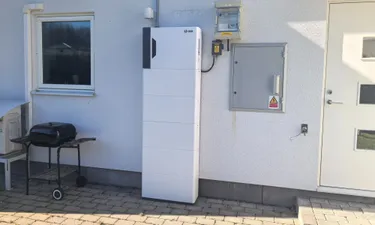
This limitation can also be observed in real-world installations. In a 19 kWh residential battery system in Stockholm using a high-voltage architecture, system performance was not determined by storage capacity alone. Instead, the design had to ensure that inverter output, load distribution, and circuit prioritization were properly aligned to avoid power bottlenecks during simultaneous load demand.
System sizing must therefore balance energy capacity and power output to match both continuous load and peak demand conditions.
3. Cost
Partial backup systems are generally more cost-efficient because they require fewer protected circuits, lower inverter capacity, and simpler electrical integration.
Whole home backup systems require higher investment due to increased power demand, additional electrical components, and more complex load distribution.
Incorrect system sizing can lead either to unnecessary oversizing costs or insufficient backup capability during outages.
System Constraints That Affect Design
Beyond cost and load planning, technical constraints strongly influence system feasibility.
Most residential PV systems must consider inverter limits, circuit distribution, and single-phase or three-phase configurations. These factors determine whether full-home backup is technically feasible or whether a partial backup strategy is more appropriate.
Single-Phase vs Three-Phase Backup Systems
Single-phase backup systems are typically sufficient for partial backup applications where only essential loads are supported.
Three-phase systems are required when multiple circuits or higher-power appliances must operate simultaneously.
The correct configuration depends on inverter capability, load structure, and the existing electrical installation.
Is Whole Home Backup Possible in Every House?
Not every home is immediately suitable for whole home backup.
System feasibility depends on the electrical infrastructure, including distribution board layout, circuit separation, and compatibility between inverter, battery, and transfer equipment.
Older buildings may require electrical upgrades before full backup integration is possible. New builds and renovation projects typically allow easier system integration.
A technical assessment is always required before system design.
Conclusion
Partial backup is a cost-efficient solution for households that only require essential loads during a power outage. It provides basic energy security with lower system complexity.
Whole home backup offers higher comfort and broader circuit coverage but requires higher investment and more advanced system design.
In most residential cases, a well-designed partial or prioritized backup strategy provides the best balance between cost, performance, and system reliability.
Proper planning ensures that the system matches real household demand, electrical infrastructure, and long-term resilience requirements.
EPC & Installer Support
Ultimati Energie supports installers, EPC companies, and project partners in providing scalable residential battery storage systems.
Support includes system configuration, load prioritization, inverter compatibility planning, and backup circuit design for residential PV projects.
If you are planning PV battery storage systems with partial or whole home backup requirements, contact our team for project-specific design support.

Ultimati Energie Deutschland GmbH is a Germany-based B2B energy storage system provider specializing in scalable residential and C&I battery storage solutions for European partners.
Become a Partner
Sales: +49 1624886367
Customer Support:
+49 15226994869
Address: Ober der Röth 4, 65824 Schwalbach am Taunus, Germany
Copyright © 2026 Ultimati Energie Deutschland GmbH All rights reserved.