

Solar Battery Backup During Power Outages: How to Keep Your Home Powered
A rooftop solar system generates clean electricity, while a home battery helps you use more of that solar energy on-site. But many homeowners have an important question: Can solar panels with battery storage keep working during a power outage?
The answer is: yes, but not automatically. To keep your home powered during a grid outage, the system must be designed for backup power. A standard grid-tied solar system without the right backup configuration will usually shut down during an outage for safety reasons.
In this article, we explain how solar panels with battery storage work during a power outage, what components are required, and what homeowners should consider when planning a backup-ready energy storage system.
Why Do Standard Solar Systems Shut Down During a Power Outage?
Many homeowners assume that solar panels will continue producing usable electricity whenever the sun is shining. In practice, this is not always the case.
During a power outage, a standard grid-tied solar system normally disconnects from the public grid. This is required to protect utility workers, grid equipment, and the electrical system. Without a dedicated backup function, the inverter cannot continue feeding solar power into the home.
This means that even if your solar panels are generating electricity and you have a battery installed, your home may still lose power during a grid outage if the system has not been designed for backup operation.
Solar Panels with Battery Storage: What Happens During a Power Outage?
A solar-plus-storage system can respond to a power outage in different ways. The key question is whether the system includes a proper backup power function.
In a suitable setup, the inverter detects the grid outage, safely isolates the home from the public grid, and continues supplying selected loads through the battery. Depending on the system design, the solar panels may also continue generating electricity and recharge the battery during the outage.
Backup Power vs. Emergency Power: What Is the Difference?
In solar storage systems, the terms backup power and emergency power are often used in similar contexts. However, they may refer to different levels of power supply.
An emergency power solution usually supports only a few essential devices, such as a refrigerator, lighting, router, or heating controls. A backup power solution may support selected circuits or larger parts of the home, provided that the battery, inverter, and electrical installation are designed for this purpose.
For homeowners, the most important point is this: not every battery storage system automatically provides backup power during an outage. The desired backup function should be considered early in the planning stage.
What Components Are Needed for Backup Power?
For a solar-plus-storage system to work reliably during a power outage, a battery alone is not enough. The solar array, battery, inverter, and home electrical system must be planned as an integrated backup solution.
The key components usually include:
Solar panels that generate electricity during the day
Battery storage that stores energy for later use
Hybrid inverter or battery inverter with a suitable backup function
Transfer switch or backup gateway to safely isolate the home from the grid
Adapted home electrical installation so selected circuits can be supplied
Energy management system to coordinate generation, storage, and consumption
Compatibility between the battery, inverter, and backup function is especially important. Not every storage system can automatically provide backup power when the grid goes down.
Can Solar Panels Recharge the Battery During a Power Outage?
Whether solar panels can continue charging the battery during an outage depends on the system design. In simple emergency power setups, the home may only be able to use the energy already stored in the battery. Once the battery is empty, the backup supply ends.
Modern backup power systems can be designed so that the solar panels continue operating during a grid outage and recharge the battery during daylight hours. This is particularly useful during longer outages, as it can extend the available backup time.
The actual amount of energy available depends on solar irradiance, PV system size, battery capacity, battery state of charge, household consumption, and inverter power.
Which Appliances Can Keep Running During a Power Outage?
The appliances that can keep running during a power outage depend on battery capacity, inverter output, and the overall backup design. In practice, homeowners usually prioritize the loads that are most important for daily life.
Typical backup loads include:
Refrigerator and freezer
Lighting
Wi-Fi router
Laptop and mobile devices
Heating controls
Security systems
Larger appliances such as ovens, electric cooktops, air conditioners, heat pumps, or EV chargers require significantly more power. They should only be included in the backup system if the battery, inverter, and electrical installation are designed for such loads.
For planning purposes, it is useful to distinguish between essential loads and comfort loads. During a power outage, basic functions such as cooling, lighting, communication, and heating control should usually take priority.
Single-Phase or Three-Phase Backup Power
When planning a backup power system, another important question is whether the system should be configured for single-phase or three-phase operation. A single-phase solution may be sufficient if the goal is to support essential loads such as lighting, router, refrigerator, or heating controls.
A three-phase backup power system is more technically demanding, but it may be useful for larger homes, higher simultaneous loads, heat pumps, or EV charger integration.
The right solution depends on the home electrical system, the connected loads, and the desired backup power capacity. For this reason, the system design should always be checked by a qualified installer.
Who Should Consider Solar Panels with Battery Storage and Backup Power?
Solar panels with battery storage and backup power are especially useful for households that want greater energy security. They are particularly relevant for:
Homes with an existing or planned solar system
Homeowners who work from home
Buildings with heat pumps or smart home technology
Homes in areas with occasional grid interruptions
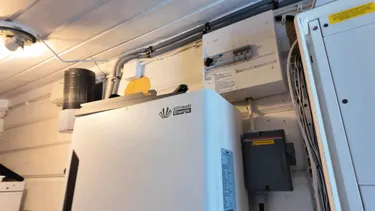
A practical example is a 15.2 kWh home battery storage project near Västerås, Sweden. In this project, a high-voltage home energy storage system supports a remote lakeside house by helping reduce the impact of grid fluctuations and occasional power outages.
Backup capability is also becoming an increasingly important topic for installers and project partners. Many customers now expect not only lower electricity costs, but also greater security, flexibility, and energy independence.
What Should Homeowners Consider When Planning?
If you want to use solar panels with battery storage during power outages, backup capability should be considered early in the system design. Retrofitting may be possible depending on the existing equipment, but it can be more complex and costly.
1. Define the Backup Goal Clearly
First, decide which appliances or circuits should keep running during an outage. Is it enough to power the refrigerator, router, lighting, and heating controls? Or should several circuits in the home be backed up? The clearer the goal, the easier it is to size the system correctly.
2. Choose a Realistic Battery Size
A larger battery provides more reserve capacity, but it is not automatically the most economical choice. The right size depends on household consumption, PV system output, desired backup duration, and available installation space.
3. Check the Inverter and Backup Function
The inverter must be compatible with the solar system, battery, and desired backup function. Not every inverter supports operation during a grid outage or allows the battery to be recharged by solar power while the grid is down.
4. Prioritize Essential Loads
During a power outage, essential loads should take priority. These may include cooling, lighting, communication, heating controls, and selected circuits. High-power loads such as heat pumps, electric cooktops, or EV chargers should only be included if the system is designed for them.
5. Use a Professional Installation
Backup power systems must be safely integrated into the home electrical system. Grid isolation, protection devices, transfer equipment, and the home distribution board should be checked and installed by qualified professionals.
Conclusion: Reliable Backup Starts with Proper Planning
Solar panels with battery storage can make an important contribution to home energy security during a power outage, but only if the battery, inverter, backup function, and electrical installation are planned as a complete system.
With the right solar-plus-storage system, homeowners can increase self-consumption while gaining greater security, flexibility, and independence from the public grid.
Planning a solar battery storage system and want to keep your home better protected during power outages? Ultimati Energie supports homeowners, installers, and project partners with scalable home energy storage solutions for modern residential buildings. Speak with us about the right storage solution for your project.

Ultimati Energie Deutschland GmbH is a Germany-based B2B energy storage system provider specializing in scalable residential and C&I battery storage solutions for European partners.
Become a Partner
Sales: +49 1624886367
Customer Support:
+49 15226994869
Address: Ober der Röth 4, 65824 Schwalbach am Taunus, Germany
Copyright © 2026 Ultimati Energie Deutschland GmbH All rights reserved.