

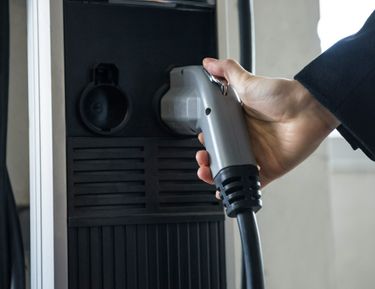
How Wallbox and Inverter Work Together to Efficiently Use Energy?
Electric mobility is no longer a future trend but an essential part of modern energy and transportation concepts. More and more households are choosing to combine their home EV charging stations with photovoltaic (PV) systems. But how exactly do the Wallbox and inverter work together? Why is their cooperation so crucial for efficient energy use? This article explains their synergy, the role of the hybrid inverter, and key considerations when installing a Wallbox.
The Cooperation Principle Between Wallbox and Inverter
To charge an electric vehicle at home, the direct current (DC) generated by the PV system must be converted into usable alternating current (AC). This is precisely the function of the inverter (Wechselrichter).
A hybrid inverter (Hybrid Wechselrichter) combines two functions: it not only converts the DC from solar panels into AC but also controls energy input, storage, and distribution—including the energy management of a home charging station. This intelligent control ensures maximum use of self-generated solar power and reduces the need to purchase electricity from the public grid.
Modern hybrid inverters can automatically recognize energy demand—whether for household consumption, energy storage systems, or EV charging. As a result, the Wallbox will prioritize charging when there is an excess of solar energy.
Why the Hybrid Inverter Is Essential?
Traditional inverters can only convert current but cannot store or intelligently distribute it. In contrast, a hybrid inverter functions as a central energy management system, significantly improving household energy efficiency.
Advantages of Combining Wallbox and Hybrid Inverter
- Maximized Solar Energy Utilization: Excess solar power can be directly used to charge the EV battery.
- Grid Independence: Even during grid fluctuations or power outages, your EV can still be charged.
- Energy Efficiency: Smart load distribution optimizes self-consumption and reduces grid electricity usage.
- Cost Savings: Lower grid consumption means reduced electricity costs—a major benefit for sustainable households.
Therefore, the hybrid inverter serves as the core of a modern PV system with a Wallbox. It ensures that energy is used precisely when needed, without waste.
Key Considerations for Installing a Home EV Charging Station
Installing a Wallbox is an important step toward efficient home charging and should always be carried out by a certified electrical professional. Here are a few key points:
Check Power and Supply Capacity
Before installation, ensure your existing electrical system can handle the additional load from the Wallbox. An electrician will confirm that the household power supply can support it safely.
Communication Between Wallbox and Inverter
Modern Wallboxes can connect with hybrid inverters via Modbus, Wi-Fi, or similar interfaces. This allows charging power to be dynamically adjusted according to solar generation—for example, automatically increasing charging speed when solar output is high.
Integration With Smart Home Energy Management Systems
If your home has a smart energy system, you can link the Wallbox, inverter, and other electrical devices. This enables automatic optimization—your EV will charge during the most cost-effective or sustainable times of the day.
How the Hybrid Inverter Controls Energy Flow?
The hybrid inverter is not just a technical connection point but the heart of energy management. It determines whether solar power should be:
- Fed directly into the home grid
- Stored in the battery system
- Supplied to the Wallbox for EV charging
This creates a dynamic energy cycle. For example, when you’re away during the day and your car isn’t connected, solar power is stored in the battery. When you return home at night, the hybrid inverter automatically transfers stored energy to your vehicle—ensuring efficient energy use around the clock.
Advantages of Charging an EV With Solar Power
More and more households are installing home EV charging stations to achieve cleaner and more independent energy use. The greatest advantage is that the energy comes directly from your rooftop.
Through a hybrid inverter, surplus solar power can be used to charge your vehicle, reducing grid dependency and significantly lowering CO₂ emissions.
Another benefit is flexibility: even on cloudy days or at night, stored battery energy can be used for charging. Your EV is always ready—unaffected by weather or fluctuating electricity prices.
How to Choose the Right Wallbox for Your PV System?
Choosing the right Wallbox depends on several factors, especially charging power, PV system size, and inverter type.
Key Selection Criteria:
- Charging Power: Based on your vehicle and household capacity, an ideal range is 3.7 to 22 kW.
- Communication Functions: Ensure compatibility between your Wallbox and hybrid inverter.
- Load Management: For households with multiple EVs, intelligent load management is essential.
- Cable Management: Built-in cables or storage brackets can make daily use more convenient.
A well-matched Wallbox and inverter combination ensures maximum energy efficiency and stable power distribution.
Everyday Energy Efficiency—Smart Charging With a Hybrid Inverter
The future of charging lies in intelligent energy management. With hybrid inverters and smart Wallboxes, users can not only monitor but also actively control energy usage.
For example, when solar generation peaks in the afternoon, the inverter automatically detects this and starts charging, while prioritizing household energy needs to prevent overload. This smart control ensures you use every kilowatt of solar energy efficiently while saving costs.
Cost and Payback Period—When the Investment Pays Off
Installing a Wallbox and hybrid inverter requires upfront investment. However, by increasing self-consumption and reducing grid dependency, the system usually pays for itself within a few years.
Moreover, government incentives or regional subsidy programs can provide financial support for Wallbox installation, making the transition to renewable energy even more cost-effective.
For instance, if you charge your EV with solar power daily, you could save hundreds of euros annually—achieving zero emissions and zero waste.
Conclusion
The combination of Wallbox and hybrid inverter is the ideal solution for anyone who wants to charge their EV at home and efficiently utilize solar energy. It not only enhances energy independence but also significantly reduces electricity costs.
Whether for private homes, businesses, or smart energy systems, adopting this technology is an investment in a sustainable future. Explore Ultimati Energie’s intelligent and scalable energy storage solutions—from hybrid inverters to Wallboxes, and complete smart energy systems for homes or businesses—your one-stop pathway to a green energy ecosystem.

Ultimati Energie Deutschland GmbH is a Germany-based B2B energy storage system provider specializing in scalable residential and C&I battery storage solutions for European partners.
Become a Partner
Sales: +49 1624886367
Customer Support:
+49 15226994869
Address: Ober der Röth 4, 65824 Schwalbach am Taunus, Germany
Copyright © 2026 Ultimati Energie Deutschland GmbH All rights reserved.