

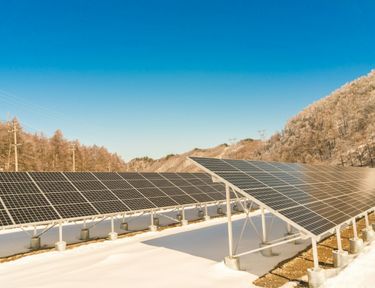
All Important Information about The Grid-connected Solar Power System and Its Advantages
What exactly is an On-Grid Solar System?
An On-Grid Solar System—also known as a grid-connected power generation system—is one of the most popular solutions for efficiently harnessing clean energy from the sun.
Unlike off-grid systems, which operate entirely independently from the public grid, an on-grid system is directly connected to it. This means the generated solar power can not only be used within your own home but also fed into the public grid.
These systems are particularly attractive because they are cost-effective, low-maintenance, and environmentally friendly. In the long term, they help reduce energy costs and carbon emissions.
How an On-Grid Solar System Works in Detail
A typical on-grid solar system consists of the following components:
- Solar Modules: Convert sunlight into direct current (DC).
- Inverter: Converts DC into alternating current (AC) for household use or feeds it into the grid.
- Smart Meter: Measures the amount of energy produced and consumed.
- On-Grid Storage: Optional battery storage device used to store excess energy for later use.
The core of the system is the inverter, which ensures that the generated electricity is precisely synchronized with the grid frequency. Only in this way can power be safely fed into the public grid.
With modern on-grid storage systems, the self-consumption rate can be significantly increased.
When solar generation exceeds daytime consumption, excess energy is stored and later used in the evening or at night—precisely during peak demand hours.
Advantages of On-Grid Solar Systems
1.High Energy Efficiency
On-grid systems allow immediate use of the generated electricity or direct feed-in to the grid. Through on-grid storage, energy can be temporarily stored and used at optimal times, significantly improving efficiency.
2.Cost Savings through Grid Feed-in
A major benefit is the feed-in tariff: when generation exceeds consumption, the surplus electricity can be fed into the public grid in exchange for compensation or energy credits.
3.Reduced Dependence on Energy Providers
Although the system is grid-connected, it reduces reliance on rising electricity prices.
With on-grid storage, the self-consumption rate can reach up to 80%, marking an important step toward energy independence.
4.Environmentally Friendly Solution
Every kilowatt-hour of solar power generated instead of fossil-fuel energy reduces carbon dioxide emissions. The combination of solar energy storage and on-grid systems makes sustainable living a reality.
5.High Reliability
Since the system remains connected to the public grid, stable power supply is guaranteed even during low sunlight or high consumption periods.
Why an On-Grid Storage System Makes Sense
Traditional on-grid systems feed surplus energy directly into the grid, whereas on-grid storage systems increase self-consumption. This is especially useful when:
- Electricity use is higher in the evening or at night
- Electricity prices rise during certain hours
- Greater energy independence is desired
How On-Grid Storage Systems Work in Practice
The storage unit is installed between the inverter and the household power system.
When solar generation exceeds current demand, the on-grid storage system stores the surplus electricity. Later—such as after sunset—the storage system automatically feeds electricity back into the household grid.
Thus, the system perfectly combines efficiency and flexibility while remaining economically sound.
The Role of Solar Energy Storage in On-Grid Systems
Solar energy storage acts as the bridge between energy production and consumption. Without storage, surplus electricity goes directly to the grid; with storage, it can be flexibly used when it’s most valuable.
Benefits of Solar Energy Storage:
- Increased self-consumption rate
- Lower electricity costs
- Nighttime solar energy use
- Reduced grid load
- Enhanced grid stability
An intelligent energy management system can further regulate when to store, use, or feed electricity into the grid—optimizing the economic performance of the on-grid system.
Lifespan of On-Grid Systems
An on-grid solar system typically lasts 20 to 25 years. Solar panels maintain efficiency for many years, while inverters and storage units should be replaced after 10–15 years. Regular maintenance, component cleaning, and performance monitoring can effectively extend the system’s lifespan and efficiency.
On-Grid vs. Off-Grid — Which is Better?
| Comparison Criteria | On-Grid System | Off-Grid System |
| Grid Connection | Yes | No |
| Cost | Lower | Higher |
| Energy Independence | Partial | Complete |
| Need for Storage | Optional | Required |
| Urban Application | Ideal | Limited |
For most German households, an on-grid solar system with storage is the better choice—it’s economical, easy to maintain, and often eligible for subsidies.
Is an On-Grid System Worth It Without Storage?
Yes, in many cases it still makes sense. If your electricity consumption is high during the day—for example, if you work from home or operate appliances during daylight hours—you can directly use the generated solar power.
However, from a long-term perspective, an on-grid storage system is undoubtedly more advantageous: It maximizes self-consumption and reduces dependency on rising electricity prices.
Planning and Installation Tips for On-Grid Solar Systems
1.Conduct a Site Analysis
Check the roof’s orientation and tilt to ensure optimal sunlight exposure. The ideal direction is south or southwest.
2.Design the System Properly
The system size should match household electricity usage. Excess generation is only beneficial if storage or feed-in is planned.
3.Choose an Efficient On-Grid Storage System
Pay attention to storage capacity, charge/discharge cycles, and compatibility with the inverter. Modern lithium battery storage offers high efficiency and long lifespan.
4.Integrate a Smart Energy Management System
An energy management system can automatically optimize the timing of storage, usage, and grid feed-in, thereby improving efficiency and self-sufficiency.
Future Outlook for On-Grid Systems in Germany
The combination of solar storage and on-grid technology plays a key role in the energy transition.
With rising electricity prices and growing environmental awareness, more households are adopting storage-equipped on-grid systems for sustainable and economical living.
Future innovations—such as smart inverters and bidirectional power flow—will further enhance the performance and flexibility of on-grid systems.
Conclusion
An on-grid solar system achieves the perfect balance between cost-efficiency, sustainability, and reliability. With modern on-grid storage and intelligent solar energy storage technologies, solar utilization today has reached unprecedented levels.
For homeowners seeking long-term cost savings and environmental protection, an on-grid solar system is undoubtedly the ideal choice. For more information on efficient storage and smart photovoltaic solutions, please visit Ultimati Energie.
Ultimati Energie Deutschland GmbH is a Germany-based B2B energy storage system provider specializing in scalable residential and C&I battery storage solutions for European partners.
Become a Partner
Sales: +49 1624886367
Customer Support:
+49 15226994869
Address: Ober der Röth 4, 65824 Schwalbach am Taunus, Germany
Copyright © 2026 Ultimati Energie Deutschland GmbH All rights reserved.