
Also read: All-in-One or Modular: Which Battery Storage System Is Right for Your Project?

How Battery Storage Systems Permanently Reduce Your Electricity Costs?
Reduce your electricity costs permanently with a battery storage system. In this easy-to-understand guide, you'll learn how to save money with intelligent electricity storage, take advantage of government subsidies, and become more independent from the power grid – explained step by step, with real-life examples.
Electricity is more expensive today than ever before. Whether in households, businesses, or industry, rising energy costs affect us all. Many people are therefore asking: How can I save money in the long term without sacrificing everyday conveniences? The answer often lies in an inconspicuous box in the basement: the battery storage system. In this blog, we take an in-depth but easy-to-understand look at how battery storage systems can permanently reduce your electricity costs – with simple explanations, real examples, and helpful tips.
Chapter 1: What is a Battery Storage System?
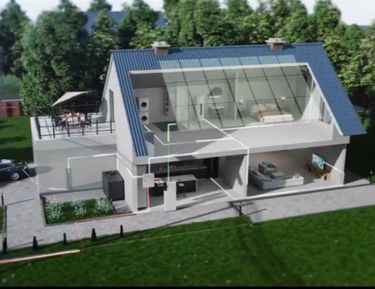
A battery storage system is a device that stores electricity when it's available and cheap, and releases it later when it's needed – especially when electricity from the grid is expensive.
Imagine your solar system produces a lot of energy during the day. But when you're home in the evening, the sun is no longer shining. Without storage, the surplus electricity goes to waste during the day, and in the evening, you have to buy expensive grid electricity. With storage, you use your self-generated electricity later – clever, right?
Chapter 2: Why are Electricity Prices Constantly Rising?
There are many reasons why electricity prices are rising:
- Higher taxes and levies
- More expensive raw materials, such as gas and coal
- Unstable political situations
- Higher grid fees
- Growing demand due to e-mobility and digitalization
A battery storage system is like a financial umbrella. It protects you from these price fluctuations because you are less dependent on grid power.
Chapter 3: How Does a Battery Storage System Work in Everyday Life?
A typical daily routine with a battery storage system might look like this:
Morning: The solar system starts up slowly, and the storage system is still well filled from the previous day.
Midday: Lots of sun, lots of solar power – the storage system is recharged.
Evening: Now the stored electricity is used when everyone is at home.
At night: The storage system empties, but only minimal grid power is used.
This means: Lower electricity costs. And more independence.
Chapter 4: How Much Does a Battery Storage System Cost – and Is It Worth It?
A modern battery storage system costs between €5,000 and €15,000, depending on size and quality. That sounds like a lot, but it's an investment in your future.
Example calculation:
- Annual electricity costs without storage: €1,200
- With storage, you save about 60–70%: You only pay €360–480
- Savings per year: approx. €720–840
- Payback period: approx. 7–10 years
From then on, your system will generate profit in the form of saved costs.
Chapter 5: Funding and Tax Benefits
The government knows how useful battery storage is. That's why many federal states have funding programs, e.g.:
- Investment grants
- Tax depreciation
- KfW loans with special conditions
Tip: Speak to a specialist company – many offer free assistance with the funding application process.
Chapter 6: What Does Self-sufficiency Mean – and How Close Can I Get?
Self-sufficiency means: You become independent of the electricity supplier. Complete self-sufficiency is difficult, but with a storage system and a solar system, 70–80% is realistic.
This means: You only purchase a minimal amount of electricity. Especially in spring and summer, your house is almost completely self-sufficient.
Chapter 7: Safety, Lifespan, and Maintenance
Modern lithium-ion storage systems are safe and durable. They usually last 10–15 years, often longer. Maintenance is minimal – an annual inspection is usually sufficient.
And: Most systems are designed to shut down automatically in the event of problems – safety comes first.
Chapter 8: Who is a Battery Storage System Particularly Beneficial for?
- For homeowners with solar systems
- For families who use a lot of electricity in the evenings or mornings
- For companies that want to manage peak loads
- For farmers who use machinery at certain times of the day
In short, for anyone who wants to reduce their electricity costs in the long term and achieve independence.
Chapter 9: Practical Experiences
Example 1: The Lehmann family from Bavaria
"Since we installed our storage system, we only pay a third for electricity. And the best part: Our house works even during a power outage!"
Example 2: Maier Carpentry in North Rhine-Westphalia
"Our machines consume a lot of energy. Thanks to battery storage, they now run cost-effectively even during our lunch break – with solar power."
Chapter 10: Future Outlook – Will It Still Be Worthwhile in 10 Years?
Yes! The technology is getting cheaper and better. Grid power, on the other hand, will likely become more expensive. The trend is clearly toward self-sufficiency and storage.
Home storage also makes sense for electric cars – this way, you can charge your car cheaply with self-generated electricity.
Conclusion
A battery storage system reduces your electricity costs – permanently. It makes you more independent, provides security, and even brings ecological benefits. Those who invest today save money tomorrow.

Ultimati Energie Deutschland GmbH is a Germany-based B2B energy storage system provider specializing in scalable residential and C&I battery storage solutions for European partners.
Company Overview
Product Center
Solution
Service Center
News Center
Become a Partner
Sales: +49 1624886367
Customer Support:
+49 15226994869
Address: Ober der Röth 4, 65824 Schwalbach am Taunus, Germany
Copyright © 2026 Ultimati Energie Deutschland GmbH All rights reserved.