

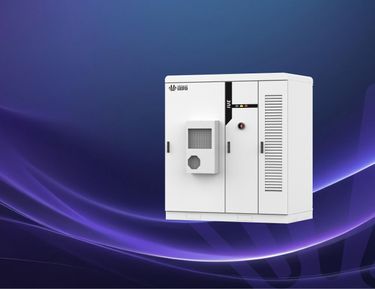
Virtual Power Plants & Load Management: How LiFePO4 Storage Enables Smarter Applications
Power grids are under enormous pressure today. While the expansion of renewable energies is an important step toward climate neutrality, it also brings with it major challenges: fluctuating power generation from solar and wind, rising electricity consumption from electromobility and heat pumps, and the need to ensure security of supply.
In this conundrum, two terms are gaining increasing importance: virtual power plants (VPPs) and load management. But what exactly do they mean – and what role do LiFePO4 storage systems play in this? In this blog, we explore the connections, explain how modern storage solutions help enable smarter applications, and demonstrate practical application scenarios.
What Are Virtual Power Plants?
A virtual power plant is not a real power plant with a chimney and turbine. Rather, it is a network of decentralized energy generators (such as PV systems, wind turbines), storage units, and controllable consumers that are digitally connected. Intelligent software controls these components so that they can collectively act as a single power plant on the energy market.
A simple example: In a neighborhood, many houses produce more solar power than they consume. Instead of feeding this power into the grid and leaving it to the market, it is collected in a local storage facility and released specifically when demand is high.
The goal: to ensure grid stability, lower electricity costs, and reduce CO2 emissions.
Load Management Explained
Load management means intelligently controlling electricity consumption in terms of time and quantity. Instead of running all devices at the same time—for example, in the evening when many people come home—peak loads are avoided by staggering device start-ups or using energy from storage.
In industry, load management can also mean shifting energy-intensive processes to cheaper times or using on-site power generators when grid electricity is expensive.
Advantages:
- Reduction in electricity costs
- Reduced load on the grid
- Better predictable energy flows
The Role of LiFePO4 Storage
LiFePO4 (lithium iron phosphate) is a particularly safe and long-lasting storage technology. Compared to other lithium-ion batteries, LiFePO4 storage systems offer the following advantages:
- High cycle stability (more charge/discharge cycles)
- Low heat generation (minimal fire risk)
- Stable voltage level
- More environmentally friendly chemistry
These properties are a major advantage, especially when combined with virtual power plants. This is where fast response times, numerous charge cycles, and high safety are essential.
Example: A virtual power plant wants to respond to short-term electricity price changes and store or release energy – LiFePO4 storage systems are ideal for this.
How Virtual Power Plants and Storage Systems Work Together?
A well-connected virtual power plant uses real-time data: weather forecasts, electricity prices, and consumption patterns. Based on this, the software makes decisions:
- When is energy stored?
- When is it fed into the grid?
- Which loads are shifted?
LiFePO4 storage units act as buffers. They absorb surplus energy and release it in a targeted manner. Thanks to their high efficiency and rapid response times, they are the perfect complement.
In residential areas, many small storage units can work together. In commercial parks, they serve as a buffer against expensive peak loads. And in industry, they even partially replace emergency power systems.
Smart Applications – What's Possible Today?
For households:
- Store solar power during the day, use it in the evening
- Feed surpluses into the VKW and earn money from it
- Increase self-consumption
For businesses:
- Peak shaving with LiFePO4 storage
- Participation in the energy market
- Combination with a charging infrastructure for electric vehicles
For municipalities:
- Security of supply in urban areas
- Smart grids with storage technology
- Integration of renewable energies locally
Looking into the Future
The energy market is becoming more dynamic, decentralized, and digital. Virtual power plants and load management will be standard in a few years. LiFePO4 storage is the key to a flexible and stable energy system.
As adoption increases, costs are falling. At the same time, trust is growing – because LiFePO4 has proven to be safe, low-maintenance, and efficient.
Many providers are already relying on this technology. And it will continue to gain importance in the future – as the basis for smart energy supply in cities, rural areas, and industry.
Conclusion
Virtual power plants and intelligent load management are no longer a thing of the future – they are a reality. Thanks to robust and reliable LiFePO4 storage, we can use energy more intelligently. Relieve grids and make an important contribution to the energy transition.
Whether it's a single-family home, a factory, or a municipality – the smart combination of storage and control brings efficiency, independence, and climate protection under one roof.

Ultimati Energie Deutschland GmbH is a Germany-based B2B energy storage system provider specializing in scalable residential and C&I battery storage solutions for European partners.
Become a Partner
Sales: +49 1624886367
Customer Support:
+49 15226994869
Address: Ober der Röth 4, 65824 Schwalbach am Taunus, Germany
Copyright © 2026 Ultimati Energie Deutschland GmbH All rights reserved.