

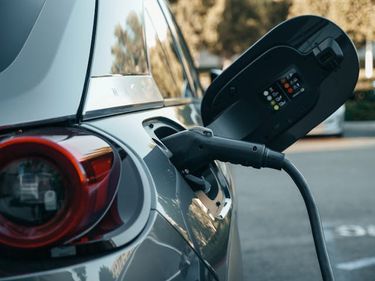
Charge Your EV with Solar Power: How It Works with Battery Storage – and Why It’s Worth It
Photovoltaics with Battery and Wallbox – Your Path to Energy Independence
Today, more and more homeowners want to charge their EV with solar power – not only for sustainability, but also to reduce long-term electricity costs. If you already own a photovoltaic (PV) system or are planning to install one, you're probably also considering a wallbox with solar panels and a battery storage system.
So here’s the key question: How can I charge my electric car with solar energy – even in the evening when the sun isn’t shining?
That’s exactly where a battery for EV charging comes into play. It stores surplus solar power generated during the day and makes it available when your EV is parked at home in the evening. Combined with a smart wallbox and energy management system, this creates a flexible, eco-friendly charging setup.
How PV System, Energy Storage, and Wallbox Work Together
A standard PV system generates solar electricity during daylight hours. Without storage, this energy is either used directly in the home or fed into the grid – often at a low feed-in tariff. That’s not the most efficient use.
When you combine a photovoltaic system with battery and wallbox, this is what happens:
- Your solar panels produce energy during the day.
- A solar battery stores excess power.
- A wallbox with solar integration charges your EV exactly when needed – even at night.
Modern smart energy management systems help monitor and control power flows efficiently. They support features like PV surplus charging, ensuring the EV only charges when excess solar energy is available – a powerful tool for home EV charging with solar.
Why Energy Storage Makes All the Difference
Without a battery, your EV can only be charged directly from the sun – usually during the day. But most cars aren’t home then. That means solar power is either wasted or used for other appliances.
With energy storage for EV charging, you can store your self-generated solar power and use it whenever it suits your schedule – especially in the evening or overnight.
This greatly improves your self-consumption rate:
- Without battery: ~30–40%
- With battery: up to 70–80%
According to Fraunhofer ISE, homeowners with a solar-powered EV charger with battery storage can reduce their electricity bills significantly by avoiding expensive grid electricity.
Tip: A wallbox connected to battery storage ensures your EV truly runs on clean solar energy – even after sunset.
Benefits of Combining PV, Battery Storage & Wallbox
Here’s what you gain from combining all three components:
- Maximum solar usage: Boost your self-consumption rate
- Lower electricity costs: Rely less on grid power
- Greater independence: Less exposure to rising energy prices
- Sustainability: Drive on 100% renewable energy
- Smart charging: Timed charging, load balancing, and PV surplus integration
- Scalable design: Easily upgrade your system as your needs grow
- EV flexibility: A home EV charger with battery backup allows you to charge your vehicle whenever you want – even when the sun isn't shining
Is the Investment Worth It?
Whether a PV system with battery and wallbox makes sense depends on your specific situation. Consider these factors:
Factor | Relevance |
Electricity consumption | From ~4,000 kWh/year: savings grow significantly |
EV charging habits | More frequent = more value |
Roof space | More panels = more stored solar energy |
Grid electricity prices | Higher rates = faster return on investment |
Incentives & Government Support
Many European countries offer attractive incentives for EV charger and battery storage systems. In Germany, for example, KfW programs provide grants or low-interest loans for energy-efficient home upgrades. Be sure to check regional offers that can reduce your up-front investment dramatically.
Example Setup for a Residential Home
A common configuration for solar-powered EV charging might include:
- PV System: 8 kWp
- Battery Storage: 10 kWh
- Wallbox: 11 kW AC charger
- Smart Controls: App monitoring + PV surplus charging enabled
This system allows you to charge your EV with solar power at any time, and scale as needed.
Who Benefits Most from PV + Battery + Wallbox?
The solution is ideal for:
- Homeowners with EVs
- Families with high energy consumption
- New builds with solar-ready rooftops
- People who value sustainability and independence
The EV charger with battery storage is the missing link that transforms solar panels into a full home charging solution. Charge clean, save money, and reduce your carbon footprint – all at once.
Common Questions (FAQs)
Q: Do I need a special EV charger for solar?
A: No. Any Level 2 EV charger works. It’s more about how your home system manages power from solar and storage.
Q: What if it’s cloudy or rainy?
A: Solar panels still produce electricity, just less. Your battery ensures consistent charging, and the grid is always there as a backup.
Q: How many panels do I need?
A: It depends on your driving habits. Someone who drives 20 miles a day will need fewer panels than someone who drives 60.
Q: Can I go completely off-grid with solar and EV charging?
A: Yes, but it requires a large solar array and battery system. Most people stay connected to the grid for backup peace of mind.
Get Started: Configure Your Wallbox with Battery Now
At Ultimati Energie, we offer advanced systems for EV charging with solar and battery – combining high-end components with expert support.
Ultimati Energie’s Wallbox solutions for your home:
NX-AE1 EV Home Charger – compact, smart, and solar-ready
NX-AE3 AC Wallbox – a powerful EV charger with PV compatibility
Ultimati Energie’s Modular solar battery storage systems:
RE-HA1 All-in-One Eneregy Storage System – includes integrated inverter
RE-LA1 5 kWh Home Battery System – scalable for growing needs
RE-LA1 6.6 kWh Energy Storage System – ideal for frequent EV charging
With Ultimati Energie, you get future-proof technology that adapts to your lifestyle. Request your solar + battery + wallbox setup now!

Ultimati Energie Deutschland GmbH is a Germany-based B2B energy storage system provider specializing in scalable residential and C&I battery storage solutions for European partners.
Become a Partner
Sales: +49 1624886367
Customer Support:
+49 15226994869
Address: Ober der Röth 4, 65824 Schwalbach am Taunus, Germany
Copyright © 2026 Ultimati Energie Deutschland GmbH All rights reserved.