

Battery Storage in Europe 2025: Key Trends and Market Drivers
Across Europe, electricity prices remain volatile, policy targets are tightening, and households are rethinking their approach to energy. In this shifting landscape, battery storage is no longer a future concept—it’s a present-day opportunity.
Whether you’re installing systems, integrating PV + storage, or distributing residential energy solutions, the market is evolving fast. Consumers are actively looking for partners who can help them save money, stabilize supply, and unlock more value from solar.
2025 marks a major turning point. Demand is scaling, expectations are rising, and the competition is moving quickly. Are you ready to lead?
Why Is 2025 a Pivotal Year for Battery Storage in Europe?
The numbers speak for themselves. According to SolarPower Europe’s 2025 Battery Storage Outlook, the installed storage capacity across Europe surpassed 89 GW by early 2025—up from just 4 GW in 2019.
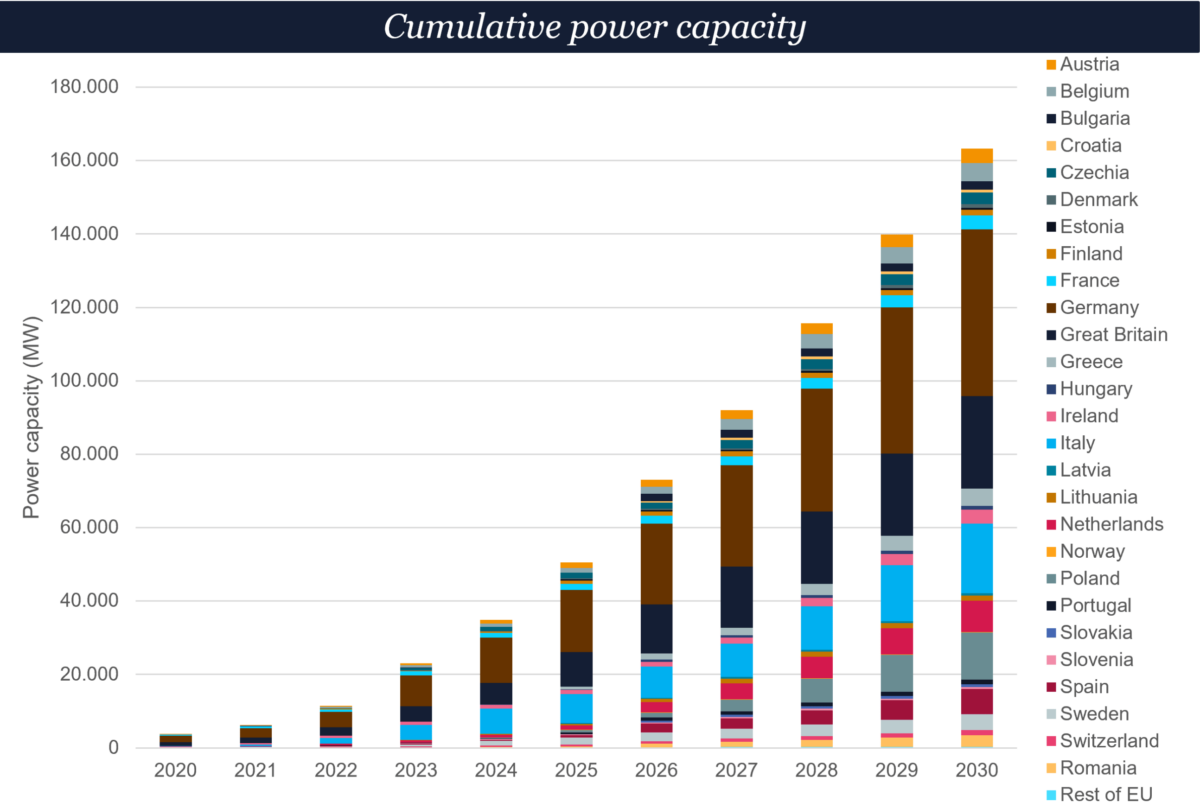
Source: European Association for Storage of Energy
This exponential growth reflects the convergence of three major forces:
- Rising energy prices and grid stress
- Increased electrification through EVs and heat pumps
- Policy incentives for solar-plus-storage across multiple EU states
For residential and small commercial applications, battery storage has become a strategic asset. It enables households to shift energy usage, avoid peak tariffs, and reduce grid dependence—all without compromising comfort or convenience.
As an energy professional, you’re not just observing these changes—you’re in a position to act on them.
What’s Powering the Surge in Residential Energy Storage Demand?
Battery storage is becoming a must-have for more and more homeowners in Europe. While high electricity costs are a key factor, the real momentum is driven by deeper structural shifts in how energy is produced, consumed, and priced.
Here are the three biggest forces behind the growing demand for residential energy storage in 2025:
1. Time-of-Use Tariffs Are Reshaping Household Energy Economics
As utilities across Europe roll out time-of-use (TOU) pricing, homeowners are no longer paying a flat rate for electricity. Instead, they face significant price differences depending on the time of day.
This dynamic creates a clear business case for home batteries:
- Charge when electricity is cheap (off-peak hours or from PV)
- Discharge when it’s expensive (peak times)
With a smart EMS (Energy Management System), this process is automated—delivering savings without any change in consumer behavior. TOU pricing structures are becoming increasingly common in residential markets such as Germany, the UK, and the Netherlands, driving adoption of storage-ready home energy solutions.
2. Home Electrification Increases Storage Needs
The shift away from fossil fuels is accelerating at the household level:
- Electric vehicles (EVs) increase peak load and require flexible charging
- Heat pumps for space and water heating demand high energy usage in winter
- Rooftop PV systems create midday production peaks—but often without consumption alignment
Storage is what makes this ecosystem work. It allows users to balance load and generation, avoid infrastructure upgrades, and participate in emerging energy markets.
By offering a reliable home battery solution, you enable your clients to electrify their homes without compromise—and position your business as a full-service energy partner.
3. Households Want Energy Independence and Climate Control
Beyond cost, many consumers are looking for energy autonomy and climate-positive choices. They want to rely less on the grid, reduce their carbon footprint, and be more resilient during power outages or energy shocks.
According to SolarPower Europe, the residential segment accounted for 63% of all newly installed battery storage capacity in 2023, highlighting that homeowners are leading the home storage boom.
By 2025, this mindset is no longer niche—it’s mainstream. The question for installers isn’t whether demand exists, but how fast you can meet it.
Where Is Battery Storage Adoption Growing Fastest in Europe?
While energy storage is expanding across the continent, not all markets are moving at the same pace. In 2025, several European countries stand out for their rapid uptake of home battery solutions—driven by policy, economics, and solar adoption.
Here are the top growth hotspots for residential battery storage:
Germany
Germany remains Europe’s largest residential battery storage market. According to EUPD Research, roughly 270,000 home storage systems were installed in the first half of 2024 alone—when combined with ongoing PV expansion and supportive incentives, this points to strong cumulative growth.
Installers are leveraging high public awareness, mature PV infrastructure, and strong regional incentives to scale deployments across both urban and rural areas.
Italy
Italy’s “Superbonus” and regional solar incentives continue to support hybrid PV+storage systems. Homeowners in southern Italy, in particular, are seeking protection against grid volatility and peak pricing—driving demand for mid-size battery solutions.
United Kingdom
The UK market is evolving quickly as energy price caps rise and time-of-use tariffs become more widespread. With rooftop PV adoption growing and EVs becoming mainstream, batteries are essential to balancing household energy use.
Although the UK lacks a national storage subsidy, private finance and utility-driven programs are helping fill the gap.
Spain & France
Both countries are showing strong momentum in 2025. Spain’s self-consumption boom is now extending into storage, while France’s ambitious targets for decarbonizing residential buildings have created new incentives for thermal + electrical storage combinations.
What Are the Technical & Commercial Trends to Watch in 2025?
The European home battery storage market is rapidly evolving—not only in volume but also in how products are designed, installed, and integrated. For installers and energy solution providers, 2025 brings several clear trends that are reshaping the technical and commercial landscape:
Modular ESS Architectures
Flexibility is now a must. Modular energy storage systems (ESS) allow installers to scale capacity based on household needs—starting small and expanding when needed. This makes them ideal for phased projects or mixed-use households.
Standardised, Plug-and-Play Solutions
Time on site is money. Plug-and-play battery storage systems simplify installation by integrating all key components—battery modules, inverter, EMS—into a factory-tested unit. With fewer parts to configure, you get faster deployment and fewer errors.
Integrated EMS and Hybrid Inverter Technologies
Customers expect smart control. Integrated Energy Management Systems (EMS) paired with hybrid inverters allow for seamless switching between PV, grid, and battery—optimising usage automatically and enhancing energy savings.
Focus on Installation Speed and O&M Predictability
Fast, clean installations and low-maintenance systems are now decisive selling points. Installers prefer systems that minimise wiring, reduce commissioning time, and offer remote diagnostics for better long-term support.
These trends are converging around one clear expectation: residential energy storage must be efficient to install, easy to manage, and scalable for the future.
How Ultimati Energie Aligns with 2025’s Market Demands
At Ultimati Energie, we don’t just observe trends—we engineer for them. Our all-in-one residential battery systems are designed with installers and distributors in mind, offering everything needed to meet the market’s demand for modularity, speed, and reliability.
Scalable, Modular Configurations
Whether your customers need a 5 kWh entry-level unit or a full 30 kWh setup for EV and backup use, our home battery storage system allows seamless scaling—using the same platform. This simplifies inventory, training, and system design.
Factory-Integrated, Plug-and-Play Design
Our all-in-one storage systems come pre-configured with lithium battery modules, hybrid inverter, and EMS—reducing installation time by up to 50%. No more compatibility issues or on-site surprises.
Smart EMS with Real-Time Optimisation
The built-in Energy Management System (EMS) enables automatic load shifting and TOU-based savings. Installers can easily set up remote monitoring for diagnostics and maintenance—ideal for long-term project support.
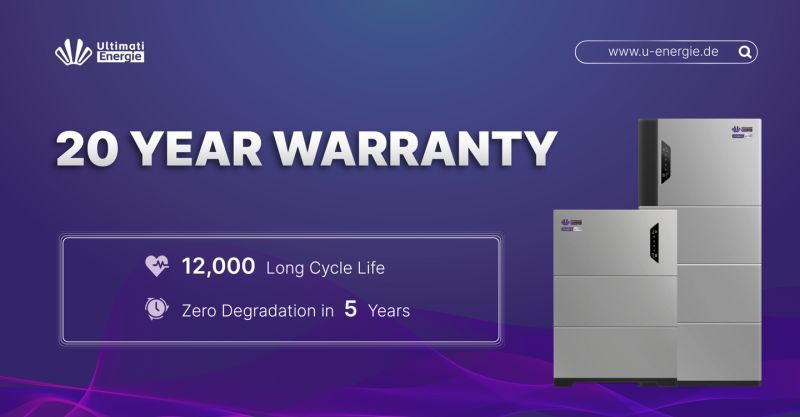
European Compliance and 20-Year Warranty
Our systems are CE-, UN-, IEC-, and VDE-AR-N-compliant, with no hidden complexity. We provide full documentation, technical training, and a 20-year performance warranty for professional peace of mind.
Partner-Focused Approach
We work with professional installers and project developers across Europe. With stable product availability and multilingual technical support, we help you stay ahead in a competitive market—without needing to customise systems from scratch.
Looking for a dependable partner for modular ESS and plug-and-play storage? Ultimati Energie delivers proven residential solutions—ready for immediate deployment.
Ready to Scale with a Proven Residential Storage Partner?
Whether you’re expanding your portfolio or standardising your installation process across projects, Ultimati Energie offers a reliable path forward. With modular ESS technology, fast lead times, and fully integrated all-in-one energy storage systems, we help you meet growing residential demand—without the friction of system compatibility or complex sourcing.
Let’s talk about how our solutions can fit into your pipeline. Reach out today and discover how Ultimati Energie can support your next residential energy storage project.
Ultimati Energie Deutschland GmbH is a Germany-based B2B energy storage system provider specializing in scalable residential and C&I battery storage solutions for European partners.
Become a Partner
Sales: +49 1624886367
Customer Support:
+49 15226994869
Address: Ober der Röth 4, 65824 Schwalbach am Taunus, Germany
Copyright © 2026 Ultimati Energie Deutschland GmbH All rights reserved.