

Austria Battery Storage Subsidies 2026: Why the Funding Logic Is Shifting Toward Storage and Grid Flexibility
Austria’s solar policy is entering a new phase. After years in which renewable-energy incentives primarily focused on installing more photovoltaic generation, policymakers are increasingly asking a different question: how can renewable electricity be stored, controlled and used when the grid actually needs it?
That change matters for homeowners, installers and commercial energy users considering battery storage in Austria in 2026. It also points to a wider European trend. As solar penetration rises, the value of an energy system is no longer determined by generation capacity alone. Flexibility — the ability to move electricity from one time period to another and respond intelligently to grid conditions — is becoming increasingly important.
Key Takeaways
- Austria’s current EAG investment-support framework continues to support eligible PV-plus-storage projects in 2026.
- The published 2026 framework includes a fixed subsidy rate of €150 per kWh for eligible electricity storage, subject to programme requirements and capacity limitations.
- The next listed 2026 EAG funding call runs from 8 October to 22 October 2026.
- Austria’s Federal Ministry of Economy, Energy and Tourism has called for future support to focus more strongly on storage, system-friendly operation and market integration.
- This does not mean a new storage-focused subsidy regime has already entered into force in 2026. The proposed reform is intended to reshape the funding logic from the 2027 funding year onward and remains subject to the policy and legislative process.
- For buyers, the implication is important: battery capacity alone may become a less meaningful metric than the ability of PV, storage, inverter and energy-management systems to operate as one controllable energy asset.
What Is Happening With Austria’s PV and Battery Storage Funding?
Austria’s 2026 EAG investment subsidy programme currently supports new or expanded photovoltaic installations and, under specified conditions, electricity storage installed in combination with those PV projects. According to current WKO programme information, eligible storage receives a fixed support rate of €150/kWh. Published WKO guidance also describes eligible storage of up to 50 kWh, subject to the applicable programme conditions. Storage-only applications are not eligible under this particular scheme.
The listed third funding round for 2026 is scheduled for 8–22 October. The programme also contains separate funding categories for PV systems according to their installed capacity.
These are current programme rules, not predictions. Project developers should always verify eligibility, capacity limits, deadlines and application procedures directly with the responsible Austrian funding authority before making an investment decision.
Official programme information: WKO — EAG Investment Subsidy 2026 for Photovoltaics and Electricity Storage.
The More Important Story: Austria Is Questioning the Existing Funding Logic
The most interesting development is not the €150/kWh figure itself. It is the discussion about what Austrian renewable-energy subsidies should achieve in the future.
On 10 July 2026, Austria’s Federal Ministry of Economy, Energy and Tourism reported that almost 28,000 applications had been submitted in the second EAG PV funding call, while available funding was sufficient for only around 3,000 applications. The ministry presented this gap as evidence that the existing support mechanism needs reform.
More importantly for the battery industry, Energy State Secretary Elisabeth Zehetner said future funding should be oriented more strongly toward storage, system-friendly operation and market integration. The ministry also argued that the electricity system must consider not only how much renewable power is generated, but when and where it is generated, how it can be stored and how it can help relieve grid pressure.
The ministry has linked this proposed change in funding logic to reforms intended to take effect from the 2027 funding year. It should therefore be understood as a policy direction rather than a new storage-focused subsidy regime already operating in 2026.
Official source: Austrian Federal Ministry of Economy, Energy and Tourism — 2nd EAG Call and Funding Reform.
Ultimati Insight: The Policy Signal Is Not Simply “More Batteries”
It would be easy to interpret Austria’s policy discussion as another sign that Europe needs more battery capacity. That is only part of the story.
The more important signal is a transition from installed capacity toward controllable flexibility.
A battery that simply sits behind a meter is different from a battery integrated with PV generation, an inverter or PCS, metering and an energy management system that can decide when charging and discharging creates the most value.
This distinction becomes increasingly important as renewable penetration grows.
| Traditional PV-Centric Question | Flexibility-Centric Question |
|---|---|
| How many kWp of PV can be installed? | When will the PV electricity be available? |
| How much electricity can the system generate annually? | How much generation can be shifted to higher-value hours? |
| How large is the battery? | How much usable, controllable flexibility does the battery provide? |
| How high is self-consumption? | Can the system coordinate self-consumption, peak control and grid conditions? |
| What is the hardware cost? | What is the value of the complete energy-management architecture? |
This is why we believe the next phase of European storage will increasingly be about the quality of energy control rather than battery capacity in isolation.
Why Solar Growth Makes Battery Storage More Relevant
Solar generation is inherently time-dependent. A commercial rooftop may produce significant electricity around midday while the building’s largest demand peak occurs later. A household may export electricity during the afternoon and purchase electricity again after sunset.
Without storage, direct on-site use of PV generation largely depends on generation and consumption occurring at the same time.
With appropriately designed battery storage, part of that timing mismatch can be managed locally.
- PV generates electricity when solar resources are available.
- On-site loads consume part of the generation immediately.
- Surplus electricity can charge the battery within system and operating limits.
- Stored energy can later be discharged when local demand rises or PV generation falls.
- An EMS can coordinate operating priorities instead of treating the battery as a passive component.
Battery storage does not eliminate the need for electricity networks, grid reinforcement or flexible generation. What it can do is add another controllable resource to the system — particularly behind the meter.
What Does the 2026 Austrian Subsidy Mean for Home Battery Storage?
For residential buyers, the current EAG programme can make PV-plus-storage projects more attractive where the project satisfies the applicable requirements. However, a subsidy should not be the only reason to install a battery.
A technically sound residential storage design begins with the household’s electricity profile.
- How much PV surplus is normally available?
- How much electricity is consumed after sunset?
- Is a heat pump part of the household load?
- Is an EV regularly charged at home?
- Is backup functionality required?
- How will the inverter, battery and EMS communicate?
Oversizing a battery purely to maximise nominal capacity can produce poor utilisation. Undersizing may leave substantial solar surplus unused. The relevant size therefore depends on the specific load profile rather than a universal “best” number of kilowatt-hours.
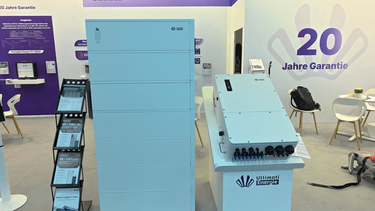
Ultimati Energie offers residential energy-storage solutions for European installers and distribution partners. Our RE-HA1 all-in-one residential energy storage system is designed around practical residential PV-storage applications.
What Does the Policy Direction Mean for Austrian SMEs?
The discussion becomes even more interesting for small and medium-sized companies.
A workshop, bakery, supermarket, agricultural business, office building or small production site may have a much more complicated load profile than a household. Its battery may need to perform several functions rather than simply increasing PV self-consumption.
- PV energy shifting: moving midday solar generation into later operating hours.
- Peak shaving: using stored energy to reduce selected power peaks where this creates economic value under the applicable tariff structure.
- Backup support: providing defined resilience functions where the system architecture supports them.
- EV charging support: coordinating local generation, battery power and charging loads.
- Energy management: controlling when different assets consume, produce, store or release electricity.
This is where the 30–60 kW hybrid energy storage system becomes particularly interesting. It sits between residential equipment and larger industrial battery cabinets and can fit businesses that need meaningful power capability without automatically moving into a much larger C&I architecture.
For more detail, see our internal guide: 4 Core Functions of C&I Energy Storage Systems.
When Does a Larger C&I Battery Make More Sense?
Battery projects should not be selected by choosing a product first and finding a use case later.
Larger C&I storage becomes relevant when the required energy capacity, charging/discharging power, operating window or site loads exceed what a smaller commercial system can reasonably address.
| Application Profile | Typical Storage Approach | Main Design Priority |
|---|---|---|
| Residential PV | Home ESS | Self-consumption, backup options, simple energy management |
| Small business / SME | 30–60 kW-class commercial ESS | PV integration, load shifting, peak management |
| Larger commercial site | Integrated C&I cabinet | Higher energy throughput, multiple operating strategies, site integration |
| Large industrial or grid project | Multi-cabinet or utility-scale architecture | Site-specific grid and market services |
For larger commercial applications, Ultimati’s ULTIBLOCK-TL261 provides 261 kWh of energy capacity in an integrated cabinet combining battery, PCS, EMS, BMS, thermal management and fire-protection functions.
Why EMS Could Become More Important in the Next Phase of Storage
The Austrian policy discussion contains a useful lesson for the wider European market: electricity storage creates its greatest value when the system knows when to use it.
Consider a commercial site with rooftop PV and a battery. Several operating priorities can compete with one another:
- charge with excess PV;
- maintain reserve capacity for later peak shaving;
- avoid unnecessary battery cycling;
- support EV charging during a defined period;
- maintain a backup reserve if required;
- follow site export or grid-connection limitations.
A battery cannot optimise these objectives based on energy capacity alone. Control logic, measurement and system integration become essential.
That is why we see a broader transition from selling batteries as standalone hardware toward designing energy-storage systems as controllable infrastructure.
What Installers and EPCs Should Prepare for Before October
The next published EAG funding call is currently scheduled for October 2026. Installers and EPCs serving the Austrian market can use the period before the call to improve project readiness rather than focusing only on application timing.
- Verify the latest EAG eligibility requirements with official sources.
- Confirm whether the proposed PV and storage configuration meets programme conditions.
- Obtain an accurate customer load profile.
- Separate power requirements in kW from energy requirements in kWh.
- Define the expected operating strategy before selecting storage capacity.
- Check connection requirements with the relevant network operator.
- Confirm metering, inverter and EMS compatibility.
- Model the business case both with and without subsidy support.
The last point is particularly important. A subsidy can improve investment economics, but a storage project should ideally have a technically and economically coherent use case independent of short-term policy changes.
From €/kWh to Value per Flexible kWh
Battery storage is often compared using simple figures such as equipment price per kilowatt-hour. This is useful, but incomplete.
Two systems with the same nominal battery capacity may create different real-world value because of differences in power capability, usable capacity, system efficiency, thermal management, control logic, integration and the load profile of the customer.
As European energy policy increasingly focuses on flexibility and system integration, a more useful commercial question may become:
How much usable and controllable flexibility can this system provide for the application?
That is a fundamentally different way to evaluate battery storage — and Austria’s current policy discussion suggests the market is moving in precisely that direction.
Frequently Asked Questions About Austria Battery Storage Subsidies 2026
Is battery storage subsidised in Austria in 2026?
Yes. Under the current EAG investment-support framework, qualifying electricity storage can receive support when installed in connection with an eligible new or expanded PV system. Storage-only applications are not eligible under this specific programme.
How much is the 2026 Austrian battery storage subsidy?
The current published EAG framework lists a fixed subsidy rate of €150 per kWh for eligible storage, subject to the programme’s technical, capacity and application requirements.
When is the next Austrian PV and battery funding call?
The currently published third 2026 EAG call is scheduled for 8 October through 22 October 2026. Applicants should verify dates on the responsible programme website before submitting a project.
Is Austria replacing PV subsidies with battery subsidies?
No such replacement should be treated as final policy at this stage. Austrian policymakers have publicly called for a new funding logic with more emphasis on storage, system-friendly operation and market integration. The proposed changes are intended to reshape the funding framework from the 2027 funding year onward and remain subject to the policy and legislative process.
Does a commercial battery automatically reduce electricity costs?
No. Savings depend on the load profile, electricity tariff, PV generation, battery sizing, operating strategy, efficiency and other site-specific factors. A project assessment should model these variables rather than assuming a fixed return.
Is 30–60 kW battery storage suitable for an SME?
It can be suitable when the site’s peak power, PV surplus and required discharge duration fall within that system class. The correct size should be determined using measured load and generation data.
When should a business consider a 261 kWh C&I cabinet?
A 261 kWh-class cabinet can become relevant when a commercial site requires more energy throughput or longer operating windows than a smaller commercial system can provide. The decision should be based on the site’s kW demand, required kWh capacity and operating strategy.

Ultimati Energie Deutschland GmbH is a Germany-based B2B energy storage system provider specializing in scalable residential and C&I battery storage solutions for European partners.
Become a Partner
Sales: +49 1624886367
Customer Support:
+49 15226994869
Address: Ober der Röth 4, 65824 Schwalbach am Taunus, Germany
Copyright © 2026 Ultimati Energie Deutschland GmbH All rights reserved.