

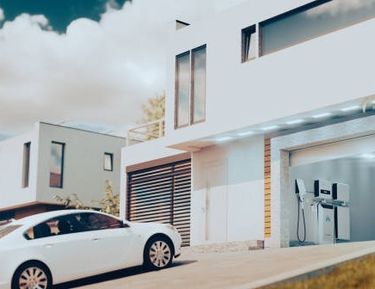
Why a Home Wallbox Is Particularly Worthwhile for Plug-In Hybrid Vehicles
As more drivers switch to plug-in hybrid vehicles (PHEVs), charging convenience is becoming just as important as fuel efficiency. While public charging stations and portable cables are useful, the most practical solution for everyday charging is a home wallbox. For PHEV owners, a dedicated wall-mounted charger not only saves time but also reduces costs, improves safety, and makes it easier to maximize the car’s electric range.
The charging needs of plug-in hybrids
Plug-in hybrids strike a balance between electric driving and conventional fuel. Their batteries are smaller than those in full electric cars, typically offering 20 to 80 km of electric range. On paper, this seems manageable with a standard socket or occasional public charging. In practice, however, most drivers quickly find these options inconvenient.
Standard sockets are slow and not designed for long hours of high current.
Public chargers may be busy, located off-route, or cost more than home electricity.
PHEV batteries need regular charging to make electric driving worthwhile, often on a daily basis.
This is where a home wallbox becomes an especially valuable tool for plug-in hybrid drivers.
What exactly is a home wallbox?
A home wallbox (also called a residential EV charger or wall-mounted charging station) is a dedicated unit installed on the wall of your garage, carport, or driveway. Unlike portable charging cables, it is built for safe, efficient, and faster charging. Most wallboxes deliver between 3.7 kW and 22 kW, depending on the home’s electrical system and the car’s capability.
Modern wallboxes often come with smart features such as app monitoring, charge scheduling, load balancing, and even integration with solar panels or energy storage systems. This makes them more than just a plug—they become part of the household’s energy strategy.
Why a home wallbox is worthwhile for PHEV drivers
1. Start each day fully charged
Because plug-in hybrids have smaller batteries, they charge quickly—often in just a few hours. A home wallbox ensures you can “top up” overnight and start each morning with the maximum available electric range.
2. Safer and faster charging
Domestic sockets were never designed for hours of continuous high power. Using them regularly can risk overheating or tripping circuits. A dedicated wallbox is engineered to deliver stable current, built-in safety protections, and durable connectors.
3. Lower energy costs
Public charging is convenient on the road, but often comes with premium pricing. At home, you can charge at your normal electricity rate—or even schedule charging during off-peak hours when rates are lower. Smart wallboxes make this simple with automatic timers.
4. Reduce fuel consumption
By charging easily and regularly at home, you’ll naturally use the electric motor more often and rely less on the combustion engine. This not only saves money on fuel but also reduces emissions and wear on the engine.
5. Integration with solar and storage
For households with solar panels, a home wallbox makes it possible to power your car with your own renewable electricity. Add home storage to the mix, and you can even use excess solar energy stored during the day to charge your plug-in hybrid at night.
A natural fit with smart home energy solutions
At U-Energie, we design our advanced lithium energy storage systems to integrate seamlessly into residential energy infrastructure. When combined with a home wallbox, our solutions allow you to charge your plug-in hybrid at the smartest times—using solar power when it’s abundant or stored energy during peak grid hours. This transforms vehicle charging into a key part of a cleaner, more efficient household energy cycle.
Backed by German engineering standards, robust safety features, and intelligent management software, our systems ensure that your charging setup is both reliable and future-proof. For plug-in hybrid drivers, this means moving beyond basic charging toward a truly cost-effective and sustainable home energy solution.
How to choose the right wallbox for a plug-in hybrid
Charging power: For most PHEVs, a 3.7 kW or 7.4 kW wallbox is sufficient. Higher outputs like 11 kW or 22 kW are useful if you plan to upgrade to a fully electric car in the future.
Smart features: Look for app control, scheduling, and load balancing, especially if you want to align charging with cheaper tariffs or renewable energy production.
Compatibility: Make sure the wallbox supports your vehicle’s connector type (usually Type 2 in Europe).
Safety: Ensure the unit complies with local standards and includes protections against overcurrent, overheating, and leakage.
Installation: Use a certified electrician to evaluate your home’s wiring and set up the wallbox safely.
Cost and benefits at a glance
Upfront investment: A home wallbox plus installation typically costs a few hundred to over a thousand euros, depending on power and features.
Savings: Charging at home instead of relying on public stations can cut charging costs significantly. Fuel savings also add up as you drive more kilometers in electric mode.
Convenience: No detours to charging stations, no waiting times—just plug in at home.
Future-proofing: If you later switch from a PHEV to a full EV, your home wallbox is already ready.
Final thoughts
For plug-in hybrid drivers, a home wallbox is more than a luxury—it’s the key to getting the most out of the vehicle’s electric capabilities. With faster charging, safer operation, and lower long-term costs, it quickly proves its worth. And when paired with smart energy solutions like those from U-Energie, it becomes part of a sustainable and efficient home energy system.
In short, a home wallbox helps you drive cleaner, spend less, and enjoy the full benefits of your plug-in hybrid—every single day.

Ultimati Energie Deutschland GmbH is a Germany-based B2B energy storage system provider specializing in scalable residential and C&I battery storage solutions for European partners.
Become a Partner
Sales: +49 1624886367
Customer Support:
+49 15226994869
Address: Ober der Röth 4, 65824 Schwalbach am Taunus, Germany
Copyright © 2026 Ultimati Energie Deutschland GmbH All rights reserved.