


Which Wallbox Should I Choose: 11 kW or 22 kW?
Electric mobility is developing rapidly—and with it comes a growing desire to be able to charge electric vehicles at home. Having your own charging station not only offers convenience and safety, but also provides long-term cost advantages. Against this backdrop, a key planning question is frequently raised: which Wallbox is the right choice—11 kW or 22 kW?
At first glance, this may seem like a purely technical issue, but it directly affects charging time, installation requirements, approval procedures, and of course the cost of the Wallbox. This article takes a detailed look at the differences between 11 kW and 22 kW Wallboxes, explains the key technical background, and helps you find the solution that best suits your individual charging needs.
Why Installing a Wallbox at Home for Your Electric Vehicle Is a Smart Choice
Safe and convenient everyday charging
Although it is possible to charge an electric vehicle via a standard household socket, this is not a long-term solution. Excessively long charging times, safety risks, and inefficient use of electricity are clear disadvantages. Home EV charging stations are specifically designed for high continuous loads and enable reliable charging overnight or while working from home.
Long-term cost control
Charging your electric vehicle at home allows you to benefit from more favorable electricity tariffs, better cost planning, and the option to combine charging with photovoltaic power generation. This makes the Wallbox an important component of a sustainable energy and mobility strategy.
The Basic Differences Between 11 kW and 22 kW Wallboxes
Charging power and power supply connection
The main difference lies in the charging power. An 11 kW Wallbox operates on a three-phase 16-amp supply, while a 22 kW Wallbox uses a three-phase 32-amp supply. The higher power significantly reduces charging time, but also places greater demands on installation and grid connection.
Approval and notification requirements
In Germany, the regulations are as follows:
- 11 kW Wallboxes must be registered with the grid operator
- 22 kW Wallboxes require approval
This is crucial for planning, as not every residential power connection can easily support 22 kW.
11 kW Wallbox: The Standard Choice for Private Households
Who is an 11 kW Wallbox suitable for?
For most private households, an 11 kW Wallbox is entirely sufficient. Commuters who charge their vehicle overnight will have a fully charged battery by the next morning. From the perspective of home EV charging station costs, this is usually the more economical option.
Everyday charging time
A common question is: how long does charging at 11 kW take? Depending on battery capacity, electric vehicles typically require around 4 to 8 hours to fully charge—more than adequate for daily mobility needs.
Installation and costs
Installation requirements are relatively moderate. Smaller cable cross-sections are sufficient, and modifications to the household power connection are usually not necessary. This has a positive impact on the Wallbox price—both in terms of purchase and installation costs.
22 kW Wallbox: Home Fast Charging—Necessary or Overengineered?
When is a 22 kW Wallbox worth considering?
A 22 kW Wallbox can be attractive for households with high charging demand, multiple electric vehicles, or short vehicle parking times. Technically inclined users seeking maximum flexibility may also consider this option.
22 kW charging: how long does it really take?
Compared to 11 kW, 22 kW can cut charging time in half. Many vehicle models can be fully charged within 2 to 4 hours—provided the vehicle itself supports this charging power.
Technical requirements and cable cross-section
One of the key factors is the supply cable cross-section for a 22 kW Wallbox. Due to the higher current, thicker cables are generally required—often at least 10 mm², depending on cable length and installation method. This can significantly increase installation costs.
Do Not Overlook Vehicle-Side Limitations
Can all electric vehicles use 22 kW?
No. Many electric vehicles are factory-limited to 11 kW AC charging. Even if a 22 kW Wallbox is installed, the vehicle will not charge any faster. Therefore, before making a decision, you should check the actual charging power supported by your vehicle.
Future-proofing vs. current needs
Some users still choose 22 kW in order to be prepared for future vehicle models. Whether this additional investment is worthwhile depends on individual long-term mobility plans.
Cost Comparison: How Much Does a Wallbox Really Cost?
Equipment purchase costs
An 11 kW Wallbox is generally cheaper than a 22 kW version. The price range depends on features, smart control, and safety functions—but the true cost goes beyond the device itself.
Installation and additional costs
The real cost of a home EV charging station often arises during installation:
- Adjustments to the household power connection
- Cable installation
- Protective devices and registration with the grid operator
In the case of 22 kW, these costs are usually higher due to larger cable cross-sections and possible grid upgrades.
Energy Efficiency and Grid Compatibility
Reducing strain on the household grid
An 11 kW Wallbox places less load on the household grid and is easier to integrate into existing energy systems. Especially when combined with photovoltaic systems or energy management systems, it is often the more efficient solution.
Load management at higher power
For 22 kW Wallboxes, intelligent load management is almost indispensable to avoid overloads. This increases system complexity, but also provides greater control and optimization potential.
Which Wallbox Is Suitable for Which User?
Occasional drivers and commuters
Users with shorter daily driving distances who charge overnight are well served by an 11 kW Wallbox. Charging times are appropriate, costs are manageable, and installation is straightforward.
High-frequency users and multi-vehicle households
For households with multiple electric vehicles or high daily mileage, a 22 kW Wallbox may be more suitable—provided that both the vehicles and the household power infrastructure allow it.
Flexible Wallbox Solutions for Single-Family and Multi-Unit Residential Buildings
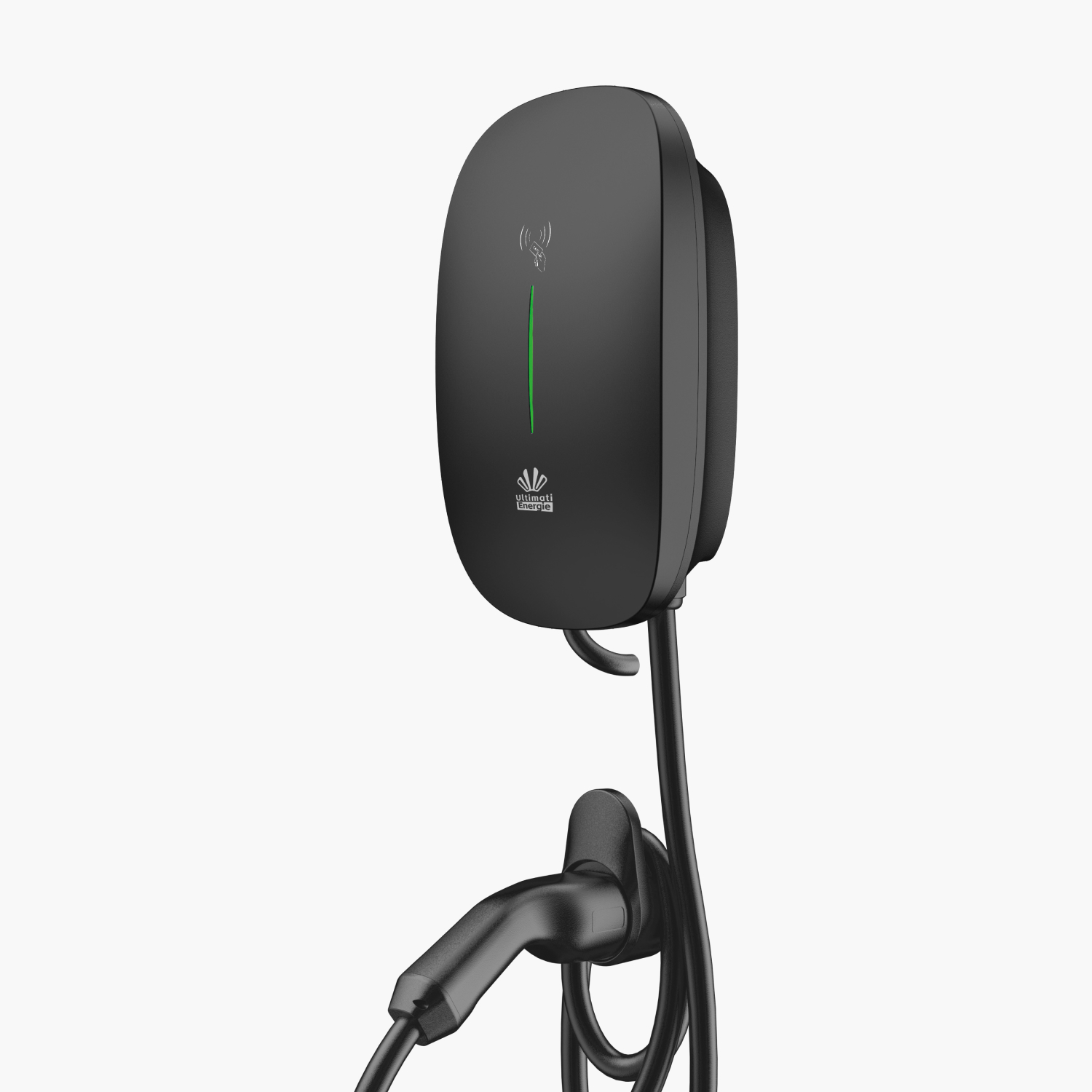
If you are looking for a solution that is future-ready and suitable for both private use and shared charging scenarios, Ultimati Energie offers multifunctional AC Wallboxes in its product portfolio. The NX-AE3 is ideal for charging electric vehicles at home, supports charging powers from 7 kW to 22 kW, and can be flexibly adapted to existing grid conditions.
Especially in underground parking garages, its intelligent control advantages are particularly evident: when combined with photovoltaic systems and load management, it can optimize self-consumption and enable grid-friendly charging control. At the same time, the solution is suitable for shared residential buildings or semi-public parking areas, where multiple charging points can be managed and dynamically controlled. With its robust structural design and remote access capabilities, it achieves a mature balance between comfort, efficiency, and future scalability.
Frequently Asked Questions About 11 kW and 22 kW Wallboxes
Are 22 kW Wallboxes allowed in private settings?
Yes, but approval is required. They may not be put into operation without authorization from the grid operator.
Can a 22 kW Wallbox operate at 11 kW?
In many cases, yes. Some Wallboxes allow power to be limited via software and increased later—offering a compromise between current needs and future planning.
Conclusion: 11 kW or 22 kW?
The question “Which Wallbox should I choose: 11 kW or 22 kW?” cannot be answered universally; it depends heavily on the specific application scenario. For most private charging points as well as standardized residential and commercial projects, an 11 kW Wallbox is an economically sound and grid-friendly solution. It offers sufficient charging power, manageable home EV charging station costs, and can be easily integrated into existing energy infrastructure.
A 22 kW Wallbox, on the other hand, demonstrates its strengths in scenarios requiring short charging times, high usage frequency, or multiple charging points. At the same time, it places higher demands on grid connection, the supply cable cross-section for 22 kW Wallboxes, and approval procedures. Only by comprehensively evaluating Wallbox costs, technical conditions, and long-term usage requirements can a sustainable and scalable charging infrastructure be established.
With professional expertise, systematic solutions, and end-to-end support, Ultimati Energie assists project developers, operators, and business decision-makers—from planning to implementation—in creating future-oriented electric mobility charging and energy solutions.

Ultimati Energie Deutschland GmbH is a Germany-based B2B energy storage system provider specializing in scalable residential and C&I battery storage solutions for European partners.
Become a Partner
Sales: +49 1624886367
Customer Support:
+49 15226994869
Address: Ober der Röth 4, 65824 Schwalbach am Taunus, Germany
Copyright © 2026 Ultimati Energie Deutschland GmbH All rights reserved.