

Energy Price Volatility Is Reshaping Europe’s Power Market
Energy prices across Europe continue to be influenced by global geopolitical developments. Recent tensions in the Middle East have renewed concerns about the security of energy supply routes, particularly around the strategic shipping corridor of the Strait of Hormuz. A significant share of global oil and liquefied natural gas shipments pass through this narrow passage, meaning disruptions can quickly translate into volatility across international fuel markets.
For households in Germany and the wider European market, these global developments often appear indirectly in electricity prices. When oil and natural gas prices rise, wholesale electricity markets typically respond within weeks or months. As a result, residential energy costs increasingly reflect fluctuations occurring far beyond national borders.
This structural exposure is one reason energy analysts expect continued price volatility in European power markets over the coming years.
Why Oil and Gas Prices Influence Household Electricity Bills
Although electricity is often viewed as a separate utility, its price formation remains closely tied to fossil fuel markets.
In Germany, household electricity prices generally consist of three primary components:
- Electricity generation costs
- Grid and transmission fees
- Wholesale market electricity prices
Among these elements, generation costs and wholesale market prices are particularly sensitive to natural gas prices. Within the European power market design, gas-fired power plants frequently serve as marginal generators—the last producers needed to meet demand during peak periods. Their operating costs therefore play a key role in setting the final market price of electricity.
When natural gas prices increase due to supply disruptions, geopolitical tensions, or shifts in global demand, electricity market prices often follow. For households, this means that electricity bills can fluctuate even when domestic consumption remains stable.
In practical terms, residential electricity costs have become increasingly linked to global energy market dynamics.
How Solar Battery Storage Improves Cost Stability for Households
As energy price volatility becomes more common, many homeowners are exploring ways to reduce their exposure to wholesale electricity price swings. One approach gaining traction across Europe is residential solar battery storage.
Instead of relying exclusively on grid electricity, households with solar generation and battery storage can manage a larger portion of their energy consumption internally. This changes how—and when—electricity is purchased from the grid.
Increasing the Utilization of On-Site Solar Power
Solar systems typically generate the majority of electricity during daylight hours, when household demand may be relatively low. Without storage, surplus electricity is exported to the grid.
Battery storage changes this dynamic:
- Solar power generated during the day can be stored locally
- Stored energy can be used during evening or nighttime demand
- Grid electricity purchases can be reduced during high-price periods
From an economic perspective, this improves solar self-consumption rates, which is one of the most important factors affecting the financial return of residential PV systems.
Reducing Exposure to Market Price Volatility
Another benefit of battery storage is reduced dependence on real-time electricity market prices.
When households can rely on stored solar energy for part of their daily demand, they become less sensitive to short-term price spikes in the wholesale market. While grid electricity remains part of the overall energy mix, storage provides a buffer that improves cost predictability.
In an environment where electricity prices increasingly reflect global fuel market fluctuations, this form of energy flexibility can be strategically valuable.
Leveraging Time-of-Use Pricing
Several European electricity markets are gradually introducing more dynamic pricing structures. Under these models, electricity prices vary by time of day based on supply and demand conditions.
Battery storage systems allow households to respond to these signals more effectively:
- Charging the battery during lower-price periods
- Using stored electricity when market prices peak
Over time, this capability can contribute to lower overall energy costs and more efficient energy consumption patterns.
Key Considerations When Evaluating Home Battery Storage
For households considering battery storage, several technical characteristics play a critical role in long-term system value.
Long Cycle Life
Battery lifespan determines how long a storage system can deliver economic value. Systems based on lithium iron phosphate (LFP) battery chemistry are increasingly favored in residential applications due to their long cycle life and stable performance.
Intelligent Energy Management
Energy storage becomes more effective when supported by advanced control systems. A well-designed Energy Management System (EMS) helps determine when electricity should be stored, used, or drawn from the grid, optimizing energy flows based on household demand and market conditions.
Thermal Stability and System Safety
Battery systems operate most efficiently within specific temperature ranges. Reliable thermal management systems help maintain safe and stable operating conditions, which contributes to both performance and longevity.
Scalable System Architecture
Energy consumption patterns can evolve over time. Modular storage systems allow households to expand capacity as energy needs grow, avoiding the need to replace the entire system.
Integrated Energy Storage as a Long-Term Infrastructure Investment
Residential energy storage is increasingly viewed not just as a device, but as part of a broader home energy infrastructure.
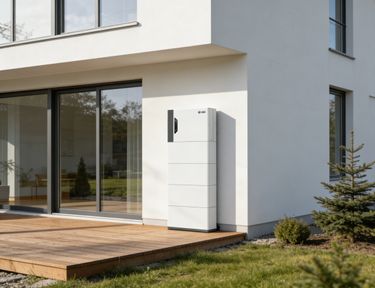
Solutions developed by companies such as Ultimati Energie integrate several critical system components—including power conversion systems (PCS), battery management systems (BMS), and energy management systems (EMS)—within a unified architecture. This integration simplifies system coordination and improves overall operational efficiency.
In addition, the use of high-cycle-life LFP battery cells, advanced thermal management technologies, and modular system expansion supports long-term reliability while allowing households to adapt to changing energy needs.
From a strategic perspective, these design principles aim to ensure that residential storage systems remain viable assets over many years of operation.
Conclusion: A Practical Strategy for Managing Energy Price Uncertainty
Europe’s energy transition is accelerating, but the path forward is unlikely to be free of market volatility. Geopolitical risks, fuel supply disruptions, and structural shifts in electricity markets will continue to influence power prices.
For households, this reality raises an important question: how to maintain stable and predictable energy costs in a volatile market environment.
Solar battery storage does not eliminate exposure to the grid, but it can significantly reduce it. By increasing on-site energy utilization and improving flexibility in how electricity is consumed, storage systems provide a practical mechanism for managing long-term energy costs.
In an increasingly uncertain energy landscape, residential energy storage is becoming an important tool for building resilience at the household level.