

LiFePO4 vs. NMC: Which Battery Is Better for Home Energy Storage?
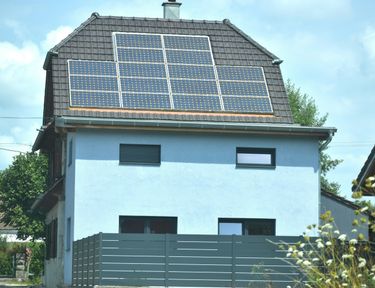
With Europe’s energy transition accelerating, solar installations are growing rapidly. But what happens when the sun goes down—or electricity prices spike to €0.40 per kWh? A solar battery storage system ensures you can store excess solar power and use it later, reducing grid reliance, lowering bills, and improving energy independence. This is why choosing the right battery chemistry (LiFePO4 vs NMC) has become more important than ever.
Not all batteries are created equal. The choice between LiFePO4 (Lithium Iron Phosphate) and NMC (Nickel Manganese Cobalt) batteries directly affects the safety, lifespan, and sustainability of a residential energy storage system. Should you prioritize maximum energy density or a chemistry known for exceptional home safety? In this article, we compare LiFePO4 vs NMC across all major factors to help you choose the best battery for your solar-powered home. For a deeper look at LiFePO4 systems, see also our guide: What Is a LiFePO4 Home Storage System – and Why Is It Worth It for Your Home?
What Are LiFePO4 and NMC Batteries?
Both LiFePO4 and NMC are lithium-ion battery chemistries widely used in home energy storage systems. However, their chemical composition results in different safety levels, cycle life, and performance, which is why comparing LiFePO4 vs NMC is essential for homeowners planning a long-term storage setup.
- LiFePO4 (Lithium Iron Phosphate) batteries are known for their high thermal stability, excellent safety profile, and long cycle life, making them ideal for solar battery storage systems and residential installations where reliability matters more than energy density.
- NMC (Nickel Manganese Cobalt) batteries provide higher energy density, which is why they are widely used in EVs and other compact applications. However, they require strict thermal management and are more prone to overheating, which makes them less suitable for indoor residential energy storage without additional protection systems.
Understanding the trade-offs between these two chemistries is essential when planning a future-ready home energy storage system, especially as more homeowners across Europe adopt solar plus storage solutions.
Key Differences Between LiFePO4 and NMC Batteries
Let’s explore the differences between LiFePO4 vs. NMC in the context of residential energy storage.
1. Safety and Thermal Stability
Safety is arguably the most important factor when placing batteries inside a home. LiFePO4 batteries are extremely stable and resistant to overheating, even under heavy load or environmental stress. They do not experience thermal runaway, which is the uncontrolled heat reaction that can cause fires in NMC batteries.
NMC batteries, while common in EVs, require sophisticated Battery Management Systems (BMS) and cooling to prevent overheating. This adds complexity and potential risk, especially when installed in basements, garages, or utility rooms.
2. Cycle Life and Longevity
A well-designed LiFePO4 battery storage system can deliver over 6,000 full charge cycles, translating to 15–20 years of daily use. This makes them ideal for homeowners seeking a durable, low-maintenance storage solution.
NMC batteries typically offer around 3,000–4,000 cycles. This shorter lifespan can lead to more frequent replacements and higher long-term costs.
3. Temperature Tolerance
In European climates where seasonal variations are significant, temperature resilience matters. LiFePO4 batteries operate reliably in a broad temperature range from around -10 °C to +55 °C, maintaining performance even during cold winters or hot summers.
NMC cells are more sensitive and often require heating or cooling systems to function within optimal temperature windows.
4. Environmental Impact
Sustainability is a growing concern in energy infrastructure. LiFePO4 batteries are cobalt-free and more environmentally benign in production and recycling. In contrast, NMC relies on cobalt and nickel—metals associated with supply chain volatility and ethical concerns around mining practices.
By choosing LiFePO4, you’re also making a more ESG-aligned decision.
5. Energy Density
Here, NMC has the edge: it packs more energy per kilogram, which is essential in mobile applications like EVs. But in residential installations where space is usually available, the slightly larger size of LiFePO4 systems is rarely a limiting factor.
6. Cost and Raw Material Stability
Because LiFePO4 uses more abundant materials, its price is more stable over time. NMC systems are more vulnerable to cost spikes due to fluctuations in cobalt and nickel markets.
7. Regulatory Compliance and Certifications
LiFePO4 batteries are easier to certify for European residential standards such as VDE-AR-N 4105, CE, and UN38.3. Their safety profile makes them more insurable and preferred by many project developers and municipalities.
LiFePO4 vs. NMC for Home Storage
Feature | LiFePO4 Battery | NMC Battery |
Safety | Excellent – No thermal runaway | Moderate – Requires a tight BMS |
Cycle Life | 6,000+ cycles | 3,000–4,000 cycles |
Temperature Range | -10 °C to +55 °C | Limited tolerance |
Energy Density | Lower | Higher |
Environmental Impact | No cobalt, easier recycling | Cobalt/nickel involved |
Material Cost Stability | High | Prone to volatility |
Certification Compliance | Easier for CE/VDE | More complex |
Fire Safety for Homes | Ideal | Requires mitigation |
LiFePO4 vs. NMC: Which One Is Better for Home Energy Storage?
In most residential energy storage scenarios, LiFePO₄ batteries are clearly the superior choice. They offer unmatched safety, long service life, and easier compliance with EU standards. By contrast, NMC’s advantages—mainly high energy density—matter far more in EVs than in home battery storage systems.
For fixed installations in homes, where safety, longevity, and regulatory compliance matter most, LiFePO₄ batteries clearly outperform NMC. Its thermal stability and long lifespan lead to fewer replacements, less maintenance, and peace of mind for both homeowners and installers.
Although NMC batteries can save space, this advantage is less relevant when installing a wall-mounted or floor-standing battery unit in a utility room or garage.
LiFePO4 batteries are also more likely to qualify for government incentives and rebates, such as Germany’s KfW programs or regional subsidy schemes, thanks to their safety and longevity.
Why We Choose LiFePO4 at Ultimati Energie
At Ultimati Energie, we specialize in high-quality LiFePO4 battery storage systems tailored for residential and small commercial energy needs. We firmly believe LiFePO4 is the best match for Europe’s residential storage requirements.
Our RESS systems are:
- Covered by an up to 20-year battery warranty
- Equipped with a 10-year inverter warranty
- Modular and scalable to grow with your needs
- Smart-grid ready with remote monitoring and diagnostics
- Certified to CE, UN38.3, and VDE-AR-N 4105 standards
Whether you're an installer, energy consultant, or homeowner planning a new PV system, our energy storage solutions offer the safety, longevity, and compatibility that today’s energy landscape demands.
Conclusion
Choosing the right battery isn’t just about specs—it’s about aligning your residential energy system with your priorities: safety, sustainability, long-term value.
For most residential applications, LiFePO₄ battery technology provides exactly that:
- Long service life
- High safety standards
- Low maintenance
- Future-proof compliance with European norms
NMC has its place in mobility. But for your home, LiFePO4 is the chemistry of confidence.
Ready to plan your LiFePO4 residential storage project?
If you're exploring LiFePO4 battery storage systems for a home or small business, we’re here to help.
Contact our expert team for system sizing, technical data, or a project-specific consultation. Request your quote or technical consultation now!

Ultimati Energie Deutschland GmbH is a Germany-based B2B energy storage system provider specializing in scalable residential and C&I battery storage solutions for European partners.
Become a Partner
Sales: +49 1624886367
Customer Support:
+49 15226994869
Address: Ober der Röth 4, 65824 Schwalbach am Taunus, Germany
Copyright © 2026 Ultimati Energie Deutschland GmbH All rights reserved.