

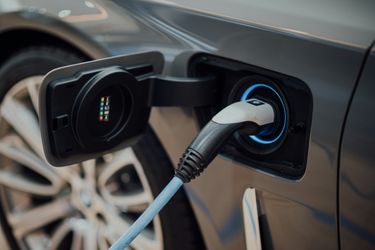
Can I Charge My Electric Car at Home?
Electric mobility is rapidly expanding in Europe, particularly in Germany where new electric car registrations continue to break records each year. With this shift, a common question among drivers is whether it is possible—and practical—to charge their electric vehicle (EV) at home. The answer is yes. In fact, according to recent studies, more than 80% of EV owners in Germany rely primarily on home charging. It’s not just convenient, but also often more affordable and environmentally friendly than public charging.
This article offers a comprehensive overview of how to charge an electric car at home in Germany and Europe. We will explore the available charging technologies, installation requirements, costs, legal aspects, and the advantages of using a high-quality home EV charger such as the NX-AE1 from Ultimati Energie.
How Home EV Charging Works
Charging your EV at home is fundamentally similar to powering any high-consumption household device, like an oven or electric heating system. You connect your car to a power supply through either a standard outlet or a dedicated charging station. While both methods are viable, their performance and efficiency differ significantly.
Level 1 charging utilizes a regular 230V household socket. This method typically delivers around 2.3 kW of power, translating to roughly 8 to 10 kilometers of range per hour of charging. Although it's an accessible starting point—requiring no modifications to your electrical system—it is too slow for most users, particularly those with longer daily commutes or full-battery electric vehicles (BEVs).
Level 2 charging, in contrast, employs a professionally installed wall-mounted unit known as a Wallbox. These systems operate on 240V and deliver between 7 kW and 22 kW, depending on the model and your home’s electrical infrastructure. With this setup, a typical EV can be fully charged overnight, making it the standard choice for most homeowners across Europe.
Types of Charging Stations for Home Use
There are two main types of EV charging stations suitable for residential use: Level 1 and Level 2 chargers.
Level 1 charging stations use a standard Schuko socket and do not require any professional installation. However, due to the slow charging speed—often more than 24 hours for a full battery—this option is best reserved for plug-in hybrids or emergency use.
Level 2 charging stations are installed with a dedicated circuit and require a licensed electrician. These chargers are faster, more efficient, and often come with smart features such as remote control via app, solar charging integration, and consumption monitoring. The NX-AE1 EV Home Charger from Ultimati Energie is an example of a smart, OCPP-compatible Level 2 charger, offering up to 7 kW/22 kW of power, dynamic load balancing, and full integration with photovoltaic systems.
If you are planning to install an EV charger at home in Germany, Level 2 is by far the most practical and future-proof solution.
Requirements for Charging Electric Vehicle at Home
Before installing a home EV charging station in Germany or elsewhere in Europe, several technical and legal factors must be considered.
Your home’s electrical infrastructure should be assessed by a certified electrician. In many cases, the existing power panel may need to be upgraded to handle a dedicated 16A or 32A circuit. Adequate space for installation, typically a garage or carport with a secure power outlet, is also necessary.
Installation costs vary, but typically range from €800 to €1,500 depending on the complexity of the work.Many homeowners also ask how much electricity does an electric car use to charge. On average, a full charge for a 60 kWh battery requires about 50–60 kWh of electricity, which can be easily managed with today’s household energy infrastructure. The charger itself may cost between €600 and €1,000. However, government subsidies—like the now-paused but expected-to-return KfW 440 program in Germany—can cover up to €900 of installation and hardware expenses. Always check your local or federal incentive programs when planning your investment.
For residents of apartment buildings, legal permission from the property owner or homeowners’ association is typically required. Since 2020, German legislation under §554 BGB gives tenants the right to install a charging station at their own expense, provided technical feasibility and building rules are respected.
Benefits of Home EV Charging
Home charging offers a wide range of advantages that go beyond convenience. One of the most significant benefits is the cost savings. Charging at home is generally cheaper than using public fast chargers, particularly when using night-time electricity tariffs or integrating with solar energy.
In Germany, the average household electricity price is about €0.30 per kWh. Charging a typical 60 kWh battery from 10% to 90% costs around €14. In contrast, public DC fast chargers often charge €0.50 to €0.70 per kWh, doubling or even tripling your cost per charge.
Another advantage is time efficiency. Instead of driving to a charging station, waiting in line, or dealing with network compatibility issues, you simply plug in your car overnight and it’s ready by morning. This predictability also allows you to optimize your household energy consumption, especially when paired with dynamic tariffs or smart meters.
Moreover, home EV charging is more environmentally sustainable. When connected to a photovoltaic system or energy storage unit, your vehicle can be powered almost entirely from renewable sources. This is a major step toward energy independence and zero-emission driving.
Challenges to Consider
Despite its benefits, installing a home charging station comes with certain challenges. The initial investment can be substantial, especially if electrical upgrades are necessary. While subsidies help, not all regions or customers may qualify, and upfront cash flow is still required.
Physical constraints may also apply. If you live in a dense urban area without a dedicated parking space, installing a private charger can be complex or even impossible without municipal permits. Solutions such as curbside cable bridges exist but are not widely supported across German municipalities.
Charging speed is another consideration. Even Level 2 chargers take several hours for a full charge. While sufficient for overnight charging, it may not be ideal if you regularly need to top up quickly during the day.
U-Energie’s Smart Charging & Storage Solutions
Ultimati Energie is a trusted provider of intelligent energy systems in Europe. We specialize in high-performance EV chargers, solar integration, and home energy storage. Our flagship model, the NX-AE1 EV Home Charger, is specifically designed for residential users and commercial partners looking to install reliable and scalable charging infrastructure.
With features like 7 kW/22 kW AC output, smart load management, MID-certified energy metering, and compatibility with solar and storage systems, the NX-AE1 EV charger is ideal for homeowners and installers looking for a compact, future-ready solution. It also supports OCPP 1.6J, making it suitable for integration into third-party backend systems or fleet management software.
For those seeking full energy autonomy, we also offer high-voltage lithium battery systems that can store excess solar power and release it for EV charging when needed. This combination optimizes grid independence and reduces electricity costs over time.
Conclusion & Next Steps
Home EV charging is not only possible in Germany and Europe—it is quickly becoming the preferred option for most electric vehicle owners. With the right planning, equipment, and support, charging your car at home is safe, reliable, and significantly cheaper than relying on public infrastructure.
Whether you are a private EV owner or a commercial buyer, Ultimati Energie offers solutions tailored to your needs. From smart EV chargers like the NX-AE1 to advanced energy storage systems, we help you build a complete, future-proof electric mobility setup.
To learn more about our charging stations or to request a quote, visit our website at u-energie.de or explore the NX-AE1 product page here.

Ultimati Energie Deutschland GmbH is a Germany-based B2B energy storage system provider specializing in scalable residential and C&I battery storage solutions for European partners.
Become a Partner
Sales: +49 1624886367
Customer Support:
+49 15226994869
Address: Ober der Röth 4, 65824 Schwalbach am Taunus, Germany
Copyright © 2026 Ultimati Energie Deutschland GmbH All rights reserved.